The right stand keeps your microphone stable, correctly positioned, and easy to adjust without adding clutter to your home studio. The best choice depends on your microphone’s weight, your desk or floor space, and whether you record vocals, instruments, podcasts, or streams.
We selected 10 microphone stands for home studios across desktop, tripod, weighted-base, and boom-arm designs. Use the guide below to match each style to your room, workflow, and budget.
Best 10 Microphone Stands for Home Studios Picks for 2026
Best Portable Boom Stand
Amazon Basics Foldable Boom Arm Stand
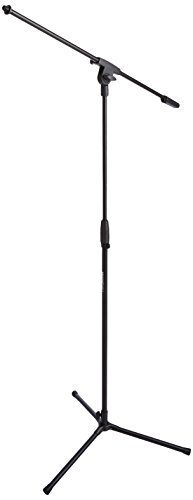
- Reaches up to 85.75 inches
- Folds flat for transport
- Supports microphones up to 2 pounds
Best For: Portable home-studio recording and vocal setups
Best for Noise Reduction
Microphone Stand With Isolation Shield

- Includes a foldable acoustic shield
- Adjusts from 42 to 71.5 inches
- Offers desktop and boom-arm configurations
Best For: Voiceover, podcast, and streaming stations
Best Heavy-Duty Floor Stand

- Uses a 6.6-pound weighted base
- Adjusts from 26.7 to 67.7 inches
- Includes pop filter and microphone adapters
Best For: Stable floor-based recording and broadcasting
Best Desktop Bundle
BILIONE Versatile Desktop Microphone Stand

- Includes shock mount and double pop filter
- Uses a 1.5-pound weighted base
- Adjusts up to 14 inches
Best For: Desk-based streaming, podcasting, and vocal recording
Best Overall
InnoGear Tripod Boom Arm Floor Stand

- 28.1–89.8-inch adjustable height
- Detachable, highly adjustable boom arm
- Includes adapters and carrying bag
Best For: Flexible home-studio and portable use
Best Desk-Mounted Option

- Clamp fits desks up to 2 inches thick
- Supports microphones up to 4 pounds
- Includes 9.8-inch extension rod
Best For: Compact streaming and podcast desks
Best Height Range
InnoGear TS250 Floor Boom Stand

- 30.82- to 82.28-inch height adjustment
- 5.8-pound weighted base with reinforced poles
- Rotating boom and included thread adapter
Best For: Seated-to-standing podcasting and studio recording
Best Compact Floor Base
BILIONE LD36 Mic Stand with Tray

- 22- to 70-inch height range
- 5.2-pound padded square weighted base
- Tray, cable management, and quick-detach design
Best For: Compact podcasting and portable home-studio setups
Best All-in-One Design
InnoGear MS138 Stand with Tablet Holder

- Mic, boom, phone, and tablet configurations
- 30- to 72-inch height adjustment
- 4.7- to 13-inch tablet holder and carrying bag
Best For: Streaming, podcasting, and mobile recording workflows
Best Portable Boom Stand – Amazon Basics Foldable Boom Arm Stand
For home studios that need flexible positioning without a bulky setup, this Amazon Basics stand provides adjustable height, a long boom arm, and a foldable tripod base. It supports microphones up to 2 pounds, though the microphone clip is sold separately.
Best For: Home-studio vocalists, speakers, and musicians who need a portable floor stand.
Pros:
- Adjusts from seated use to standing height, reaching up to 85.75 inches.
- Long boom arm and molded counterweight support flexible microphone placement.
- Folds flat and includes a clip-on cable holder for easier transport and cable management.
- Steel construction remains relatively lightweight at 3.3 pounds.
Cons:
- Microphone clip is not included.
- Maximum microphone weight is 2 pounds.
Its combination of height range, portability, and cable management makes it a practical general-purpose choice for home studios. Confirm that your microphone and separate clip stay within the stated weight and thread requirements.
Best for Noise Reduction – Microphone Stand With Isolation Shield
This stand combines a height-adjustable microphone support with a foldable isolation shield, making it suited to home studios where reflections and ambient noise are concerns. Its tripod base, steel construction, and included thread adapters support several recording configurations.
Best For: Voiceover, podcasting, and streaming setups that benefit from an integrated acoustic shield.
Pros:
- Foldable isolation shield uses acoustic foam and an ABS backing.
- Height adjusts from 42 to 71.5 inches for seated or standing sessions.
- Weighted triple-leg base is designed to reduce tipping risk.
- Supports desktop and boom-arm configurations and includes 3/8-inch to 5/8-inch adapters.
Cons:
- At 8.1 pounds, it is heavier than simpler microphone stands.
- Microphone is not included.
- The shield and stand create a larger setup than a basic floor stand.
For home studios dealing with unwanted reflections, the integrated shield is the defining advantage. It is a more specialized and substantial option, so it makes the most sense when acoustic isolation is a priority rather than maximum portability.
Best Heavy-Duty Floor Stand – Weighted Base Boom Arm Stand
Among microphone stands for home studios, this floor boom model stands out for its 6.6-pound weighted square base and included accessories. Its adjustable height and folding arm make it suitable when you want a stable setup that stays off the desk.
Best For: Home-studio recording, podcasting, gaming, and live performance with heavier microphones.
Pros:
- Weighted base and spring-supported boom arm provide added stability.
- Height adjusts from 26.7 to 67.7 inches.
- Includes a mic clip, double pop filter, cable ties, and 1/4-inch and 5/8-inch screw adapters.
- Listed compatibility includes Blue Yeti, SM7B, MV7, QuadCast, and other microphones.
Cons:
- Its floor footprint is less suitable for very compact rooms.
- Maximum recommended microphone weight is 1.5 kilograms.
- The complete kit weighs about 4.5 kilograms.
This is a strong all-in-one choice for creators who prefer floor placement and want accessories included. The weighted base should help with stability, while the folding arm makes storage and transport more manageable.
Best Desktop Bundle – BILIONE Versatile Desktop Microphone Stand
This BILIONE kit is a convenient pick for home studios that record at a desk. It combines a weighted desktop base with a shock mount, double-layer pop filter, microphone clip, and thread adapter, reducing the need to purchase accessories separately.
Best For: Desk-based streaming, podcasting, and vocal recording with compatible microphones.
Pros:
- All-in-one package includes a shock mount, pop filter, clip, and 3/8-inch to 5/8-inch adapter.
- 1.5-pound metal base includes anti-slip pads.
- Adjustable stand reaches up to 14 inches.
- Listed compatibility includes Yeti, AT2020, AT2035, QuadCast, SM58, and Seiren X.
Cons:
- The included shock mount is not compatible with Blue Yeti.
- The shock mount fits microphones between 1.77 and 2.05 inches in diameter.
- Maximum recommended microphone weight is 0.7 kilograms.
Its compact footprint and included accessories make it an efficient starting point for a desk-based home studio. Check your microphone’s diameter and weight carefully, especially if you plan to use the included shock mount.
Best Overall – InnoGear Tripod Boom Arm Floor Stand
For home studios that need flexible placement, the InnoGear TS186 combines a tall tripod base with an adjustable boom arm. Its broad height range, included adapters, and portable design make it a versatile choice among microphone stands for home studios.
Best For: Home-studio users who want one stand for podcasts, singing, recording, and occasional travel.
Pros:
- Adjusts from 28.1 to 89.8 inches for seated or standing use.
- 360-degree horizontal and up-to-180-degree vertical boom adjustment supports flexible positioning.
- Thickened steel tripod weighs 4.2 pounds and is designed for improved stability.
- Includes mic clips, a 3/8-to-5/8-inch adapter, cable clips, and a carrying bag.
Cons:
- A floor tripod takes more room than a desk-mounted arm.
- The stand is designed for microphones weighing up to 2 kg, so setup weight should be checked.
The detachable boom can be removed for straight-stand use, giving this model more configuration flexibility than a fixed floor stand. It is a strong all-around option when portability and height range matter.
Best Desk-Mounted Option – M05 Pro Low-Profile Boom Arm
The M05 Pro is a compact desk-mounted arm for home studios where preserving floor space is a priority. Its clamp, extension rod, and 360-degree rotation help position a microphone around monitors and across a workstation.
Best For: Streamers, podcasters, and recording setups using a desk up to 2 inches thick.
Pros:
- Desk clamp fits surfaces up to 2 inches thick and includes a protective silicone pad.
- Aluminum-alloy arm supports up to 4 pounds, including heavier microphones such as Yeti models.
- 360-degree adjustment and a 9.8-inch extension rod help clear monitors and reach wider desks.
- Supports 3/8-inch and 5/8-inch connections and includes a conversion screw.
Cons:
- It requires a suitable desk edge and is not a freestanding stand.
- HyperX QuadCast requires an adapter that is not included.
With its low-profile desk design and included cable bands, the M05 Pro suits focused desktop recording spaces. Confirm your desk thickness and microphone adapter needs before buying.
Best Weighted-Base Stand – InnoGear MS250 Floor Stand
The InnoGear MS250 uses a 4.5-pound weighted round base for a stable floor setup. With 34-to-60-inch height adjustment and a rotatable mic clip, it is a practical choice for home studios that prefer a conventional floor stand.
Best For: Singers and studio users who want a stable, straightforward floor stand without a tripod footprint.
Pros:
- Adjusts from 34 to 60 inches for varied performance and recording positions.
- 4.5-pound, 9.8-inch weighted base includes non-slip pads for stability.
- Thickened 1.5mm steel arm is designed to support heavier microphones.
- Disassembles into three parts for transport and storage.
Cons:
- The 60-inch maximum height is lower than the TS186’s maximum height.
- A shock mount is not included.
- The weighted base occupies floor space and weighs 6.6 pounds overall.
The MS250 favors stability and simplicity over maximum reach. Its weighted base and detachable construction make it a dependable fit for fixed home-studio vocal or instrument setups.
Best Height Range – InnoGear TS250 Floor Boom Stand
For home studios that need flexibility from seated podcasting to standing performances, the InnoGear TS250 offers a broad 30.82- to 82.28-inch height range. Its weighted base and adjustable boom make it a versatile option among microphone stands for home studios.
Best For: Musicians, podcasters, broadcasters, and creators who need seated-to-standing adjustment.
Pros:
- Adjusts from 30.82 to 82.28 inches for varied recording setups.
- Weighted 5.8-pound base and reinforced 25mm poles support stability.
- 360-degree boom rotation and a 180-degree mic clip help fine-tune positioning.
- Includes a mic holder, mic clip, and 3/8-inch to 5/8-inch adapter.
Cons:
- Its floor-based design requires dedicated studio space.
- The stand weighs about 4.84 kg, so it is less convenient to move frequently.
The TS250 is a strong fit when height range and positioning flexibility matter most. Choose it for a permanent or semi-permanent studio setup where a substantial base is welcome.
Best Compact Floor Base – BILIONE LD36 Mic Stand with Tray
The BILIONE LD36 combines a boom arm, tray, cable management, and a compact weighted base in one setup. For microphone stands for home studios, it is a practical choice when you want stable positioning without a large footprint.
Best For: Podcasters and home-studio users who value a compact base, accessory tray, and portability.
Pros:
- Adjusts from 22 to 70 inches with a smooth clutch knob.
- 5.2-pound weighted square base with EVA pads helps protect floors.
- Includes a tray, cable management, two mic clips, and a 3/8-inch to 5/8-inch adapter.
- Breaks down into portable parts in under 20 seconds.
Cons:
- Its 70-inch maximum height is lower than some tall floor stands.
- The listed warranty is a 60-day free-return period.
The LD36 emphasizes convenience and efficient use of space. Its tray and quick-detach design are especially useful for compact recording areas or setups that need to be moved between locations.
Best All-in-One Design – InnoGear MS138 Stand with Tablet Holder
The InnoGear MS138 expands beyond a standard mic stand with a boom arm, gooseneck, phone or tablet holder, and carrying bag. It suits home studios where recording, streaming, and reference-device access need to share one flexible setup.
Best For: Streamers, podcasters, and mobile creators using a microphone alongside a phone or tablet.
Pros:
- Works as a standard mic stand, boom setup, or tablet holder stand.
- Adjusts from 30 to 72 inches with a 360-degree rotating boom.
- Tablet holder accommodates devices from 4.7 to 13 inches.
- Includes a carrying bag and 3/8-inch to 5/8-inch adapter.
Cons:
- Tripod stability depends on positioning the boom parallel and directly above a leg.
- The 24.4-inch maximum leg span may require more floor space than a compact base.
The MS138 is the most multifunctional option here, particularly if a tablet or phone is part of your workflow. Follow the recommended boom-and-leg alignment to maintain balance with heavier equipment.
How We Picked These Microphone Stands for Home Studios
We focused on the practical features that matter during everyday recording: stability, height and reach, adjustment range, portability, cable management, mounting versatility, and compatibility with common microphones. The selection includes desk-mounted arms, compact desktop stands, tripod floor stands, and weighted-base models for different room layouts.
Because microphones vary considerably in weight and shape, check the stand’s stated load capacity and confirm that its thread size or adapter matches your microphone, shock mount, or clip. Features such as isolation shields, trays, tablet holders, and cable routing can also improve a specific setup, but they should not replace a stable base.
Quick Comparison
| Stand type | Best for | Main advantage | Potential trade-off |
|---|---|---|---|
| Desk boom arm | Streamers, podcasters, compact desks | Flexible positioning with minimal floor space | Needs a sturdy, compatible desk edge |
| Desktop stand | Small rooms and simple recording | Fast setup and easy portability | Limited height and reach |
| Tripod floor stand | Vocals, instruments, and multipurpose use | Adjustable and relatively portable | Uses more floor space |
| Weighted-base floor stand | Large microphones and frequent repositioning | Stable footprint for heavier setups | Heavier to move and store |
Key Buying Factors for Microphone Stands for Home Studios
Stability and Load Capacity
A stand should remain planted when you adjust the microphone or move around the room. Weighted bases generally offer dependable stability, while tripod legs are useful when portability matters. For heavy broadcast microphones, verify the combined weight of the microphone, shock mount, pop filter, and any accessories.
Reach, Height, and Adjustment
Choose enough vertical range for your recording position and enough horizontal reach to place the microphone without blocking a monitor or keyboard. Boom joints with secure tightening controls are especially useful for switching between seated and standing work.
Footprint and Cable Management
Measure your desk or recording area before buying. A desk arm saves floor space but requires clearance for its clamp. Floor stands need room for legs or a base. Integrated cable clips or channels help prevent cables from catching on furniture and reduce visual clutter.
Compatibility and Extras
Check whether the stand includes 3/8-inch and 5/8-inch adapters, a microphone clip, or other hardware you need. Isolation shields, phone holders, trays, and tablet mounts are valuable when they solve a specific workflow problem, but avoid unnecessary accessories if they add weight or make positioning harder.
Who Should Buy Which Microphone Stands for Home Studios?
- Choose a desk boom arm if you podcast, stream, or record at a fixed workstation and want the microphone off your desk.
- Choose a desktop stand if you need a compact, low-cost option for calls, voiceovers, or occasional recording.
- Choose a tripod floor stand if you record vocals or instruments and regularly move the microphone around the room.
- Choose a weighted-base stand if stability is more important than portability or you use a heavier microphone.
- Choose a stand with a tray or device holder if you read lyrics, scripts, or recording notes while performing.
Before ordering, compare the stand’s dimensions with your room, confirm microphone compatibility, and leave enough clearance to adjust the microphone comfortably. A properly matched stand should make recording easier without forcing you to compromise on positioning or stability.