Great mixes start with reliable monitoring. If you want fast transients, low distortion, and a more revealing sound, planar magnetic headphones can be a smart upgrade for the studio.
This roundup focuses on the best planar magnetic headphones for mixing in 2026, with options for home studios, travel rigs, and louder workspaces.
Best 10 Planar Magnetic Headphones for Mixing Picks for 2026
Best Value Planar for Mixing
HIFIMAN HE400SE Planar Headphones

- Low-distortion planar driver for clearer mix detail
- Open-back stage helps with imaging and separation
- Comfortable, lightweight fit for long sessions
Best For: Home mixers and budget buyers who want a planar open-back headphone for mix work.
Best for Balanced Planar Tracking
Fostex T50RP mk4 Planar Headphones

- Redesigned RP planar driver
- Balanced-ready 4-pole 3.5mm connector
- Thicker ear pads for long-session comfort
Best For: Mix engineers and home-studio users who want a planar option with balanced connection support and all-day comfort.
Best for Large-Driver Detail
Fosi Audio i5 Open-Back Planar Headphones

- 97mm planar driver for fine detail and low distortion
- Open-back tuning for a wider, more natural stage
- Comfortable build with metal, walnut, and breathable pads
Best For: Mix engineers and detail-focused listeners who want an open, spacious planar headphone for long sessions.
Best Closed-Back Pick
Monolith M1070C Closed-Back Planar Headphones

- 106mm planar driver for detailed monitoring
- Closed-back shell improves isolation while mixing
- Comes with lambskin and velour earpads
Best For: Mixers who need a detailed planar sound with strong isolation in louder environments.
Best for Detail and Speed
FiiO FT7 Open-Back Planar Headphones
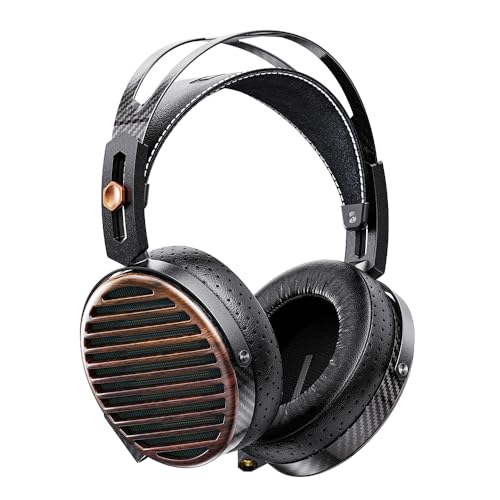
- 106mm planar driver for fast, detailed monitoring
- 427g carbon fiber build helps reduce fatigue
- Includes two ear pad options and detachable balanced cable
Best For: Mix engineers and critical listeners who want a detailed open-back planar monitor with strong transient response.
Best for Detail & Openness
HIFIMAN HE1000 Stealth Planar Open-Back

- Stealth magnets reduce interference and distortion
- Open-back design helps reveal stereo width and ambience
- Ultra-thin diaphragm targets fast, detailed response
Best For: Engineers and audiophiles who want an ultra-detailed open-back planar for critical listening and mix checks.
Best for Open-Back Detail
ASUS ROG Kithara Planar Gaming Headphones

- 100mm planar magnetic drivers for detailed, low-distortion sound
- Open-back design improves separation and soundstage
- Wide compatibility with DACs, amps, PC, console, and mobile
Best For: Mix engineers and gamers who want spacious planar sound with broad device compatibility.
Best Heavy-Duty Pick
Monolith Over Ear Planar Magnetic Headphones

- Closed-back design improves isolation for studio work.
- 66mm planar drivers offer detailed, controlled playback.
- 20-ohm impedance is easy to drive from interfaces.
Best For: Engineers and home-studio users who need isolated planar headphones for mixing.
Best Value Open-Back Choice
Monolith M1060 Planar Magnetic Headphones

- 106mm planar driver for detailed playback
- Open-back design supports wider imaging
- Comfortable pads suit longer sessions
Best For: Mix engineers and home-studio users who want a spacious planar sound at a fair price.
Best Value Planar for Mixing – HIFIMAN HE400SE Planar Headphones
The HIFIMAN HE400SE is a practical entry point if you want planar magnetic headphones for mixing without paying flagship prices. Its open-back design, low distortion planar driver, and high sensitivity make it a solid pick for learning balances, checking detail, and hearing a more honest stereo image from modest sources.
Best For: Home mixers, project studio owners, and budget-conscious listeners who want a clean planar presentation for editing and mix checks.
Pros:
- Planar driver aims for low distortion and clear detail
- Open-back tuning helps with width, separation, and mix decisions
- High sensitivity works well with low-voltage portable players and interfaces
- Lightweight headband and over-ear fit improve long-session comfort
Cons:
- Open-back design leaks sound and offers little isolation
- Stock cable and included accessories are basic
- Not the most resolving choice for critical mastering-grade work
If you’re shopping for planar magnetic headphones for mixing on a tighter budget, the HE400SE is appealing because it delivers the planar speed and openness many engineers want without overcomplicating the setup. It’s a strong value option for mix translation checks, though serious isolation or ultra-high-end detail will require a different tier.
Best for Balanced Planar Tracking – Fostex T50RP mk4 Planar Headphones
If you want planar magnetic headphones for mixing with a more neutral, controlled presentation, the Fostex T50RP mk4 is built around a redesigned RP planar driver and practical studio-friendly connectivity. The thicker around-ear pads and balanced-capable 4-pole 3.5mm connection make it a flexible option for long sessions and different monitoring setups.
Best For: Mix engineers and home-studio users who want a planar option with balanced connection support and all-day comfort.
Pros:
- Completely redesigned RP planar magnetic driver for improved monitoring performance
- 4-pole 3.5mm connector supports balanced connections for added versatility
- Thicker low-resilience ear pads help comfort during long mix sessions
- OFC conductors in the cable support reliable signal quality
Cons:
- May require a good amp/interface to get the most out of them
- Less portable than smaller on-ear or lightweight closed-back options
The mk4 update focuses on studio usability more than flash, which is exactly what many buyers want from planar magnetic headphones for mixing. If you value comfort, balanced-ready wiring, and a straightforward planar design for critical listening, this Fostex is a strong contender.
Best for Large-Driver Detail – Fosi Audio i5 Open-Back Planar Headphones
If you want planar magnetic headphones for mixing, the Fosi Audio i5 is built around a huge 97mm driver, open-back tuning, and low-distortion detail that can help expose edits, balance, and stereo placement more clearly. The walnut-and-metal build also gives it a more premium studio feel than many value-focused options.
Best For: Mix engineers and serious listeners who want an open, detailed planar sound with strong transient response and long-session comfort.
Pros:
- 97mm planar driver aims for very fine detail and low distortion
- Open-back design helps create a wider, more natural soundstage
- Comfort-focused headband, pivoting cups, and breathable pads suit long sessions
- Solid CNC metal and walnut construction feels durable and refined
Cons:
- Open-back design leaks sound and offers little isolation
- Large planar headphones may benefit from a capable headphone amp
- More of a detail-first studio option than a bass-heavy casual headphone
For buyers comparing planar magnetic headphones for mixing, the i5 stands out for its oversized driver and spacious presentation, but it makes the most sense if you can use open-back headphones in a quiet room.
Best Closed-Back Pick – Monolith M1070C Closed-Back Planar Headphones
If you want planar magnetic headphones for mixing in noisier spaces, the Monolith M1070C is built around isolation, a large 106mm driver, and a roomy soundstage. It aims for the kind of detail and low-end control that can help with balance checks, EQ moves, and tracking without bleeding sound everywhere.
Best For: Producers and mixers who need a closed-back planar option with strong isolation and a big, detailed presentation.
Pros:
- 106mm planar driver delivers tight bass and clear top-end detail
- Closed-back design helps keep outside noise out during sessions
- Comfortable enough for longer mix and edit work
- Removable earpads add flexibility for fit and feel
Cons:
- Closed-back tuning is less open than some mixing-focused planar models
- May be bulkier than lighter studio headphones
- Not the most neutral-sounding option if you prefer a very flat reference
The M1070C is a smart pick if you need planar magnetic headphones for mixing in apartments, shared studios, or anywhere isolation matters. It trades a little openness for practicality, but the strong driver performance and comfortable build make it a compelling workhorse.
Best for Detail and Speed – FiiO FT7 Open-Back Planar Headphones
If you want planar magnetic headphones for mixing that emphasize speed, detail, and low-end control, the FiiO FT7 is built to deliver a very resolving open-back presentation. Its large 106mm planar driver and ultra-thin diaphragm are aimed at fast transients and accurate signal tracking, while the open-back design helps with a more natural sense of space.
Best For: Mix engineers and critical listeners who want a detailed, open-back planar sound with strong transient response and a more comfortable lightweight build than many heavy planar models.
Pros:
- 106mm planar driver with fast response for critical mix detail
- Lightweight 427g carbon fiber build is easier to wear for long sessions
- Includes lambskin and fabric pads for tuning comfort and tone
- Detachable balanced cable setup adds flexibility for studio use
Cons:
- Open-back design leaks sound and offers little isolation
- At 427g, it is still not truly lightweight by conventional headphone standards
- Likely overkill if you only need casual listening or portable use
The FT7 stands out as a serious option for planar magnetic headphones for mixing when you want speed, clarity, and a spacious open-back monitor sound without the usual planar weight penalty. It is less about bass hype and more about clean, controlled detail that helps with editing and balance decisions.
Best for Detail & Openness – HIFIMAN HE1000 Stealth Planar Open-Back
If you want planar magnetic headphones for mixing that lean hard into resolution, spatial accuracy, and low distortion, the HIFIMAN HE1000 Stealth is a serious reference-style option. Its ultra-thin diaphragm and stealth magnet design are built to preserve fine detail, while the open-back presentation helps reveal panning, ambience, and balance decisions more clearly.
Best For: Engineers and audiophiles who want an ultra-detailed open-back planar for critical listening and mix checks.
Pros:
- Stealth magnets are designed to reduce wave interference and distortion
- Open-back design supports a wide, airy soundstage for mix evaluation
- Nanometer-thin diaphragm aims for fast, highly resolving transient response
- Includes both 1/4" and 4-pin XLR plugs for flexible amp connectivity
Cons:
- Open-back construction leaks sound, so it is not ideal for tracking
- Premium pricing puts it beyond many project-studio budgets
- Needs a capable amplifier to get the most from it
For mixing, the HE1000 Stealth stands out when you need to hear subtle EQ moves, spatial cues, and low-level detail rather than just a flattering sound. Among planar magnetic headphones for mixing, it is a high-end choice aimed at accuracy-first listeners who value openness and refinement.
Best Portable Planar – FiiO JT7 Foldable Planar Headphones
The FiiO JT7 is a practical pick for planar magnetic headphones for mixing when you want a full-size planar sound without a heavy studio headphone. Its 95x86mm driver, dual-sided magnet array, and included 4.4mm balanced cable give it the kind of detail and drive that can work well for editing, rough mixing, and critical listening.
Best For: Mixers and audio hobbyists who want a lightweight, foldable planar headphone with balanced cable options.
Pros:
- Large planar driver aims for a wide soundstage and strong bass response.
- Light 318g foldable design makes it easier to wear and store than many planars.
- Comes with both 3.5mm and 4.4mm cables plus a 6.35mm adapter.
- 92dB/mW sensitivity means it can be driven from portable gear more easily.
Cons:
- Firm clamp may feel tight at first before the headband breaks in.
- Not the most neutral studio tuning if you want ultra-sterile mix references.
- Open sound and bass performance can still vary with fit and seal.
Overall, the JT7 stands out as a flexible, travel-friendly option among planar magnetic headphones for mixing, especially if you value a balanced-cable setup and lighter comfort over a bulky studio frame.
Best for Open-Back Detail – ASUS ROG Kithara Planar Gaming Headphones
If you want planar magnetic headphones for mixing with a wide, airy presentation and very low distortion, the ASUS ROG Kithara is a strong hybrid pick for both studio-style listening and gaming. Its 100mm HIFIMAN planar drivers and open-back design aim for clear separation, helping you hear balance, panning, and texture more easily during critical listening.
Best For: Mix engineers, content creators, and gamers who want planar detail, an open soundstage, and easy plug-and-play compatibility.
Pros:
- 100mm planar magnetic drivers deliver detailed, low-distortion sound
- Open-back tuning provides a spacious soundstage and strong instrument separation
- Includes multiple connection options for DACs, amps, PC, console, and mobile use
- Detachable MEMS boom mic adds clear voice capture for calls and gaming
Cons:
- Open-back design leaks sound and offers little isolation
- Less ideal for portable or noisy environments
- Gaming-forward styling may not suit every studio setup
Overall, the Kithara stands out as a flexible option if you want planar magnetic headphones for mixing without giving up everyday compatibility. It is not a pure reference monitor, but the combination of planar speed, open-back space, and broad connectivity makes it a practical all-rounder for detail-focused listeners.
Best Heavy-Duty Pick – Monolith Over Ear Planar Magnetic Headphones
If you want planar magnetic headphones for mixing that help keep your work focused, this Monolith model is worth a look. The closed-back design helps reduce bleed and outside distractions, while the 66mm drivers and low 20-ohm impedance make them easy to drive from common studio gear.
Best For: Mixing in shared spaces or home studios where isolation matters more than an ultra-open soundstage.
Pros:
- Closed-back design helps with isolation and tracking/mixing overlap.
- Large 66mm planar drivers aim for detailed, controlled playback.
- 20-ohm impedance makes them easy to run from interfaces and portable gear.
- Comfort-focused ear pads support longer studio sessions.
Cons:
- Closed-back tuning may feel less spacious than open-back mixing headphones.
- At 2 watts max power handling, they’re not meant for brute-force amplification.
For buyers comparing planar magnetic headphones for mixing, this Monolith is a practical closed-back option when isolation and straightforward compatibility matter. It’s a sensible studio choice if you want planar detail without going to a more expensive reference-tier set.
Best Value Open-Back Choice – Monolith M1060 Planar Magnetic Headphones
If you want planar magnetic headphones for mixing without jumping straight to boutique pricing, the Monolith M1060 is an easy model to consider. Its 106mm planar driver, open-back design, and 50 ohm impedance make it a practical studio-style option for critical listening, especially if you want a more spacious presentation than typical closed-back cans.
Best For: Mix engineers and home-studio users who want an open, detailed planar sound on a reasonable budget.
Pros:
- 106mm planar magnetic driver aims for detailed, controlled playback
- Open-back design gives a wider, more natural stereo image for mixing
- Large ear pads help make long sessions more comfortable
- Strong value for the feature set compared with many studio planars
Cons:
- Open-back design leaks sound and offers little isolation
- May benefit from a decent amp to get the best performance
For buyers comparing planar magnetic headphones for mixing, the M1060 stands out as a value-minded pick that leans toward spaciousness and comfort over isolation. It is a sensible choice if you need a reference-friendly listening experience at home or in a quiet studio.
How We Picked the Best Planar Magnetic Headphones for Mixing
We prioritized headphones that make mix decisions easier: neutral-leaning tuning, strong detail retrieval, consistent imaging, and enough comfort for long sessions. We also weighed build quality, pad quality, cable options, and whether the headphone is easy enough to drive from a typical interface or amp.
Quick Comparison
For the most open, spacious presentation, open-back models are usually the better fit. For tracking, late-night work, or shared environments, closed-back designs can help reduce leakage and keep low-end detail more contained. Among Planar Magnetic Headphones for Mixing, the right choice often depends less on brand and more on how much isolation, power, and portability you need.
Key Buying Factors for Planar Magnetic Headphones for Mixing
Frequency Balance
Look for a headphone that does not exaggerate bass or treble. You want enough sub-bass extension to judge kick and bass relationships, but not so much emphasis that you overcorrect your mix.
Transient Response and Detail
Planar drivers are popular because they can make edits, reverb tails, compression artifacts, and stereo placement easier to hear. That helps when checking punch, clarity, and masking.
Open-Back Vs. Closed-Back
Open-back models generally sound more natural and spacious, which is useful for panning and reverb decisions. Closed-back models are more practical if you need isolation or want less bleed during recording and editing.
Power Requirements
Some planar models need a dedicated headphone amp to sound their best. If you plan to plug directly into an audio interface, choose a model known for easier driveability or confirm it works well at lower output levels.
Comfort and Build
Mix sessions can run long, so clamp force, headband design, and pad material matter. Lightweight construction and replaceable pads are useful if you work every day.
Who Should Buy Which Planar Magnetic Headphones for Mixing?
Choose open-back Planar Magnetic Headphones for Mixing if you want the most natural imaging and are working in a quiet room. Choose closed-back if you need isolation, travel often, or also record in the same space. If you are building a first studio setup, look for an efficient model that balances accuracy with easy day-to-day use. If you already have a capable amp, higher-end planars can deliver more refinement, headroom, and separation for critical mix work.