Recording a podcast away from the studio requires more than a built-in microphone. The right portable recorder can provide cleaner preamps, flexible inputs, dependable battery operation, and a workflow that keeps interviews moving.
We selected 10 field-ready options for different production styles, including solo creators, two-person interviews, multitrack podcasts, and creators who also record music or video sound.
Best 10 Podcast Recorders for Field Recording Picks for 2026
Best Multi-Person Podcast Pick

- Four XLR mic inputs and four headphone outputs
- Automatic mix-minus for phone and remote interviews
- Multitrack recording with programmable sound pads
Best For: Mobile podcasts with up to four microphones
Best Clip-Free Field Recording

- 32-bit float recording handles unpredictable peaks
- Two locking XLR/TRS inputs for secure connections
- Low-noise preamps and flexible power options
Best For: Run-and-gun dialogue and location recording
Best Mixer-Recorder for Groups

- Eight channels and up to 12-track simultaneous recording
- Four headphone outputs with three monitor mixes
- Records to SD card and computer at once
Best For: Group podcasts and mobile live sessions
Best Interchangeable-Mic Recorder
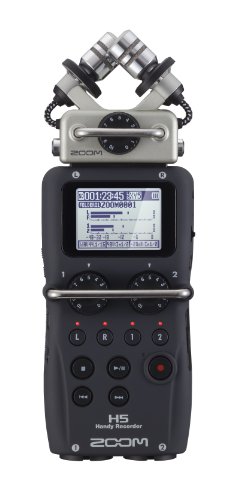
- Detachable X/Y capsule with shock-mounted microphones
- Two XLR/TRS inputs with phantom power and pad
- Four-track recording and USB audio interface
Best For: Flexible stereo field recording and interviews
Best Compact Pick

- Lightweight 92 g stereo recorder
- 32-bit float, clip-free recording
- USB-C microphone mode
Best For: Mobile interviews, ambience, and solo podcasting
Best Multitrack Option

- Four-track recording and bouncing
- Two XLR/TS combo inputs
- USB interface with battery power
Best For: Layered music, instruments, and mobile production
Best Expandable Recorder

- Stereo mics plus two XLR/TRS inputs
- Four-track, 32-bit float recording
- USB-C and SD card recording
Best For: Interviews, filmmaking, and external-mic setups
Flagship Field Audio

- 32-bit float recording for clip-free audio
- Large stereo mics and dedicated gain controls
- Up to four tracks with two XLR/TRS inputs
Best For: Advanced field recording and multi-track location work
Most Versatile Capture

- Three mics with nine recording patterns
- 32-bit float recording without constant gain adjustment
- USB microphone mode with simultaneous SD backup
Best For: Portable interviews, podcasts, and varied field soundscapes
Compact XLR Option

- Two locking XLR/TRS combo inputs
- 32-bit/96kHz WAV recording
- OLED waveform display and 3.5mm monitoring
Best For: Compact two-microphone podcast and interview setups
Best Multi-Person Podcast Pick – Zoom PodTrak P4
For podcast recorders for field recording that need to handle several speakers, the Zoom PodTrak P4 combines four XLR microphone inputs with four independently controlled headphone outputs. Its battery-powered design, remote-interview connectivity, and multitrack recording make it practical for mobile podcast setups.
Best For: On-location podcasts with up to four microphones and remote guests.
Pros:
- Four XLR inputs with phantom power support multiple microphones.
- Four headphone outputs include individual volume control.
- Automatic mix-minus supports phone and remote interviews.
- Records multitrack audio and includes programmable sound pads.
Cons:
- Battery life is listed at up to 3.5 hours on two AA batteries.
- It is more podcast-focused than a compact stereo field recorder.
The PodTrak P4 is a strong choice when a field setup must accommodate multiple participants, headphones, and call-in guests without adding a separate mixer.
Best Clip-Free Field Recording – Zoom F3
Among podcast recorders for field recording, the Zoom F3 is designed for unpredictable levels and demanding locations. Its 32-bit float recording, dual A/D converters, locking XLR/TRS inputs, and low-noise preamps help simplify capture for filmmakers, musicians, and mobile interview teams.
Best For: Run-and-gun dialogue, location interviews, and recordings where levels may change suddenly.
Pros:
- 32-bit float recording is designed to capture quiet audio and sudden peaks without constant level adjustment.
- Dual locking XLR/TRS inputs help secure connected microphones.
- Ultra-low-noise preamps support clean recordings in uncontrolled environments.
- Battery power and USB workflows provide flexible field operation.
Cons:
- It has two inputs, so it is less suited to larger multi-speaker podcasts.
- The recorder relies on external microphones rather than built-in recording microphones.
The F3 is the most specialized option here for protecting recordings from unpredictable volume changes, especially when a compact two-input setup is enough.
Best Mixer-Recorder for Groups – Zoom LiveTrak L-8
The Zoom LiveTrak L-8 suits podcast recorders for field recording when a larger group needs separate channels, headphone mixes, and hands-on control. It records 12 tracks simultaneously to an SD card at 24-bit/96kHz and can record to a computer at the same time.
Best For: Group podcasts, live performances, and mobile sessions requiring mixing and multiple monitor mixes.
Pros:
- Eight-channel mixer/recorder captures up to 12 tracks simultaneously.
- Four headphone outputs provide three independent monitor mixes.
- Six preamps offer up to +54dB of gain and a stated -121dBu noise floor.
- Records to SD card and computer simultaneously through USB.
Cons:
- At 1,500g, it is substantially less portable than handheld recorders.
- Its larger mixer layout may be more equipment than a simple interview requires.
- Battery-powered operation is convenient, but the supplied notes do not specify battery life.
The L-8 is a practical field production hub when several people need inputs, personalized headphone mixes, and a recorder that can also feed a computer.
Best Interchangeable-Mic Recorder – Zoom H5
The Zoom H5 is a flexible option among podcast recorders for field recording, combining a detachable stereo X/Y capsule with two XLR/TRS combo inputs. Its compact handheld design, four-track recording, battery operation, and USB interface make it useful for interviews, filmmaking, and music capture.
Best For: Portable stereo recording with the option to add two external microphones or line-level sources.
Pros:
- Interchangeable input capsules allow the microphone configuration to change with the assignment.
- Detachable shock-mounted X/Y microphones help reduce handling noise.
- Two XLR/TRS inputs include selectable phantom power and a -20dB pad.
- Supports four-track recording and multichannel or stereo USB audio.
Cons:
- Recording to SD/SDHC cards is listed up to 32GB.
- It provides two external combo inputs, fewer than dedicated multi-person podcast mixers.
- The supplied notes list about 10 hours of digital recording time.
The H5 is a well-rounded handheld choice for creators who want built-in stereo capture now and the flexibility to connect additional microphones later.
Best Compact Pick – Zoom H1 Essential
The Zoom H1 Essential is a straightforward choice for podcast recorders for field recording when portability and quick setup matter. Its X/Y stereo microphones capture interviews, ambience, nature, room tone, and everyday sound, while 32-bit float recording helps provide clip-free audio without constant gain adjustments.
Best For: Solo podcasters, interviewers, travelers, and creators who want a lightweight stereo recorder with USB microphone functionality.
Pros:
- Compact 92 g design with built-in X/Y stereo microphones.
- 32-bit float recording helps reduce clipping concerns.
- Works as a USB-C microphone for calls, streaming, and podcasting.
- Up to 10 hours of battery life from two AAA batteries.
Cons:
- Built-in stereo microphones are the primary recording option.
- Does not provide the two XLR/TRS inputs found on the larger H4 Essential.
The H1 Essential is best when you need an easy-to-carry recorder for voices and environmental sound rather than a multi-input production setup. Its simple controls and USB mode make it especially practical for mobile content workflows.
Best Multitrack Option – Zoom R4 Multi-Track Recorder
The Zoom R4 is a strong option among podcast recorders for field recording when you also want to layer music, instruments, or additional parts. It records up to four tracks, includes two XLR/TS combo inputs, and uses 32-bit float recording for a flexible setup that can run on batteries or USB-C power.
Best For: Musicians, traveling creators, and podcasters who want multitrack recording, external input support, and built-in rhythm patterns.
Pros:
- Records, layers, and bounces up to four tracks.
- Two XLR/TS combo inputs accommodate microphones and instruments.
- 32-bit float recording reduces the need for gain adjustments.
- Functions as a USB audio interface and runs on four AA batteries or USB-C.
Cons:
- Its multitrack features may be more than needed for simple interviews.
- The recorder requires four AA batteries, more than the H1 Essential or H4 Essential.
The R4 stands out for field sessions that involve more than a single stereo capture. Its track layering, effects, rhythm patterns, and external inputs make it a versatile portable workstation, though simple voice recording may not require all of those features.
Best Expandable Recorder – Zoom H4 Essential
The Zoom H4 Essential is designed for podcast recorders for field recording where built-in stereo capture and external connections are both important. It combines 32-bit float recording with stereo microphones, two XLR/TRS inputs, four-track recording, and USB-C connectivity for phones, tablets, and computers.
Best For: Filmmakers, interview teams, musicians, and podcasters who need external microphones, instruments, mixers, or soundboards in a portable recorder.
Pros:
- Built-in stereo microphones plus two XLR/TRS inputs.
- Four-track recording supports larger creative projects.
- 32-bit float capture helps handle quiet dialogue and loud performances.
- Can record or stream through USB-C while saving a backup to an SD card.
Cons:
- At 243 g, it is less lightweight than the H1 Essential.
- Its broader input and recording features may be unnecessary for basic stereo notes.
The H4 Essential is the most adaptable choice of the three for field work involving external gear. It offers a useful balance between handheld stereo recording and more advanced four-track production, with spoken menu guidance adding accessibility and ease of navigation.
Flagship Field Audio – Zoom H5 Studio
The Zoom H5 Studio is a strong choice among podcast recorders for field recording when you need detailed sound, flexible inputs, and hands-on control. Its large stereo microphones, 32-bit float recording, and portable battery operation suit demanding location work.
Best For: Filmmakers, musicians, and field podcasters who need multi-track recording and flexible microphone connectivity.
Pros:
- 32-bit float recording helps provide clip-free audio across changing volume levels.
- Large 19.4mm X/Y microphones capture detailed stereo sound with a wide dynamic range.
- Dedicated gain knobs and two XLR/TRS inputs support fast, hands-on setup.
- Records up to four tracks simultaneously at up to 192kHz in WAV format.
Cons:
- Its 14.4-ounce weight is higher than the compact H2 Essential and H1 XLR.
- It requires four AA batteries, compared with two for the other listed models.
Choose the H5 Studio when recording quality and input flexibility matter more than minimizing size and battery requirements. It is the most capable option here for larger field setups and multi-track work.
Most Versatile Capture – Zoom H2 Essential
The Zoom H2 Essential stands out among podcast recorders for field recording because its three built-in microphones offer nine selectable patterns. With 32-bit float recording, USB microphone mode, and a lightweight design, it can adapt to interviews, podcasts, and changing outdoor setups.
Best For: Journalists, podcasters, and field recordists who want flexible built-in microphone coverage in a compact recorder.
Pros:
- Three microphones and nine patterns support mono, stereo, and surround recording.
- 32-bit float recording reduces the need for manual gain adjustments.
- Can work as a USB microphone while recording a backup to an SD card.
- At 6.72 ounces, it is the lightest recorder in this comparison.
Cons:
- It has no listed XLR/TRS inputs for connecting external professional microphones.
- The 1.3-inch screen is smaller than the H5 Studio’s 2-inch display.
The H2 Essential is the easiest pick for grab-and-go recording when built-in microphone versatility is more important than external input expansion. Bluetooth timecode support also makes it useful for synchronized multi-recorder setups.
Compact XLR Option – Zoom H1 XLR
The Zoom H1 XLR is a practical option among podcast recorders for field recording when you need two external microphone or instrument connections in a small package. It combines 32-bit/96kHz recording with locking XLR/TRS inputs, a waveform display, and 3.5mm connectivity.
Best For: Podcasters, interviewers, and filmmakers who need a compact two-input recorder for external microphones.
Pros:
- Two locking XLR/TRS combo inputs accommodate microphones, instruments, and other sources.
- 32-bit/96kHz recording supports clear, detailed WAV audio.
- OLED waveform display provides a quick view of recording levels.
- Supports 3.5mm stereo input and headphone monitoring for added flexibility.
Cons:
- Its stated battery life is 10 hours, shorter than the H2 Essential’s 20 hours.
- The 0.96-inch screen is the smallest listed display.
- It does not list built-in microphones comparable to the H5 Studio or H2 Essential.
The H1 XLR is a focused choice for two-source recording rather than wide built-in stereo capture. Pick it when compact size, external XLR/TRS connectivity, and straightforward level monitoring are your priorities.
How We Picked the Best Podcast Recorders for Field Recording
We focused on portability, input flexibility, recording reliability, and practical podcast workflows. The selection includes simple handheld recorders for fast setup, models with XLR or combo inputs for external microphones, and larger systems suited to multiple guests or multitrack production.
We also considered features that matter outside a controlled studio, including battery operation, headphone monitoring, onboard microphones, USB connectivity, remote-interview support, and 32-bit float recording where available. The best choice depends on how many people you record and how much control you need during and after a session.
Quick Comparison
| Best For | Recommended Type | What to Prioritize |
|---|---|---|
| Solo field interviews | Compact handheld recorder | Simple controls, onboard microphones, low weight |
| Two-person podcasts | Two-input XLR recorder | Mic preamps, headphone monitoring, separate tracks |
| Multiple guests | Multichannel podcast recorder or mixer | Several mic inputs, headphone outputs, routing |
| Video production | Professional field recorder | Low-noise preamps, secure connections, reliable levels |
| Music and podcasting | Multitrack recorder | Overdubbing, effects, track control, storage |
Key Buying Factors for Podcast Recorders for Field Recording
Inputs and Microphone Compatibility
Check whether you need a built-in stereo microphone, 3.5mm input, XLR inputs, or combo XLR/TRS connections. XLR inputs are the better choice for professional dynamic or condenser microphones, while a built-in mic is faster for ambient sound and spontaneous interviews. Phantom power may be important if you use condenser microphones.
Recording Format and Headroom
Standard WAV recording is suitable for most podcast production. 32-bit float can provide extra protection against unexpectedly loud peaks, which is useful when recording unpredictable subjects outdoors. It does not replace good microphone placement or a quiet recording location.
Monitoring and Guest Support
For interviews, count both microphone inputs and headphone outputs. A recorder may support several microphones but offer limited independent monitoring. Mix-minus, phone connectivity, and USB audio features are especially useful for remote guests and live podcast workflows.
Power, Storage, and Handling
Field work benefits from replaceable batteries, dependable storage, and controls that are easy to operate without menu diving. A windscreen, shock protection, and a small case can make as much difference as the recorder itself when working outdoors.
Who Should Buy Which Podcast Recorders for Field Recording?
Choose a compact handheld model if you want the fastest setup for solo narration, quick interviews, or ambient sound. Pick a two-input XLR recorder if you regularly use external microphones and need separate voices for editing. For panel discussions, co-hosted shows, or live production, a podcast recorder or mixer with multiple XLR inputs and headphone outputs is the more practical investment.
Creators who record both podcasts and music should consider a multitrack model with overdubbing, effects, or track bouncing. Filmmakers should prioritize quiet preamps, reliable monitoring, and flexible placement over the largest feature list. Whichever model you choose, budget for quality microphones, wind protection, spare batteries, and enough memory for your longest planned sessions.