Choosing your first synthesizer can feel complicated, especially when the options range from pocket-sized instruments to full-featured MIDI controllers. The best starting point depends on whether you want built-in sounds, computer-based production, portability, or a simple way to explore synthesis.
We selected 10 approachable options for different budgets and learning styles, including compact keyboards, distinctive beginner instruments, and practical learning resources. Use the guide below to narrow the list by features, setup, and long-term usefulness.
Best 10 Synthesizers for Beginners Picks for 2026
Most Versatile

- Built-in speaker and 100+ internal sounds
- Eight pads, knobs, arpeggiator, and note repeat
- Includes production, learning, and sound software
Best For: Portable beat making and beginner-friendly standalone play
Best for Bowie Fans
Bowie Stylophone Limited Edition
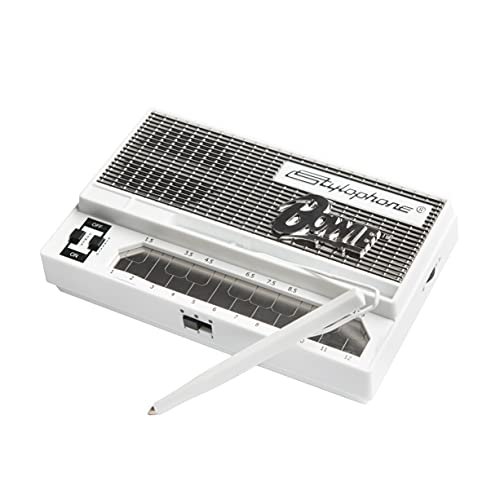
- Limited-edition Bowie design
- Stylus interface with three sound modes
- Compact and battery-powered
Best For: Collectors and beginners wanting simple electronic sound exploration
Best Software Bundle
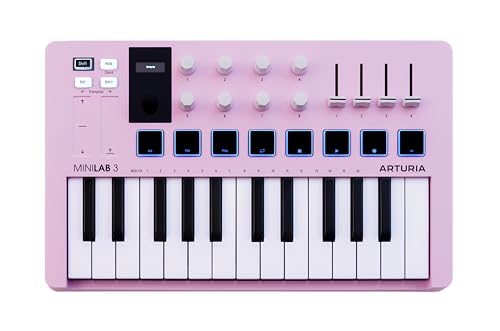
- 25 keys, eight RGB pads, encoders, and sliders
- Arpeggiator, Chord mode, and DAW integration
- Includes Analog Lab and Ableton Live Lite
Best For: Computer-based production and hands-on MIDI control
Best Pocket Pick

- Fully functional touch-stylus synthesizer
- Measures 75 × 45 × 18 mm and weighs 42 g
- AA batteries included
Best For: Portable experimentation, gifts, and simple melodies
Editing Essentials

- Focuses on preset and performance editing
- Includes musical examples and solos
- Compact 48-page guide
Best For: Beginners seeking a focused introduction to synth editing
Zero-to-Sound Guide
Synthesizer for Absolute Beginners

- Plain-English lessons for core synthesis concepts
- Recipes for pads, leads, basses, and layers
- Includes challenges, cheat sheets, and trackers
Best For: Total newcomers building sounds and recording skills
Hands-On Starter Controller
Akai MPK Mini Plus 37-Key Controller

- 37-key controller for melodic and harmonic playing
- CV/Gate, MIDI, USB, pads, knobs, and sequencer
- Includes MPC Beats and two months of Splice
Best For: Beginners controlling DAWs, software, or external synth gear
Best with Extra Features

- Stylus-controlled, touch-sensitive playing surface
- Three octaves with optional vibrato and retro analog-style sound
- Battery-powered with speaker, headphones, and computer connectivity
Best For: Beginners wanting a fun, highly portable first synth
Best DAW Starter
DaierTek 25-Key MIDI Controller

- 25 velocity-sensitive keys plus eight pads and eight knobs
- Smart chord, smart scale, and arpeggiator features for beginners
- Bluetooth and USB MIDI with up to 16 hours of battery operation
Best For: Beginners producing music with a computer, tablet, or phone
Best Standalone Features

- Six-operator FM engine with 32 algorithms and 128 presets
- Built-in arpeggiator, sequencer, effects, and color TFT display
- Portable, rechargeable, and equipped with USB-C and Bluetooth MIDI
Best For: Beginners who want a feature-rich synth to grow into
Most Versatile – Akai MPK Mini Play MK3
For beginners seeking synthesizers for beginners that can also support beat making, the Akai MPK Mini Play MK3 offers an unusually broad feature set. It combines a 25-key velocity-sensitive keyboard with built-in sounds, a speaker, drum pads, software, and USB MIDI connectivity.
Best For: Beginners who want a portable keyboard controller with standalone sounds and beat-making features.
Pros:
- Built-in speaker and more than 100 drum and instrument sounds allow standalone play.
- Includes eight velocity-sensitive MPC pads, eight knobs, an arpeggiator, and note repeat.
- Comes with MPC Beats, AIR Music Tech instruments, Melodics lessons, and a Splice trial.
- Can run on batteries or connect to a computer over USB.
Cons:
- Only 25 keys, so it offers less range than a full-size keyboard.
- Batteries are not included.
The MPK Mini Play MK3 is a strong all-rounder for new producers who want to learn, sketch ideas away from the computer, and expand into computer-based production later.
Best for Bowie Fans – Bowie Stylophone Limited Edition
The Bowie Stylophone is a compact, battery-powered choice for beginners exploring synthesizers for beginners without a traditional keyboard. Its stylus interface keeps the playing experience simple, while three modes provide classic analog synth and bass sounds.
Best For: David Bowie fans, collectors, and beginners who want an easy, distinctive pocket synth.
Pros:
- Limited-edition white design features an embossed Bowie logo.
- Stylus-controlled keyboard is simple and approachable.
- Three modes provide classic analog synth and bass sounds.
- Compact and battery-powered for portable use.
Cons:
- Its compact stylus layout is less conventional than a piano-style keyboard.
- It is focused on simple synth experimentation rather than broad controller functionality.
This is more of a characterful starter instrument and collectible than a complete production controller, but its straightforward design can make first experiments with electronic sounds inviting.
Best Software Bundle – Arturia MiniLab 3
For beginners comparing synthesizers for beginners with computer-based production in mind, the Arturia MiniLab 3 provides a hands-on 25-key controller and a useful software starting point. Its pads, encoders, sliders, display, and DAW integration are designed to make music creation more accessible.
Best For: New producers who want a compact MIDI controller with expressive controls and included music software.
Pros:
- Includes 25 velocity-sensitive keys, eight RGB pads, eight encoders, and four sliders.
- Built-in arpeggiator, Chord mode, transposition, and pitch/modulation touchstrips support creativity.
- Includes Arturia Analog Lab and Ableton Live Lite.
- USB-C, MIDI out, and compact construction suit bedroom or stage setups.
Cons:
- It requires a computer for its included software-based instruments.
- The 25-key layout provides limited playing range.
The MiniLab 3 is a practical entry point for learning MIDI and developing production habits, especially if you value direct control over software instruments more than standalone operation.
Best Pocket Pick – Stylophone Mini
The Stylophone Mini is an especially approachable option for beginners looking at synthesizers for beginners and wanting something genuinely portable. Its touch-stylus keyboard provides a working synth experience in a keychain-sized format, with AA batteries included for immediate play.
Best For: Beginners, gifts, and musicians who want an ultra-portable instrument for experimenting with melodies and synth sounds.
Pros:
- Fully functional synthesizer with a touch-stylus keyboard.
- Extremely compact at 75 × 45 × 18 mm and 42 g.
- AA batteries are included, so it is ready to play out of the box.
- Available in white, pink, and silver finishes and supplied in a branded tin and box.
Cons:
- Its pocket-sized design limits controls and playing space.
- It is better suited to experimentation and simple melodies than detailed production.
The Stylophone Mini is a fun, low-commitment way to explore electronic music. Choose it for portability and novelty rather than the broader control set of a MIDI keyboard.
Editing Essentials – Programming Synthesizers
Programming Synthesizers (The Keyboard magazine library for electronic musicians)
Check Price On AmazonProgramming Synthesizers is a compact option for musicians who want to move beyond factory sounds. Among books for synthesizers for beginners, it focuses specifically on editing presets and shaping sounds during performance, with musical examples and solos to connect technique to playing.
Best For: Beginners who already have access to a synthesizer and want a focused introduction to preset and performance editing.
Pros:
- Concentrates on editing presets and editing in performance.
- Includes musical examples and solos.
- Short, focused 48-page format.
Cons:
- Its narrow focus may not cover a complete first-synth journey.
- Published in 1988, so it may not address newer software or hardware workflows.
- Enhanced typesetting and page flip are not enabled in the listed edition.
This is best treated as a targeted editing guide rather than a comprehensive modern course. Choose it if preset programming and performance techniques are your immediate priorities.
Zero-to-Sound Guide – Synthesizer for Absolute Beginners
Synthesizer for Absolute Beginners is designed as a welcoming starting point for synthesizers for beginners. Its 10-minutes-a-day approach explains oscillators, filters, envelopes, and LFOs in plain English, then applies them to melodies, chords, patches, recording, and basic computer-based setups.
Best For: Total newcomers who want a structured, low-pressure path from choosing a first synth to making sounds and recording music.
Pros:
- Explains core synthesis concepts without requiring music reading.
- Includes step-by-step recipes for pads, leads, basses, and layered sounds.
- Provides a seven-day challenge, cheat sheets, patch sheets, and progress tools.
- Covers hardware, software, free VSTs, effects, and computer connections.
Cons:
- Its accessible, introductory approach may not satisfy advanced users.
- At 128 pages, it is more of a guided starting course than an exhaustive reference.
- The listed publication date is May 28, 2026.
With practical exercises and troubleshooting support, this is the most complete beginner-oriented choice in the group. It should appeal to learners who want both sound design fundamentals and an achievable practice routine.
Hands-On Starter Controller – Akai MPK Mini Plus 37-Key Controller
The Akai Professional MPK Mini Plus is a practical hardware choice for beginners exploring synthesizers for beginners through a computer or external gear. Its 37-key layout, USB connection, pads, knobs, chord and scale modes, and CV/Gate and MIDI I/O give new players several ways to perform and control sounds.
Best For: Beginners who need a compact controller for a DAW, software instruments, modular equipment, or external synthesizers.
Pros:
- Offers 37 keys across three octaves for melodic and harmonic playing.
- Includes CV/Gate and MIDI I/O for connecting external sound sources.
- Provides pads, assignable knobs, chord and scale modes, and a built-in sequencer.
- Includes MPC Beats and a two-month Splice Creator plan.
Cons:
- It is a MIDI keyboard controller, not a standalone synthesizer with its own sound engine.
- USB connectivity is centered on computer-based use, with compatibility listed for Mac and Windows.
- Its broad feature set may require setup and learning before a first-time user can use everything comfortably.
This is a flexible entry point for hands-on control rather than a self-contained instrument. It makes the most sense for beginners planning to use a DAW, software instruments, or compatible external synth gear.
Best with Extra Features – Stylophone Original
The Stylophone is a compact, approachable choice for anyone exploring synthesizers for beginners. Its touch-sensitive metal surface, stylus control, three-octave range, and built-in speaker make it easy to start playing without a traditional keyboard setup.
Best For: Beginners seeking a fun, portable introductory synth with a distinctive vintage sound.
Pros:
- Simple stylus-based interface is easy to learn.
- Compact, battery-powered design with built-in speaker and headphone socket.
- Offers three octaves, optional vibrato, and an iconic analog-style sound.
- Can connect to a computer or other gear through a 3.5mm stereo cable.
Cons:
- The small playing surface may feel limited for more advanced keyboard techniques.
- Requires three AA batteries.
Choose the Stylophone if portability and immediate playability matter more than extensive sound-shaping controls. It is a playful first step into synthesis and a distinctive instrument for casual experimentation.
Best DAW Starter – DaierTek 25-Key MIDI Controller
For beginners who want to make music on a computer or mobile device, this DaierTek controller provides a broader production setup than a standalone mini synth. It combines 25 velocity-sensitive keys with pads, knobs, touch controls, and beginner-friendly smart chord and scale functions.
Best For: New producers learning keyboard control and beat-making in a compatible DAW.
Pros:
- Includes 25 velocity-sensitive keys, eight backlit pads, eight assignable encoders, and pitch/modulation touch-strips.
- Smart chord, smart scale, and arpeggiator functions can help novices get started.
- Bluetooth and USB MIDI support works with Windows, Mac, Android, and iOS setups.
- Built-in 2,000 mAh battery offers about 16 hours of operation.
Cons:
- It produces no sound by itself and requires music software or a DAW.
- Bluetooth setup varies by platform, and Windows requires a MIDI driver.
This is a versatile entry point for computer-based music rather than a self-contained synthesizer. Its control layout gives beginners room to explore melodies, rhythms, and software instruments as their skills develop.
Best Standalone Features – M-VAVE FM-1
The M-VAVE FM-1 suits beginners who want a portable synthesizer with real onboard sound generation and room to grow. Its six-operator FM engine, 128 presets, color display, effects, arpeggiator, and sequencer offer more depth than a basic starter instrument.
Best For: Beginners interested in learning FM synthesis, sequencing, and portable sound design.
Pros:
- Six-operator FM synthesis includes 32 algorithms and 128 factory presets.
- Built-in arpeggiator, 16-step sequencer, and six effects support experimentation.
- Features USB-C, Bluetooth BLE MIDI, and 3.5mm MIDI connectivity.
- Rechargeable battery provides up to 12 hours of play, with a built-in speaker and headphone support.
Cons:
- The 27-key silicone keyboard may not suit players seeking a conventional keybed.
- Its deeper FM engine and production tools may take longer to learn than a simpler beginner instrument.
The FM-1 is a strong choice when a beginner wants an instrument that can remain useful beyond the first lessons. Presets make it approachable immediately, while the FM architecture, sequencing, and effects provide substantial room for exploration.
How We Picked These Synthesizers for Beginners
We focused on products that make experimentation accessible without requiring advanced keyboard technique or sound-design experience. The selection includes instruments with built-in speakers or sounds, MIDI controllers designed for software instruments, compact keyboards, and educational books that can support a first setup.
We also considered portability, control layout, connectivity, included software, playability, and how well each option fits a specific use case. A simple pocket synthesizer may be ideal for casual exploration, while a larger controller can be a better long-term choice for recording and production.
Quick Comparison
| Best For | Look For | Typical Choice |
|---|---|---|
| Casual experimentation | Built-in sounds and speaker | Stylophone models |
| Computer music production | USB MIDI, pads, knobs, and software | Arturia MiniLab 3 or Akai MPK Mini |
| More playing range | 37-key layout and expanded controls | Akai MPK Mini Plus |
| Learning synthesis | Clear explanations and guided exercises | Beginner books and programming guides |
| Portable practice | Compact design and battery-friendly operation | Pocket or mini-key instruments |
Key Buying Factors for Synthesizers for Beginners
Standalone or MIDI Controller?
A standalone synthesizer generates sound by itself, making it easier to start playing immediately. A MIDI controller usually does not create sound independently; it controls virtual instruments on a computer, tablet, or compatible device. Controllers often provide more production features, but they require additional software and setup.
Keyboard Size and Playability
Compact 25-key layouts save space and work well for melodies, bass lines, and basic chords. A 37-key controller offers more room for two-handed playing. Mini keys improve portability, while full-size keys generally feel more natural for players coming from a piano background.
Controls, Connectivity, and Software
Knobs, pads, pitch controls, and assignable buttons can make beat-making and parameter changes faster. Check whether the keyboard uses USB, Bluetooth, or traditional MIDI, and confirm that included software works with your computer or mobile device. Software bundles can add significant value when starting a production setup.
Learning Curve and Budget
Choose an instrument with enough controls to support growth but not so many that the interface becomes intimidating. If the goal is to learn synthesis rather than simply trigger software sounds, prioritize hands-on controls and a clear learning resource. Set aside part of the budget for headphones, a stand, or software if needed.
Who Should Buy Which Synthesizers for Beginners?
Choose a Stylophone or another pocket instrument if you want an inexpensive, tactile introduction to electronic sound, a travel-friendly instrument, or a fun creative gift. These are especially suitable for casual players who value immediacy over extensive keyboard range.
Choose the Arturia MiniLab 3, Akai MPK Mini Play MK3, or DaierTek controller if you plan to make music with a computer and want pads, knobs, and software integration. The Akai MPK Mini Plus is the stronger fit for users who want more keys and room to develop their playing.
Choose a standalone digital keyboard such as the M-VAVE FM-1 if built-in voices and independent operation matter most. Pair any hardware choice with a beginner-focused book or structured practice plan if you want to understand synthesis fundamentals rather than rely only on presets.