Finding the right synthesizer under $1,000 means balancing sound, workflow, keyboard feel, sequencing, and portability. This lineup covers compact analog instruments, flexible digital designs, hybrid keyboards, and performance-focused desktop options.
Whether you are building a first serious setup or adding a distinctive voice to an established rig, these synthesizers offer useful features without reaching premium-instrument prices.
Best 10 Synthesizers Under 1000 Picks for 2026
Warm Analog Polyphony

- Four-voice true analog synthesis
- 200 presets and extensive sound shaping
- 37 keys with step and motion sequencing
Best For: Hands-on analog sound design and compact performance setups
Deep Analog Control

- Six true analog voices
- Two oscillators and two LFOs per voice
- Four simultaneous effects with 30+ algorithms
Best For: Detailed analog programming and effect-rich polyphonic parts
Experimental Hybrid Design
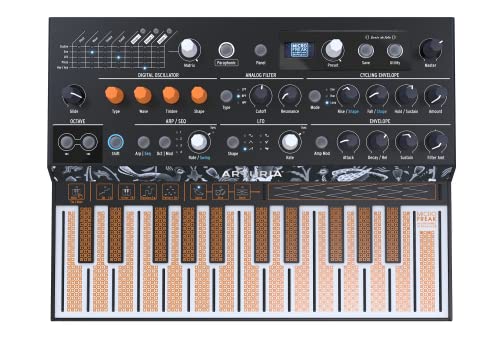
- Hybrid digital engines with an analog filter
- 25-key poly-aftertouch touch keyboard
- CV, USB, MIDI, and creative sequencing tools
Best For: Experimental sound design and compact hybrid setups
Full-Size Analog Power

- Four VCOs with warm, bass-heavy tones
- Four-voice polyphonic or paraphonic operation
- 37 full-size velocity-sensitive keys
Best For: Hands-on analog performance, bass, and lead parts
Portable FM Pick

- Four-operator FM engine for expressive sounds
- Phrase looper and 32 voice memories
- Battery-powered with built-in speakers
Best For: Mobile FM synthesis and quick musical sketches
Analog Sequencing Pick

- Monophonic analog synth with a biting filter
- 16-step sequencer with quick step edits
- Parameter locking for motion-based sequences
Best For: Hands-on basses, leads, and pattern sequencing
Vocal Performance Pick

- Up to 18-voice analog modeling polyphony
- Built-in vocoder, VocalTune, and microphone
- 256 presets plus Animate performance buttons
Best For: Compact vocal processing and versatile live sounds
Versatile Workstation

- 11 oscillator models for varied sound design
- Four synth parts plus rhythm section
- 128-pattern sequencer and USB-C audio/MIDI
Best For: Hands-on desktop production and live electronic performance
Analog Performance Pick

- Two wavefolding VCOs plus sub-oscillator
- Full-size 32-key velocity and aftertouch keyboard
- 64-step sequencer and flexible ladder filter
Best For: Expressive analog bass, lead, and sequence parts
Hybrid Keyboard Choice
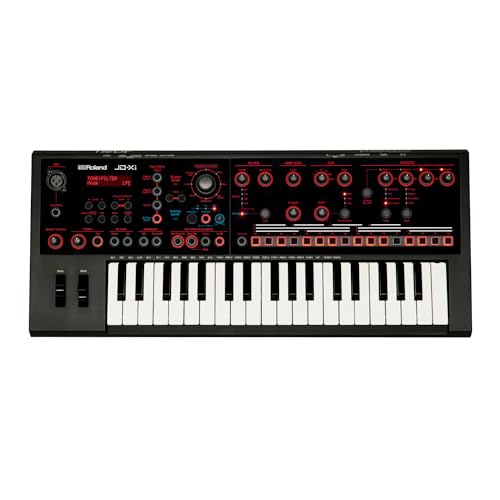
- Analog and dual digital synth engines
- Four-track sequencer with rhythm sounds
- Built-in vocoder microphone and effects
Best For: Compact keyboard-based live performance and songwriting
Warm Analog Polyphony – Korg Minilogue
If you want synthesizers under 1000 with an unmistakably analog character, the Korg Minilogue is a practical, compact choice. Its four-voice polyphony, 37 slim keys, onboard effects, and built-in sequencing make it suitable for both hands-on sound design and performance.
Best For: Beginners and experienced musicians seeking warm analog tones, polyphonic patches, and an integrated sequencer.
Pros:
- Four-voice analog polyphony delivers warm, punchy sound.
- Includes 200 presets plus extensive editing and sound-shaping controls.
- Polyphonic step and motion sequencer supports recording, saving, and recall.
- Compact 37-key design includes a tape-style delay and real-time oscilloscope.
Cons:
- Four voices may be limiting for very dense arrangements.
- Slim keys may not suit players who prefer full-size keys.
- Its 5-pound weight and compact format may feel less substantial than larger keyboards.
The Minilogue balances approachable controls with genuine analog synthesis. It is especially compelling if you want a complete instrument for creating, sequencing, and shaping sounds without moving into a larger studio setup.
Deep Analog Control – Behringer DeepMind 6
Among synthesizers under 1000, the Behringer DeepMind 6 stands out for its six true analog voices and extensive modulation options. It is designed for players who want substantial polyphonic sound, multiple oscillators, and studio-friendly effects in one keyboard.
Best For: Synth players who prioritize six-voice analog polyphony, deep modulation, and built-in effects.
Pros:
- Six true analog voices provide full, authentic polyphonic sounds.
- Each voice has two oscillators, two LFOs, and three ADSR generators.
- Four simultaneous effects offer more than 30 algorithms, including reverb, chorus, delay, and distortion.
- Oscillator sync mode expands sound-design possibilities.
Cons:
- Its 15.2-pound weight makes it less convenient to transport.
- The extensive modulation and effects architecture may take time to master.
- The supplied details identify a USB Type-B connector but do not list additional connectivity.
The DeepMind 6 favors depth over simplicity. Its six voices and per-voice modulation structure make it a strong option for players ready to explore detailed analog programming and layered effects.
Experimental Hybrid Design – Arturia MicroFreak
The Arturia MicroFreak is one of the most unconventional synthesizers under 1000, combining digital oscillator engines with a resonant analog filter. Its touch-plate keyboard, modulation matrix, sequencing tools, and CV connectivity make it a flexible choice for exploratory sound design.
Best For: Advanced users who want experimental timbres, expressive touch control, and connections to MIDI, USB, or modular gear.
Pros:
- Offers 17 listed oscillator modes spanning physical modeling, wavetable, vocoder, and more.
- 25-key PCB keyboard provides poly-aftertouch and pressure sensitivity.
- Five-by-seven modulation matrix and Spice and Dice functions encourage evolving patterns.
- Supports CV pitch, gate, and pressure signals alongside USB and MIDI.
Cons:
- The touch-plate keyboard has no moving keys, which may not suit traditional keyboard players.
- Its advanced feature set is better suited to experienced users than beginners.
- It has only 25 keys, limiting the playing range compared with larger instruments.
MicroFreak is a strong fit when originality and experimentation matter more than conventional keyboard feel. Its compact body and broad connectivity also make it useful in hybrid computer-and-hardware setups.
Full-Size Analog Power – Behringer Poly D
The Behringer Poly D brings a larger, performance-oriented format to synthesizers under 1000. Its four VCOs, four-voice polyphonic or paraphonic operation, 37 full-size semi-weighted keys, and classic ladder filter are aimed at players who want thick, bass-forward analog tones.
Best For: Keyboardists seeking full-size keys, powerful analog bass, and flexible mono, unison, paraphonic, or polyphonic modes.
Pros:
- Four VCOs create fat, warm, rich tones with clear definition.
- Supports mono, unison, polyphonic, and paraphonic operation.
- 37 velocity-sensitive semi-weighted full-size keys offer a more familiar playing experience.
- Includes a classic ladder filter, 32-step sequencer, arpeggiator, stereo chorus, and distortion.
Cons:
- At 26.1 pounds, it is considerably less portable than compact synthesizers.
- The 31.4-inch-wide chassis requires more desk or stand space.
- Its feature-rich analog layout may be more than casual users need.
Poly D is the choice for players who value physical scale and substantial analog presence. It combines a broad keyboard with flexible voice modes and performance features, making it well suited to bass lines, leads, and hands-on playing.
Portable FM Pick – Yamaha REFACE DX
The Yamaha REFACE DX is a strong choice for anyone shopping for synthesizers under 1000 who wants expressive FM sounds in a portable format. Its 37-key mini keyboard, built-in speakers, phrase looper, and battery-powered design make it practical for practice, travel, and quick idea capture.
Best For: Portable performance, FM synthesis, and sketching song ideas anywhere.
Pros:
- Four-operator FM sound engine supports dynamic, expressive tones.
- Integrated phrase looper helps capture ideas and jam.
- Built-in speakers and battery power support mobile use.
- 32 voice memory locations store favorite sounds.
Cons:
- Mini keys may not suit players who prefer a full-size keyboard.
- Its FM-focused engine may require more sound-design familiarity than simpler synths.
The REFACE DX balances portability with substantial FM sound shaping. Choose it if built-in speakers, battery operation, and a premium-feeling mini keyboard matter more than having a larger keybed.
Analog Sequencing Pick – Korg monologue
The Korg monologue is a focused option among synthesizers under 1000 for players who want a monophonic analog instrument with hands-on sequencing. Its 16-step sequencer, real-time step editing, parameter locking, and redesigned modulation features are suited to basses, leads, and evolving patterns.
Best For: Monophonic bass lines, cutting leads, and hands-on sequence programming.
Pros:
- Analog design includes a filter with more bite and a DRIVE control.
- 16-step buttons support fast real-time step edits.
- Parameter-lock-style sequencing enables moving, evolving patterns.
- Expanded LFO rates and modulation add sound-shaping flexibility.
Cons:
- Monophonic architecture limits simultaneous-note playing.
- The compact 16-step sequencer may feel restrictive for longer arrangements.
The monologue is built around immediacy rather than broad polyphonic coverage. It makes the most sense for producers who value tactile analog controls, aggressive tones, and sequence-based performance.
Vocal Performance Pick – Novation MiniNova
The Novation MiniNova is a versatile entry in synthesizers under 1000, combining analog modeling, up to 18-voice polyphony, onboard effects, and performance controls. It is especially useful for players who want ready-made sounds, vocal processing, and expressive live manipulation from a compact 37-key instrument.
Best For: Versatile preset-based playing, vocal effects, and compact live performance.
Pros:
- Offers up to 18 voices, five effects per voice, and 256 presets.
- Built-in vocoder and VocalTune support voice-based sound creation.
- Eight Animate buttons provide immediate performance control.
- Includes a gooseneck microphone, USB cable, and 12V power supply.
Cons:
- Its 37 keys are mini keys rather than full-size keys.
- Plastic construction may feel less substantial than heavier instruments.
The MiniNova stands out for breadth: it covers basses, leads, pads, effects, and vocal processing while making sounds easy to find and customize. It is a practical pick when variety and performance features are priorities.
Versatile Workstation – Roland SH-4d
For shoppers comparing synthesizers under 1000, the Roland SH-4d stands out as a compact desktop instrument built for hands-on sound design. It combines 11 oscillator models, four synth parts, a rhythm part, sequencing, and extensive effects in a flexible studio- or stage-ready format.
Best For: Producers and performers who want multitimbral sequencing, direct-access controls, and broad sound-design options without a full-size keyboard.
Pros:
- 11 oscillator models support a wide range of synthesis approaches.
- Four independent synth parts and a dedicated rhythm part offer up to 60 voices of polyphony.
- Includes a 128-pattern sequencer with real-time, step-entry, and motion recording.
- USB-C audio/MIDI connectivity can send 12 discrete audio channels to a DAW.
Cons:
- It is a desktop module, so a separate keyboard may be needed for traditional key-based playing.
- The many controls and synthesis options may take time to learn.
The SH-4d is a strong choice when flexibility and immediate control matter more than a conventional keyboard layout. Its multitimbral design and integrated audio interface make it especially practical for compact production setups.
Analog Performance Pick – Moog Messenger
Among synthesizers under 1000, the Moog Messenger is aimed at players who prioritize classic monophonic analog character and tactile control. Its two wavefolding VCOs, sub-oscillator, flexible filter, full-size keys, and performance-focused modulation tools create a focused instrument for basses, leads, and expressive sequences.
Best For: Keyboardists, producers, and performers seeking a portable Moog monosynth with full-size velocity- and aftertouch-sensitive keys.
Pros:
- Two continuously variable-shape VCOs include sync, frequency modulation, and wavefolding.
- The ladder filter offers low-pass, band-pass, and high-pass responses with 2- or 4-pole operation.
- Full-size 32-key action includes velocity and aftertouch for expressive playing.
- Features a 64-step sequencer, arpeggiator, 256 presets, and CV connectivity.
Cons:
- As a monophonic synthesizer, it is designed for one note at a time rather than chords.
- Its full-size format is less compact than a desktop module.
The Messenger is best suited to musicians who want an immediately playable analog monosynth with modern sequencing and connectivity. Its expressive keyboard and bass-focused filter design make it particularly compelling for lead and low-end parts.
Hybrid Keyboard Choice – Roland JD-Xi
The Roland JD-Xi offers a practical hybrid approach for shoppers comparing synthesizers under 1000. It pairs an analog engine for lead and bass sounds with two digital synth sections, a four-track pattern sequencer, rhythm sounds, and a built-in vocoder microphone.
Best For: Players who want a compact keyboard synthesizer that covers analog-style bass and leads, digital sounds, rhythm parts, and vocal processing.
Pros:
- Combines an analog synth section with two digital SuperNATURAL synth sections.
- Four-track pattern sequencing supports integrated musical sketches.
- Includes rhythm sounds and a gooseneck microphone for vocoder and AutoPitch use.
- Four simultaneous effects include two effect sections, delay, and reverb.
Cons:
- The 37-key layout is more limited than a larger keyboard for two-handed parts.
- Its broad feature set may feel less specialized than a dedicated analog or desktop synth.
The JD-Xi is a versatile all-in-one option for musicians who want keyboard access and multiple sound types in one instrument. Its combination of analog, digital, rhythm, sequencing, and vocal features makes it useful for compact live rigs and songwriting setups.
How We Picked the Best Synthesizers Under 1000
We focused on instruments that provide strong value for studio production, live performance, sound design, or learning synthesis. The selection considers synthesis architecture, hands-on controls, keyboard and sequencer features, connectivity, portability, and the range of sounds each model can create.
Because “best” depends on workflow, this list includes monophonic and polyphonic analog synthesizers, FM and modeled instruments, hybrid analog/digital keyboards, and compact desktop designs. We also favored products with a clear identity rather than models that simply duplicate the same feature set.
Quick Comparison
| Best For | Look For |
|---|---|
| Analog chords and sequences | Polyphony, stable tuning, built-in sequencing |
| Bass and lead sounds | Monophonic architecture, filter control, expressive modulation |
| Experimental sound design | Multiple synthesis engines, digital modulation, flexible routing |
| Portable production | Compact construction, versatile connectivity, battery or mobile-friendly operation |
| Live performance | Fast-access controls, dependable presets, full-size keys or performance pads |
Key Buying Factors for Synthesizers Under 1000
Synthesis Type and Polyphony
Analog synths are often valued for immediate, physical control and full low-end character. Digital, FM, and modeling instruments can provide sharper textures, complex modulation, and a broader variety of sounds. Polyphony matters if you plan to play chords, pads, or layered parts; monophonic models are often more focused for basses and leads.
Controls and Workflow
Prioritize the controls you will actually use. Dedicated knobs make subtractive synthesis easier to learn and faster to perform, while menu-based systems may offer deeper programming in a smaller enclosure. Sequencers, arpeggiators, motion recording, and onboard effects can reduce the need for additional hardware.
Keys, Size, and Connectivity
Check the keyboard dimensions and playing response before buying. Mini keys save space, while full-size keys are generally better for traditional performance. MIDI, USB, CV or gate connections, and audio outputs determine how easily the synthesizer fits into your existing setup.
Sound Library and Expansion
Preset quantity is less important than sound quality and usefulness. Look for a model with the tone range you need, plus patch storage, editor support, or expansion options if you expect your sound-design needs to grow.
Who Should Buy Which Synthesizers Under 1000?
Choose a polyphonic analog model if you want classic chords, pads, and sequenced patterns from a hands-on instrument. A monophonic analog synthesizer is a better fit for focused bass, lead, and solo lines. FM and modeling keyboards suit producers who need bright digital tones, metallic textures, and broad timbral variety.
Hybrid analog/digital instruments are especially useful for musicians who want contrasting sound engines in one keyboard, while compact desktop synthesizers make sense for small studios, modular setups, or performers who already own a separate controller. Before purchasing, match the instrument’s control layout and connectivity to your actual workflow—not just its specifications.