The best voice recorders for musicians make it easier to capture rehearsals, songwriting ideas, live performances, interviews, and quick production notes before inspiration disappears.
This roundup compares 10 portable options, from feature-rich Zoom handheld recorders with stereo microphones to compact digital dictaphones built for simple voice capture and playback.
Best 10 Voice Recorders for Musicians Picks for 2026
Versatile Track Builder

- 32-bit float, four-track recording
- Two XLR/TRS inputs plus stereo mics
- USB-C connectivity with SD backup
Best For: Rehearsals, performances, and compact multitrack recording
Compact Note Taker

- WAV and MP3 recording options
- 64GB storage with rechargeable battery
- Voice activation and USB-C file transfer
Best For: Song ideas, practice notes, and spoken recordings
Multichannel Performance Tool

- Six-track 32-bit float recording
- Four XLR/TRS inputs and built-in X/Y mics
- Interchangeable capsule system
Best For: Bands, ensembles, and multichannel live recording
High-Capacity Idea Keeper
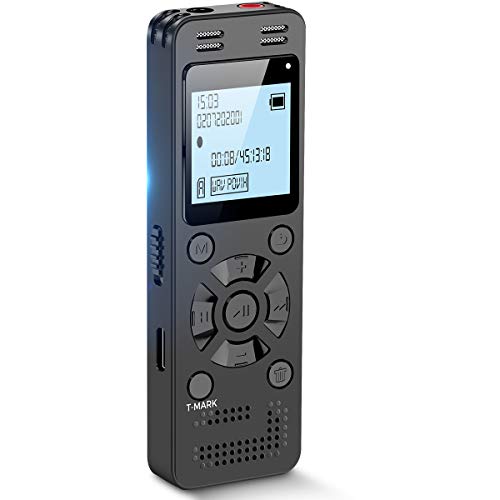
- 128GB storage for extensive recordings
- MP3 and 1536Kbps WAV options
- Voice activation and organized file folders
Best For: Song ideas, rehearsal notes, and long-term voice storage
Best All-Around Pick

- 32-bit float recording helps reduce clipping concerns
- X/Y stereo microphones for music and voice
- USB-C microphone mode plus up to 10-hour battery life
Best For: Musicians who also create content, podcasts, or livestreams
Best for Long Recording Sessions

- Up to 100 hours of continuous recording
- One-touch recording with automatic timestamps
- Voice activation, playback tools, and password protection
Best For: Musicians needing portable recording and extended battery life
Best Compact 32-Bit Float Option
Zoom H1essential Stereo Recorder
- 32-bit float stereo recording without manual gain setting
- X/Y mics handle sound up to 120dB SPL
- USB microphone mode supports computers and mobile devices
Best For: Musicians wanting compact stereo recording and flexible USB use
Best High-Capacity Pick
Tonfarb 136GB Digital Voice Recorder

- 136GB total storage
- 1536 kbps PCM recording
- Up to 68 hours of battery life
Best For: Musicians needing extended recording time and ample storage
Best Pro-Style Bundle
Zoom H1essential Handy Recorder Bundle

- 32-bit float recording
- Onboard X/Y microphones
- Includes lav mic and windscreen
Best For: Musicians wanting flexible capture and bundled accessories
Best Simple Budget Option
Sunlan 16GB Digital Voice Recorder
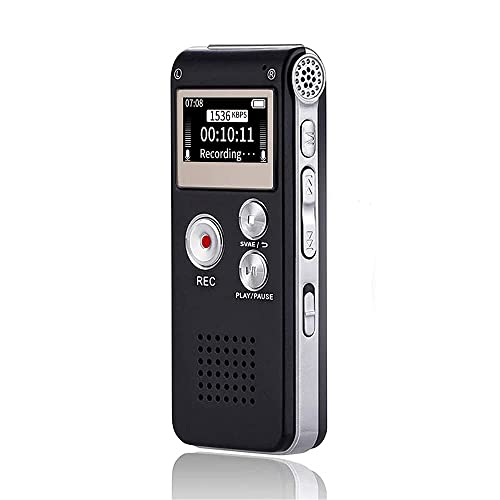
- Easy one-button recording
- 1536 kbps recording with noise reduction
- 30 hours of continuous recording
Best For: Beginners capturing practice notes and musical ideas
Versatile Track Builder – Zoom H4 Essential
For musicians seeking voice recorders for musicians that can handle rehearsals, live performances, and connected gear, the Zoom H4 Essential combines built-in stereo microphones with two XLR/TRS inputs. Its 32-bit float recording and four-track capability provide a flexible setup for capturing creative work.
Best For: Musicians who need a portable recorder for performances, instruments, interviews, and basic multitrack projects.
Pros:
- 32-bit float recording helps capture clip-free audio.
- Built-in stereo microphones and two XLR/TRS inputs support varied setups.
- Can function as a USB-C audio device while saving a backup to SD card.
- Spoken menu guidance can make operation more accessible.
Cons:
- Requires two AA batteries.
- Four-track capacity may be limiting for larger ensembles.
The H4 Essential is a practical middle ground for musicians who want more than a simple dictation recorder without stepping up to a larger multichannel system.
Compact Note Taker – EVISTR L357 Digital Recorder
The EVISTR L357 is a compact option among voice recorders for musicians who primarily need to capture song ideas, lessons, rehearsals, or spoken notes. It offers WAV and MP3 recording, voice activation, playback controls, and 64GB of storage in a small metal-bodied design.
Best For: Musicians who want an uncomplicated recorder for demos, practice notes, lectures, and voice memos.
Pros:
- Supports WAV and MP3 recording with adjustable gain.
- Voice activation can reduce silent sections in spoken recordings.
- 64GB storage and a rechargeable battery support extended use.
- USB-C transfer works with Windows and Mac computers.
Cons:
- Built-in microphone design offers less connection flexibility than a recorder with XLR inputs.
- Voice activation is better suited to speech than continuously changing music.
The L357 makes sense for musicians prioritizing portability, simple controls, and generous storage over multitrack recording or external microphone expansion.
Multichannel Performance Tool – Zoom H6 Essential
The Zoom H6 Essential is built for musicians who need voice recorders for musicians with room for multiple microphones or instruments. It combines six-track 32-bit float recording, built-in X/Y microphones, four XLR/TRS combo inputs, and interchangeable capsule support for adaptable recording setups.
Best For: Bands, ensembles, live-event recording, and creators who need several simultaneous inputs.
Pros:
- Six-track 32-bit float recording helps protect against distorted takes.
- Four XLR/TRS inputs accommodate multiple microphones and instruments.
- Built-in X/Y microphones can capture loud sources up to 135 dB SPL.
- Works as a USB audio interface while recording to an SD card.
Cons:
- At 450 g, it is heavier than the H4 Essential.
- Requires four AAA batteries.
- Optional interchangeable capsules may add to the overall setup cost.
For musicians recording full groups or complex live sources, the H6 Essential offers substantially more input capacity and expansion potential than simpler handheld recorders.
High-Capacity Idea Keeper – EVIDA V618 Digital Recorder
The EVIDA V618 suits musicians who want voice recorders for musicians focused on storing song ideas, spoken arrangements, and rehearsal reminders. Its built-in noise-cancelling microphone records in MP3 or WAV, while voice activation, bookmarks, and folder organization help manage longer collections of files.
Best For: Musicians who prioritize long recording storage, simple playback, and organized voice-note management.
Pros:
- 128GB capacity provides substantial room for recordings and other files.
- Supports MP3 settings and high-quality 1536Kbps WAV recording.
- Voice activation can reduce blank sections in spoken recordings.
- Includes folders, bookmarks, password protection, and USB file transfer.
Cons:
- Mono recording is less suitable for capturing a wide stereo music performance.
- No headphone jack is listed in the supplied specifications.
- Built-in microphone design does not provide external mic inputs.
The V618 is primarily a storage-rich voice recorder rather than a multitrack music-production tool, making it most useful for ideas and spoken material.
Best All-Around Pick – Zoom H1 Essential
For musicians comparing voice recorders for musicians, the Zoom H1 Essential is a versatile choice for songwriting sessions, rehearsals, acoustic performances, lessons, and live music. Its X/Y stereo microphones and 32-bit float recording are designed to capture detailed audio while reducing concern about clipping.
Best For: Musicians who also record content, podcasts, interviews, or livestreams.
Pros:
- 32-bit float recording helps provide clip-free audio without manually setting gain.
- X/Y stereo microphones capture music, voices, ambience, and room sound.
- USB-C microphone mode works for streaming, calls, voiceovers, and computer or mobile recording.
- Offers up to 10 hours of battery life and includes a 3.5mm headphone jack.
Cons:
- Requires two AAA batteries.
- Its compact design may offer fewer dedicated controls than a larger recorder.
The H1 Essential stands out as the most adaptable option here: it is purpose-built for music but also handles content creation and USB recording. Choose it when flexible use matters more than marathon battery life or advanced multitrack features.
Best for Long Recording Sessions – Vandlion HD Clear Recorder
If long battery life and simple operation are priorities when choosing voice recorders for musicians, this Vandlion model is worth considering. It combines one-touch recording with a compact zinc-alloy body, making it practical for rehearsals, lessons, songwriting notes, and extended interview or meeting recordings.
Best For: Musicians who need portable recording with exceptionally long battery life and built-in playback features.
Pros:
- One-touch slide recording starts quickly and timestamps files automatically.
- Up to 100 hours of battery life and 16GB of built-in storage.
- Voice activation can skip silent sections and conserve storage.
- Includes A-B repeat, scheduled recording, split recording, and password protection.
Cons:
- Built-in microphones and listed features are geared more toward general voice recording than dedicated stereo music capture.
- Voice activation is off by default and must be enabled through the manual.
- Its maximum expandable storage is listed as up to 256GB, but the supplied details do not specify the included card.
The Vandlion is the practical endurance pick. Its 100-hour battery and instant controls are useful for musicians who record frequently and want playback and file-management tools, though the Zoom models are more explicitly focused on stereo music recording.
Best Compact 32-Bit Float Option – Zoom H1essential Stereo Recorder
This Zoom H1essential is a compact option for musicians seeking voice recorders for musicians with 32-bit float capture and a USB-C connection. Its X/Y microphones record up to 96kHz and support audio capture for rehearsals, performances, practice sessions, and mobile production.
Best For: Musicians who want straightforward stereo recording with 32-bit float audio and USB connectivity.
Pros:
- Stereo 32-bit float recording avoids the need to set gain manually.
- X/Y microphones capture audio up to 120dB SPL.
- Records up to 96kHz to an SD card.
- Works as a USB microphone with PC, Mac, iOS, and Android devices.
Cons:
- The supplied details list no headphones jack.
- Listed digital recording time is 120 minutes.
- Includes a 90-day limited warranty, shorter than the one-year replacement warranty listed for the other Zoom H1 Essential.
This version is appealing when 32-bit float recording and broad USB compatibility are the main requirements. Check the included accessories and recording setup carefully, especially if headphone monitoring or longer standalone sessions is important to you.
Best High-Capacity Pick – Tonfarb 136GB Digital Voice Recorder
If you need voice recorders for musicians that can handle rehearsals, songwriting ideas, lessons, and long sessions, the Tonfarb offers generous storage and extended battery life. Its 1536 kbps PCM recording, dual noise-reduction microphones, and one-click recording make it practical for capturing ideas quickly.
Best For: Musicians who prioritize long recording time, high storage capacity, and simple portable operation.
Pros:
- Includes 136GB total storage and can hold up to 9,775 hours in MP3 format.
- Supports 1536 kbps PCM recording with automatic noise reduction.
- Up to 68 hours of continuous recording on one charge.
- One-click recording, USB-C transfers, A-B repeat, and password protection.
Cons:
- Uses built-in microphones rather than dedicated instrument inputs.
- The compact 1.44-inch screen may feel small for browsing many recordings.
The Tonfarb is a strong choice when storage and endurance matter most. It is especially convenient for musicians who want a pocket-sized recorder for repeated practice sessions, though more advanced recording setups may require a recorder with purpose-built audio inputs.
Best Pro-Style Bundle – Zoom H1essential Handy Recorder Bundle
For musicians seeking voice recorders for musicians with more advanced capture features, the Zoom H1essential bundle is the most specialized option here. It combines the H1essential recorder with 32-bit float recording, onboard X/Y microphones, a lavalier microphone, windscreen, memory card, and batteries.
Best For: Musicians who want flexible recording accessories and 32-bit float capture for rehearsals, performances, interviews, or field recording.
Pros:
- 32-bit float recording reduces the need to adjust recording levels.
- Onboard X/Y microphones capture audio up to 120 dB SPL.
- Bundle includes a lavalier microphone, furry windscreen, 32GB microSDHC card, batteries, and cloth.
- Offers overdubbing, pre-record, auto record, and playback-speed adjustment.
Cons:
- The supplied notes do not specify a built-in rechargeable battery.
- Its feature set may be more than needed for basic voice memos.
The H1essential bundle stands out for musicians who want a more capable recorder and useful accessories in one package. Its 32-bit float workflow and X/Y microphones make it better suited to varied recording situations than a basic dictaphone-style device.
Best Simple Budget Option – Sunlan 16GB Digital Voice Recorder
The Sunlan is a straightforward choice among voice recorders for musicians who want to capture practice notes, lyric ideas, lessons, and voice demos without a complicated setup. A dedicated REC button, playback controls, noise reduction, and voice activation keep the operation simple.
Best For: Beginners and musicians who want a lightweight recorder for basic voice and idea capture.
Pros:
- Simple REC, STOP, and PLAY controls are easy to learn.
- 1536 kbps recording with DSP noise reduction helps produce clearer voice recordings.
- Voice activation can conserve storage and power when no sound is detected.
- Weighs just 35 grams and offers up to 30 hours of continuous recording.
Cons:
- 16GB storage is considerably less than the Tonfarb’s capacity.
- Built-in mono microphone is intended for basic capture rather than detailed stereo recording.
- Playback battery life is listed at about seven hours.
The Sunlan keeps the recording process accessible and portable. It is a practical entry-level pick for spoken ideas and simple musical notes, but musicians recording fuller performances may prefer a recorder with more advanced microphone options.
How We Picked These Voice Recorders for Musicians
We focused on the features that matter when recording music away from a studio: microphone quality, stereo imaging, portability, storage, file transfer, battery or USB charging, monitoring options, and ease of use. The selection includes dedicated handheld recorders for musicians as well as inexpensive voice recorders suited to songwriting notes, lessons, interviews, and spoken reminders.
We also considered recording flexibility. Models with external microphone support, headphone monitoring, higher-quality formats, or 32-bit float recording can better accommodate rehearsals and changing sound levels. Simpler dictaphones may be a better value when the main priority is clear speech and fast playback.
Quick Comparison
| Best For | Look For | Product Type |
|---|---|---|
| Songwriting ideas | Small size, quick start, reliable playback | Compact digital recorder |
| Rehearsals and demos | Stereo microphones, manual level control, headphone output | Handheld music recorder |
| Live performances | Wide level range, wind protection, dependable storage | Advanced field recorder |
| Interviews and lessons | Voice activation, large capacity, simple file management | Digital dictaphone |
| Computer recording | USB microphone mode and compatible file transfer | Hybrid recorder |
Key Buying Factors for Voice Recorders for Musicians
Microphones and Recording Quality
Stereo X/Y microphones are useful for capturing acoustic instruments, rehearsals, and room ambience with a natural left-right image. Built-in microphones are convenient, but external microphone inputs provide more control over placement and sound character.
Headroom and Level Control
Loud guitars, drums, and amplified performances can overload a recorder. Look for adjustable input levels, a suitable sensitivity range, and—when available—32-bit float recording, which can make unpredictable levels easier to manage during capture.
Storage, Battery Life, and File Transfer
Check whether the recorder uses internal memory, a microSD card, or both. High-capacity storage is helpful for long sessions, while USB connectivity simplifies transfers and may allow the recorder to function as a computer microphone. Consider rechargeable power, replaceable batteries, and charging convenience for rehearsals or travel.
Portability and Usability
A recorder is only useful if you will carry it. Physical buttons, a readable display, quick-start recording, a tripod mount, included wind protection, and a headphone jack can all make a noticeable difference in real-world use.
Who Should Buy Which Voice Recorders for Musicians?
Choose a Zoom H1 Essential or a similar compact stereo recorder for songwriting, acoustic practice, field recordings, and quick stereo demos. It is a strong fit when portability matters most.
Choose a Zoom H4 Essential or H6 Essential if you record rehearsals, ensembles, concerts, podcasts, or more involved productions. Their broader feature sets are better suited to musicians who need more input and monitoring flexibility.
Choose a bundle with a lavalier microphone and memory card if you want a ready-to-use setup for spoken introductions, instructional content, interviews, or mobile recording without buying accessories separately.
Choose an affordable high-capacity digital dictaphone for lessons, lyric ideas, meetings, lectures, and voice memos. These models prioritize convenience and storage rather than the detailed stereo sound expected from a dedicated music recorder.
Before buying, match the recorder to your loudest source and typical recording situation. For music, microphone quality and level handling should come first; for speech, battery life, storage, playback, and simple controls may offer greater value.