The best wireless microphone for event hosts keeps announcements clear while letting you move naturally around a venue. The right system can also simplify sound checks, support multiple presenters, and connect easily to common mixers, amplifiers, and powered speakers.
This roundup compares 10 options across dual-handheld, multi-microphone, lavalier, and headset configurations. Use the guide below to match microphone style, operating range, frequency flexibility, and event size to your hosting needs.
Best 10 Wireless Microphone for Event Hosts Picks for 2026
Best Plug-and-Play Pick
JBL Dual Wireless Microphone System
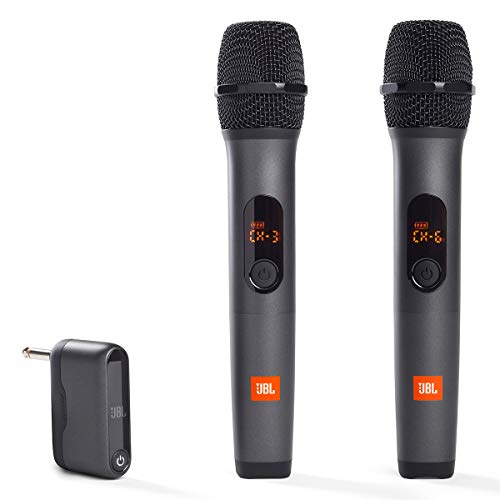
- Two microphones with a dual-channel receiver
- Plug-and-play setup for compatible JBL PARTYBOX speakers
- Clear vocal sound and up to 6 hours of playback
Best For: JBL PARTYBOX users hosting small events or dual-person performances
Best Durable Value
TONOR TW-820 Dual Wireless Microphones

- Two metal cardioid dynamic microphones
- 15 selectable frequencies per microphone
- Separate receiver volume controls and 60m open-space range
Best For: Weddings, meetings, parties, and karaoke setups with a PA or amplifier
Best Long-Range Choice
Phenyx Pro PTU-71-2H Dual UHF System

- Auto Scan helps reduce frequency interference
- Up to 328 feet of line-of-sight range
- Two channels with 100 selectable UHF frequencies each
Best For: Large venues, weddings, churches, DJ events, and public speaking
Best for Group Events
Aveek Four-Microphone Wireless System

- Four handheld microphones for group performances
- 262-foot range and up to 40-hour rechargeable battery life
- Standard 1/4-inch output for PA systems and powered speakers
Best For: Ceremonies, church services, bands, weddings, and large group events
Easy-Setup Pick
HUACAM Dual Handheld Microphones

- Two wireless handheld mics included
- Up to 200 feet line-of-sight range
- Supports 1/4-inch and 1/8-inch mic inputs
Best For: Weddings, church events, speeches, and karaoke
Pro-Control Pick
Phenyx Pro PTU-52-2H UHF System

- 30 tunable frequency groups
- Two XLR outputs plus mixed 1/4-inch output
- Up to 200 feet in open-space line of sight
Best For: Live events, DJs, churches, and mixer-based PA systems
Versatile Event Host Kit
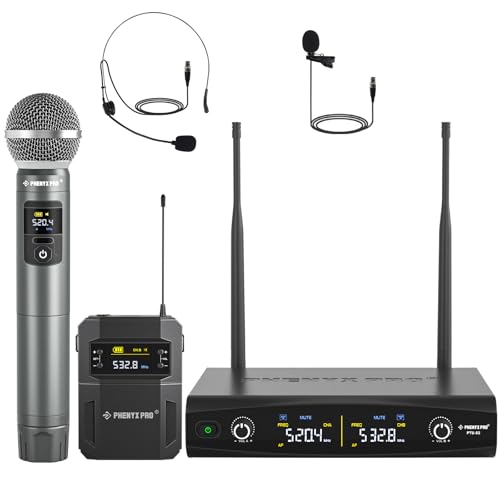
- Handheld, headset, and lapel options
- 30 tunable frequency groups
- Two XLR and mixed 1/4-inch outputs
Best For: Hosts needing flexible handheld and hands-free operation
Simple Hands-Free Pick

- Headset and lapel microphones included
- 200-foot range with 15 adjustable frequencies
- Rechargeable receiver with 6–8 hours of use
Best For: Presenters needing a simple hands-free system
Dual Presenter Solution
Phenyx Pro PTU-52-2B Dual Bodypack Set

- Two bodypacks with headset and lapel mics
- 30 tunable frequency groups per system
- 200-foot range with XLR and 1/4-inch outputs
Best For: Events with two simultaneous hands-free speakers
Best Plug-and-Play Pick – JBL Dual Wireless Microphone System
For event hosts who want a straightforward wireless microphone for event hosts setup, the JBL dual-microphone system combines simple operation with JBL Original Pro Sound. Turn on the receiver and microphones, then connect to a compatible JBL PARTYBOX speaker for a quick start.
Best For: Hosts using compatible JBL PARTYBOX speakers who need two microphones for announcements, duets, or small events.
Pros:
- Includes two wireless microphones and a dual-channel receiver.
- Designed for clear vocal sound with a unidirectional pickup pattern.
- Plug-and-play setup with up to 6 hours of playback through a compatible speaker.
- Microphones use replaceable AA batteries.
Cons:
- Compatibility is centered on listed JBL PARTYBOX models.
- The microphones do not provide their own built-in speaker.
This is a convenient choice when your event audio is already built around a compatible JBL PARTYBOX. Its two-mic design and simple setup are especially useful when multiple people need to speak or perform.
Best Durable Value – TONOR TW-820 Dual Wireless Microphones
The TONOR TW-820 is a practical wireless microphone for event hosts who need two handheld mics, separate volume controls, and flexible UHF operation. Its metal construction and included 6.35mm cable suit meetings, weddings, parties, karaoke, and other events using a PA or amplifier.
Best For: Event hosts with a PA system, mixer, amplifier, or compatible speaker that accepts a 6.35mm or XLR microphone connection.
Pros:
- Two cardioid dynamic microphones help reduce background noise and howling.
- Each microphone offers 15 adjustable UHF frequencies, with up to 60 meters of open-space range.
- All-metal microphones are designed for impact and corrosion resistance.
- Receiver provides separate volume control for each microphone.
Cons:
- Requires a separate speaker, mixer, or amplifier; it has no built-in speaker.
- Two AA batteries per microphone are required and are not included.
- It does not connect directly to a TV or AV receiver without a microphone input.
Choose the TONOR when physical durability and individual mic-level control matter more than rechargeable convenience. It is a capable event system, but you will need to confirm that your existing audio equipment has the right input.
Best Long-Range Choice – Phenyx Pro PTU-71-2H Dual UHF System
For larger venues, the Phenyx Pro PTU-71-2H stands out as a wireless microphone for event hosts who need extended range and frequency flexibility. Its auto-scan function finds a less-interfered frequency, while dual UHF channels and metal construction support demanding speaking and performance setups.
Best For: Weddings, churches, DJ events, public speaking, and other larger venues where reliable line-of-sight coverage is important.
Pros:
- Auto Scan helps identify a frequency with less interference.
- Offers up to 328 feet of line-of-sight operating range.
- Two channels provide 100 selectable UHF frequencies each.
- Includes metal microphones, mute functions, IR synchronization, and four AA batteries.
Cons:
- Requires a separate PA system, speaker, mixer, or other compatible audio equipment.
- Long-range performance is specified for line-of-sight conditions.
The PTU-71-2H is a strong fit when signal management and range are higher priorities than the simplest possible setup. Auto scanning and frequency selection give hosts more control in crowded wireless environments.
Best for Group Events – Aveek Four-Microphone Wireless System
The Aveek four-microphone system is designed for event hosts who need several speakers or performers onstage at once. With a claimed 262-foot range, built-in rechargeable batteries, and a standard 1/4-inch receiver output, it provides a flexible wireless microphone for event hosts setup for PA systems, mixers, powered speakers, weddings, and outdoor events.
Best For: Group performances, ceremonies, church services, bands, and larger events that need four handheld microphones.
Pros:
- Includes four cardioid dynamic microphones for group use.
- Offers up to 262 feet of wireless range.
- Built-in rechargeable batteries provide up to 40 hours of use and charge via Type-C.
- Includes a receiver, power adapter, 1/4-inch cable, charging cables, and non-slip rings.
Cons:
- Requires a PA system, mixer, amplifier, or powered speaker; it is not a standalone speaker.
- Not compatible with laptops, iPads, cellphones, or AV receivers.
- The receiver randomly assigns a channel when pairing.
If your event regularly needs more than two microphones, the Aveek offers useful capacity without requiring separate systems. Its rechargeable microphones can also reduce battery changes during long programs, provided your audio setup supports the receiver’s output.
Easy-Setup Pick – HUACAM Dual Handheld Microphones
For hosts seeking a practical wireless microphone for event hosts, this HUACAM dual-handheld set offers plug-and-play operation, a 200-foot line-of-sight range, and compatibility with common 1/4-inch and 1/8-inch microphone inputs. Its cardioid dynamic capsules are designed to provide clear voice pickup while reducing some background noise.
Best For: Weddings, church services, classroom activities, speeches, karaoke, and smaller indoor or outdoor events.
Pros:
- Includes two handheld microphones for hosts, presenters, or guest participation.
- Offers up to 200 feet of operating range in line-of-sight conditions.
- Automatically pairs with the receiver and supports 6.35mm and 3.5mm microphone inputs.
- Includes an adapter, microphone covers, and anti-slip rings.
Cons:
- Not compatible with mobile phones, computers, or tablets.
- Requires a microphone input; AUX or line inputs are not supported.
- Two versions of the receiver plug may be shipped at random.
This is a straightforward choice when you need two cordless microphones and broad range without a complicated setup. Confirm that your PA system or speaker has a supported microphone jack before ordering.
Pro-Control Pick – Phenyx Pro PTU-52-2H UHF System
For event hosts who need more frequency control, the Phenyx Pro PTU-52-2H is a wireless microphone for event hosts with 30 tunable frequency groups, automatic pairing, and a claimed 200-foot open-space range. Its receiver provides two XLR outputs and a mixed 1/4-inch output for flexible PA and mixer connections.
Best For: Live performances, weddings, church services, DJ use, public speaking, and event setups that benefit from adjustable frequencies.
Pros:
- Provides 30 tunable frequency groups in the 500MHz band.
- Supports up to three units operating together without interference, according to the supplied notes.
- Includes two microphones, two XLR outputs, and one mixed 1/4-inch output.
- Metal receiver and microphones are designed for heavy use, with AA batteries included.
Cons:
- Uses AA batteries rather than a rechargeable microphone-and-receiver system.
- The setup is heavier and more equipment-oriented than a basic plug-and-play kit.
- Its 200-foot operating distance is specified for open-space line-of-sight use.
The PTU-52-2H is the strongest fit here for hosts managing larger or more demanding audio setups. Its tunable frequencies and XLR connectivity add flexibility when working with mixers, amplifiers, or multiple wireless systems.
Rechargeable Choice – Talomen K60-2 Dual Wireless Mics
If you want a wireless microphone for event hosts that reduces battery replacement, the Talomen K60-2 combines two handheld microphones with a rechargeable receiver and USB-C charging. Its 2.4GHz connection reaches up to 160 feet, while DSP noise reduction and dynamic microphone cores are intended to deliver clear speech and vocals.
Best For: Wedding hosts, party presenters, karaoke users, speeches, church events, and mobile event setups with supported microphone inputs.
Pros:
- Includes three rechargeable 1200mAh lithium batteries and USB-C charging.
- Offers more than 10 hours of continuous use after a full charge, according to the supplied notes.
- Automatically matches the microphones and receiver without manual pairing.
- Works with 6.35mm and 3.5mm microphone inputs and includes an adapter.
Cons:
- Does not support AUX or line inputs.
- Not compatible with mobile phones, computers, or tablets.
- The stated 160-foot range is shorter than the 200-foot range of the other listed systems.
The K60-2 is a convenient option for hosts who prioritize rechargeable power and simple operation. It is especially appealing for recurring events, but you should verify that your speaker or PA system has a dedicated microphone input.
Versatile Event Host Kit – Phenyx Pro PTU-52-1H1B
For event hosts who need flexible hands-free or handheld operation, this wireless microphone for event hosts combines a handheld mic with a bodypack, headset, and lavalier options. Its 30 tunable frequency groups, 200-foot open-space range, and multiple audio outputs make it adaptable for presentations, ceremonies, and larger gatherings.
Best For: Event hosts who want one system for both handheld announcements and hands-free speaking.
Pros:
- Includes handheld, headset, and lapel microphone options.
- Offers 30 tunable frequency groups and up to 200 feet of line-of-sight range.
- Provides two XLR outputs and one mixed 1/4-inch output for PA equipment.
- Includes AA batteries and automatic pairing with frequency hopping.
Cons:
- Requires a compatible speaker, mixer, amplifier, or PA system.
- Its frequency range is specified for the 500MHz–590MHz band, so local compatibility should be checked.
The PTU-52-1H1B is a strong all-around choice when an event host may switch between handheld announcements and hands-free presentations. The included accessories and connection options also make it practical for varied event setups.
Simple Hands-Free Pick – TONOR TW621 Bodypack System
This TONOR system is a practical wireless microphone for event hosts who prefer a bodypack with either a headset or lapel mic. It provides a 200-foot line-of-sight range, 15 adjustable frequencies, automatic pairing, and a rechargeable receiver for speeches, conferences, weddings, and teaching events.
Best For: Hosts, presenters, and instructors who need a straightforward hands-free microphone setup.
Pros:
- Includes both headset and lapel microphones for hands-free use.
- Offers a 200-foot line-of-sight range and 15 adjustable frequencies.
- Rechargeable receiver provides approximately 6–8 hours of use after a 2–3 hour charge.
- Bodypack includes an LCD, volume controls, and ON/MUTE/OFF switching.
Cons:
- Bodypack requires two AA batteries, which are not included.
- Uses a 1/4-inch output and may require an adapter for incompatible equipment.
- It does not support Bluetooth or operate independently without a speaker, mixer, or amplifier.
The TW621 keeps the setup focused on hands-free speaking and offers useful controls for event work. Its rechargeable receiver is convenient, but buyers should confirm their sound system has a compatible 1/4-inch microphone input.
Dual Presenter Solution – Phenyx Pro PTU-52-2B Dual Bodypack Set
When two people need to speak at the same event, this wireless microphone for event hosts supplies two bodypack transmitters with headset and lavalier microphones. It adds 30 tunable frequency groups per system, automatic pairing, a 200-foot open-space range, and balanced mini-XLR bodypack connections for presentations and ceremonies.
Best For: Events with two presenters, speakers, instructors, or hosts using hands-free microphones.
Pros:
- Includes two bodypacks, two headsets, and two lapel microphones.
- Provides 30 tunable frequency groups and frequency hopping for flexible operation.
- Offers up to 200 feet of open-space range and quick automatic pairing.
- Includes two XLR outputs and a mixed 1/4-inch output for PA connections.
Cons:
- Designed for hands-free microphones rather than a handheld microphone.
- Requires compatible external audio equipment such as an amplifier or mixer.
- Its 1.93 kg weight may be more than a single-presenter setup needs.
The PTU-52-2B is the most suitable option here when an event regularly involves two hands-free speakers. Its dual bodypacks and broad frequency-selection features can simplify shared presentations, though a single host may not need the extra channel.
How We Picked the Best Wireless Microphone for Event Hosts
We focused on the features that matter during real events: microphone configuration, wireless range, frequency selection, receiver flexibility, portability, and ease of setup. The selection includes single- and dual-microphone systems, four-microphone packages, and bodypack options for hosts who need hands-free announcements.
We also considered the practical differences between UHF and other wireless designs, including interference management and the ability to tune or scan for a cleaner channel. Published range figures are useful benchmarks, but walls, crowded radio environments, venue layout, and speaker placement can reduce usable distance.
Quick Comparison
| Best For | Recommended System Type | Why It Helps |
|---|---|---|
| Weddings and ceremonies | Dual handheld or handheld plus bodypack | Supports announcements and a second speaker |
| DJ and karaoke events | Dual handheld system | Allows quick vocal handoffs and audience participation |
| Panels and classrooms | Multi-microphone or bodypack system | Accommodates several presenters or hands-free speaking |
| Small private events | Single handheld system | Reduces cost, setup time, and equipment bulk |
Key Buying Factors for a Wireless Microphone for Event Hosts
Microphone Format
Handheld microphones are versatile and familiar, but they require one hand and consistent positioning. Lavalier and headset microphones keep the host’s hands free for notes, demonstrations, or guest coordination. Dual systems are useful when two people must speak without passing one microphone back and forth.
Range and Venue Layout
Choose a system with more range than your venue technically requires. A quoted 160- to 262-foot range may be measured in open space, so allow a margin for walls, people, and equipment. Keep receivers visible and avoid placing them behind metal objects or inside crowded racks.
Frequency Control and Interference
Auto-scan and tunable-frequency systems make it easier to find a usable channel in busy venues. If you operate several wireless systems simultaneously, confirm that their channels can coexist and follow the manufacturer’s pairing and frequency guidance.
Receiver Connections and Power
Check whether the receiver uses the input your mixer, amplifier, or powered speaker accepts. Rechargeable receivers and microphones can reduce battery waste, while replaceable batteries may be easier to swap during a long event. Always carry spares and test the complete system before guests arrive.
Who Should Buy Which Wireless Microphone for Event Hosts?
Choose a dual handheld system for weddings, parties, karaoke, DJ work, and general announcements. A four-microphone package makes more sense for larger programs, panel discussions, classrooms, or events with multiple speakers. Select a bodypack with lavalier or headset microphones when the host needs both hands free or must move continuously.
For occasional indoor use, prioritize straightforward setup and the right connector over advanced controls. For professional or recurring events, spend more attention on tunable channels, durable construction, range margin, and backup planning. Whichever Wireless Microphone for Event Hosts you choose, test volume, feedback, battery life, and channel stability at the actual venue before the event begins.