RK ROYAL KLUDGE RK61 Wired 60% Mechanical Gaming Keyboard review is a strong fit for buyers who want a compact, customizable board without moving into a much more expensive custom-keyboard build.
It is especially appealing if you want a small desktop footprint, hot-swap flexibility, and a wired connection for steady input.
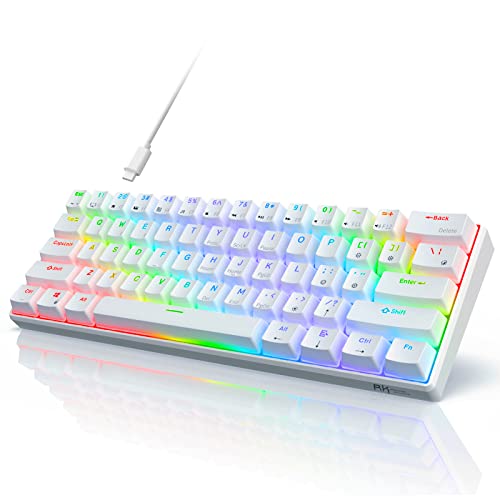
RK61 Review Summary
The RK ROYAL KLUDGE RK61 is worth considering if you want a practical 60% keyboard that balances gaming convenience, desk space savings, and mod-friendly features.
It suits users who want a compact board for FPS play, everyday typing, or a starter keyboard they can customize over time.
This is not a flashy all-in-one premium board.
Its value comes from the combination of a 61-key layout, hot-swappable PCB, detachable Type-C cable, RGB lighting, and support for Windows, Linux, and Mac.
That is a useful mix for buyers who care more about usability and flexibility than a full-size layout.
Review Scorecard
| Category | Score | Rationale |
|---|---|---|
| Space-saving design | 9/10 | The 60% layout keeps the footprint small and leaves more room for mouse movement. |
| Customization | 8/10 | Hot-swappable 3-pin and 5-pin support plus QMK/VIA programmability give it real flexibility. |
| Gaming practicality | 8/10 | The wired Type-C connection and anti-ghosting focus fit fast-paced play well. |
| Typing comfort | 7/10 | The pre-lubed red switches and ergonomic stair-step keycap design aim for smoother daily use. |
| OS compatibility | 8/10 | The listing supports Windows, Linux, and Mac, which broadens its appeal. |
| Lighting and presentation | 7/10 | RGB modes add atmosphere, though the main draw is function rather than showmanship. |
| Long-term value | 8/10 | It offers a lot of mod-friendly hardware for buyers who want to learn or iterate later. |
Key Features and Specifications of RK61
The RK ROYAL KLUDGE RK61 is a wired 60% mechanical keyboard with 61 keys.
The compact layout removes the usual number pad and many navigation keys, so it is built for users who want a smaller desk footprint and fewer reaches between keys.
Key database-backed features include:
- 60% compact layout with 61 keys
- Wired detachable Type-C connection
- QMK/VIA programmability
- Hot-swappable PCB for 3-pin and 5-pin switches
- Pre-lubed red linear switches
- RGB backlighting with 18 RGB modes and 8 monochrome backlight options
- Full-key anti-ghosting
- Compatibility listed for Windows, Linux, and Mac
- Ergonomic stair-step keycap design
The strongest part of the specification set is that it does not stop at basic RGB cosmetics.
The keyboard is designed to be configurable, and the hot-swap PCB means you can change switches without soldering.
That matters if you are still learning what switch feel you prefer or if you want to tune the board later.
The pre-lubed red switches point to a smooth, quiet mechanical feel compared with clickier options.
For office work, late-night sessions, or games where fast repeated presses matter, that is a sensible default.
The wired connection also keeps the board simple and reduces one more variable for buyers who do not want to think about charging or wireless latency.
Pros and Cons of RK61
Pros
- Compact 60% format saves desk space and helps mouse movement
- Hot-swappable design makes it easier to customize
- QMK/VIA support is a meaningful advantage for power users
- Wired Type-C connection is straightforward and stable
- Red linear switches suit gaming and quieter typing
- Works across Windows, Linux, and Mac according to the listing
Cons
- The 60% layout removes dedicated arrow keys and other shortcuts, which can slow down some workflows
- Buyers who want a full-size productivity keyboard may find it too minimal
- RGB lighting is useful, but it is still secondary to the board’s practical appeal
- The listing suggests broad flexibility, but people new to compact layouts may need time to adjust
Who Should Buy RK61?
This keyboard makes sense for gamers who want more mouse room and a smaller footprint.
It also suits buyers who want an affordable path into switch customization without soldering.
If you like the idea of tuning a keyboard over time, the hot-swap PCB is the main reason to pay attention.
It is also a good match for people who need a wired board that works across multiple operating systems.
The listing explicitly mentions Windows, Linux, and Mac, so it fits mixed-device households or work setups where you may move the keyboard between systems.
You should probably skip it if you rely heavily on a full-size layout, dedicated navigation cluster, or constant number entry.
A 60% keyboard asks for comfort with layers and shortcuts.
If that sounds inconvenient rather than appealing, a larger board will be easier to live with.
Compact Layout and Customization Tradeoffs of RK61
60% Layout Means Fewer Keys
The RK61’s 61-key design is the defining tradeoff.
It saves space and looks clean, but it also removes dedicated keys many people take for granted.
That is a benefit for minimal desks and gaming setups, but not ideal for users who depend on direct access to every key.
Hot-Swap Hardware Changes the Ownership Experience
The hot-swappable PCB is one of the most important features in the listing.
It lowers the barrier to switch experimentation and makes the board more attractive to first-time keyboard tinkerers.
You are not locked into the default feel forever.
QMK/VIA Support Adds Real Utility
QMK/VIA programmability pushes the RK61 beyond a basic budget board.
For people who remap frequently, build custom layers, or want the keyboard to match a very specific workflow, that support can matter more than cosmetic extras.
Wired Connection Keeps the Focus on Reliability
Because this is a wired board with a detachable Type-C cable, it is a good fit for users who want a simple, dependable setup.
The connection choice is not trendy, but it is practical, and for many buyers that is the better tradeoff.
Alternatives to RK61
If you want to compare the RK61 against similar options, look at these Amazon search pages:
The Keychron K6 is a natural comparison if you want a compact mechanical keyboard with a different brand ecosystem.
The RK68 is worth checking if you like the RK family but want a slightly different layout approach.
The Redragon K617 is another compact option for buyers who are shopping in the same broad category.
The Anne Pro 2 remains a familiar reference point for people comparing 60% boards and looking at established alternatives.
Is RK61 Worth It?
Yes, the RK ROYAL KLUDGE RK61 is worth it if you want a compact, wired, customizable 60% keyboard and you are comfortable giving up dedicated keys for desk space and flexibility.
Its best case is a buyer who values hot-swap support, QMK/VIA programmability, and a simple Type-C connection more than a full-size layout.
If you want a practical entry into keyboard customization, this is a sensible buy.
If you need a productivity-first keyboard with more dedicated keys, look elsewhere.