The best synthesizer depends on how you plan to create: shaping analog tones, building sample-based grooves, performing live, or learning keyboard fundamentals. This roundup compares 10 distinct options across those use cases, including compact portable instruments, MIDI controllers, digital FM keyboards, and full-featured analog synthesizers.
Use the guide below to narrow your choice by sound engine, key feel, workflow, portability, connectivity, and budget before choosing the instrument that best fits your setup.
Best 10 Synthesizers Picks for 2026
Experimental Hybrid Pick
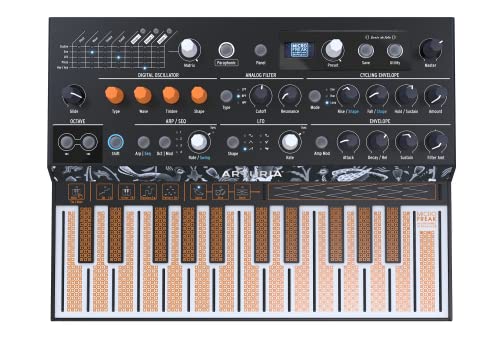
- Hybrid digital oscillator and analog-filter design
- Poly-aftertouch touch-plate keyboard
- CV, USB, MIDI, and creative sequencing
Best For: Advanced experimental sound designers and modular-friendly producers
Portable Sampling Pick

- Standalone battery-powered sampling workflow
- 16 MPC pads and instant sample chopping
- Built-in speaker, microphone, effects, and storage
Best For: Portable beatmaking and DAWless sample-based production
Analog Monosynth Pick

- Two wavefolding VCOs plus sub-oscillator
- Ladder filter with resonance bass compensation
- Full-size keys, sequencer, CV, MIDI, and USB-C
Best For: Expressive bass, lead, and monophonic analog performance
Compact Controller Pick

- 37-key USB MIDI controller with pads and knobs
- Built-in 64-step drum and melodic sequencing
- CV/Gate and MIDI connectivity for external gear
Best For: Compact DAW, software-synth, and modular control
Analog Powerhouse

- Hands-on analog controls with 40 knobs and 74 switches
- Two-note paraphony with 37 semi-weighted keys
- CV/Gate, MIDI, USB, and editor software included
Best For: Analog sound designers and expressive electronic performers
Weighted Workstation
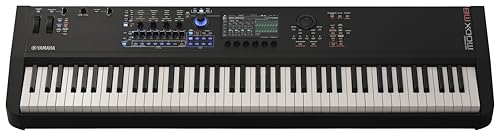
- 88-key graded-hammer action for piano-focused playability
- Three engines cover analog, FM, and realistic instrument sounds
- Touchscreen, faders, Super Knob, and DAW plugin support
Best For: Pianists and professional stage or studio players
Portable Production Hub

- Eight synth engines with sampling and 64-step sequencing
- Built-in mic, speaker, CV, and extensive MIDI connectivity
- Eight instrument and eight auxiliary tracks for external gear
Best For: Mobile producers and electronic performers
Retro Pocket Pick
Stylophone Original Pocket Synthesizer

- Iconic analog sound with three octaves
- Stylus-controlled design is easy to play
- Battery-powered with speaker and headphone output
Best For: Beginners, retro-synth fans, and portable creative play
Portable FM Workstation
M-VAVE Wireless FM Synthesizer

- Six-operator FM engine with 32 algorithms
- 128 presets, effects, arpeggiator, and sequencer
- USB, Bluetooth, and 3.5mm MIDI connectivity
Best For: Portable producers and hands-on FM sound design
Guitar-Rig Companion
M-VAVE FM-1 Digital Synthesizer

- Six-operator FM synthesis with 32 algorithms
- Sequencer, arpeggiator, effects, and color TFT display
- USB-C, Bluetooth, and 3.5mm MIDI connectivity
Best For: Guitarists, mobile producers, and live MIDI setups
Experimental Hybrid Pick – Arturia MicroFreak
The Arturia MicroFreak is a compact choice for musicians who want synthesizers with unusual sound-shaping options. Its hybrid architecture combines multiple digital oscillator modes with a resonant analog filter, while the touch-sensitive keybed, modulation matrix, and sequencer encourage exploratory sound design.
Best For: Advanced users creating experimental sounds, evolving sequences, and hybrid hardware setups.
Pros:
- Offers a broad selection of digital oscillator modes, including wavetable, physical-modeling, vocoder, and Noise Engineering options.
- 25-key PCB keyboard provides individual pressure or poly-aftertouch sensing.
- Includes sequencing, automation, Spice and Dice randomization, and a 5×7 modulation matrix.
- Supports CV, USB, and MIDI connections for DAW and modular integration.
Cons:
- The 25-key touch-plate design may not suit players who prefer conventional moving keys.
- Its advanced modulation and oscillator features may require a learning period.
The MicroFreak stands out when flexibility and experimentation matter more than a traditional playing experience. It is especially appealing for producers who want a lightweight synthesizer that can connect to both computer-based and modular systems.
Portable Sampling Pick – Akai MPC Sample
The Akai Professional MPC Sample is a portable production tool for beatmakers who want sampling and sequencing without relying on a computer. With battery power, a built-in speaker and microphone, MPC pads, onboard effects, and microSD storage, it supports quick idea-making in the studio or away from it.
Best For: Beatmakers, finger drummers, DAWless creators, and beginners exploring sample-based music production.
Pros:
- Operates standalone with a rechargeable battery, built-in speaker, microphone, and internal storage support.
- Provides 16 responsive MPC pads, Instant Sample Chop Mode, timestretching, repitching, and internal resampling.
- Includes four internal FX processors with 60 effect types and dedicated knob control.
- Offers USB-C audio/MIDI, stereo line I/O, headphones output, and smart-device sampling.
Cons:
- MIDI DIN connectivity requires an adapter, which is not included.
- Its compact 2.4-inch display may feel limited for users who prefer larger visual interfaces.
While it is not a conventional keyboard synthesizer, the MPC Sample is a practical companion for synthesizers and other sound sources. Its standalone workflow makes it useful for capturing ideas, chopping audio, and building grooves wherever inspiration strikes.
Analog Monosynth Pick – Moog Messenger
The Moog Messenger is a focused analog synthesizer for players and producers who want hands-on monophonic sound design. Its two wavefolding VCOs, sub-oscillator, ladder filter, full-size expressive keys, and extensive modulation tools are suited to basses, leads, and detailed sequences.
Best For: Musicians seeking a portable Moog-style monosynth for bass lines, leads, studio sound design, and live performance.
Pros:
- Two continuously variable-shape VCOs include sync, frequency modulation, and wavefolding, plus a sub-oscillator.
- Next-generation ladder filter offers low-pass, band-pass, and high-pass responses with resonance bass compensation.
- 32 full-size semi-weighted keys provide velocity and aftertouch control.
- Includes a 64-step sequencer, arpeggiator, 256 presets, CV patch points, MIDI, and USB-C.
Cons:
- Its monophonic design is intended for one-note-at-a-time performance rather than polyphonic chords.
- The 27.6-inch-wide, 5.14-kilogram format is less compact than many small synthesizers.
The Messenger is a strong fit when classic analog character, full-size keys, and direct knob-per-function control are priorities. Its sequencing, patch points, and expressive keyboard also give it room to grow in both live and studio setups.
Compact Controller Pick – Akai MPK Mini Plus
The Akai Professional MPK Mini Plus is a USB MIDI controller for producers who want hands-on control over software synthesizers and studio equipment. Its 37-key layout, pads, knobs, built-in sequencing, and CV/Gate and MIDI connectivity make it more versatile than a basic computer keyboard.
Best For: Home producers and performers controlling DAWs, software synthesizers, sound modules, and modular gear.
Pros:
- 37 velocity-sensitive keys provide three octaves for melodic and harmonic playing.
- Includes eight RGB MPC pads, eight assignable knobs, chord and scale modes, and an arpeggiator.
- Built-in 64-step sequencer supports separate drum and melody or chord tracks.
- CV/Gate and MIDI I/O expand compatibility beyond USB-based DAW control.
Cons:
- It is a controller rather than a standalone sound-generating synthesizer and requires an external sound source.
- USB is the listed computer connection, so users should plan their setup around compatible hardware or a DAW.
The MPK Mini Plus is a practical way to control synthesizers without committing to a larger keyboard. It works particularly well for compact workstations that combine software instruments, external MIDI gear, and modular equipment.
Analog Powerhouse – MOOG Subsequent 37
The MOOG Subsequent 37 is a strong choice for musicians seeking hands-on analog synthesizers with extensive sound-design control. Its 37 semi-weighted, velocity-sensitive keys, two-note paraphony, flexible oscillators, and deep modulation options make it well suited to detailed patch creation and expressive performance.
Best For: Sound designers, electronic musicians, and performers who want a tactile analog instrument with extensive routing and sequencing controls.
Pros:
- Large control panel with 40 knobs and 74 switches for hands-on editing.
- Two variable waveshape oscillators, a square-wave sub oscillator, noise generator, and external input/filter feedback.
- Includes 256 presets, aftertouch, MIDI, USB, CV/Gate connections, and editor/librarian software.
Cons:
- Two-note paraphony is more limited than full polyphony.
- Its 10 kg weight and 26.77-inch width may reduce portability.
The Subsequent 37 is focused on rich, complex analog tones and immediate control rather than maximum polyphonic range. It is particularly appealing if you value physical knobs, CV integration, and detailed modulation over a lightweight setup.
Weighted Workstation – Yamaha MODX M8
The Yamaha MODX M8 brings piano-style playability to modern synthesizers, pairing 88-key graded-hammer action with three sound engines and streamlined performance controls. It is designed for players who need realistic key response, broad sound options, and useful stage- or studio-oriented integration.
Best For: Pianists, professional performers, and studio musicians who want weighted keys alongside analog, FM, and instrument sounds.
Pros:
- 88-key graded-hammer action provides a heavier low-key response and lighter high-key response.
- Three engines cover classic analog, modern FM, and realistic instrument sounds.
- Color touch screen, six display knobs, eight faders, Super Knob, and ESP softsynth plugin support.
Cons:
- At 57.5 inches wide and 40.5 pounds, it is less portable than compact synthesizers.
- Its weighted keyboard may feel less suitable for players seeking a light synth action.
The MODX M8 is a versatile choice when keyboard feel matters as much as synthesis. Its size favors a dedicated stand, stage, or studio setup, but the combination of weighted action and multiple sound engines offers broad practical flexibility.
Portable Production Hub – teenage engineering OP–XY
The teenage engineering OP–XY is a compact option for producers who want portable synthesizers, sampling, and sequencing in one instrument. Its eight synth engines, built-in mic and speaker, fast sequencing workflow, and extensive connectivity support sketching, performance, and control of external gear.
Best For: Mobile producers, beatmakers, and electronic performers who prioritize sequencing depth and compact all-in-one production.
Pros:
- Combines a sampler, sequencer, eight synth engines, built-in microphone, and speaker.
- Offers eight instrument tracks plus eight auxiliary tracks for external synthesizers and effects.
- Supports audio input, MIDI over USB-C, Bluetooth LE, built-in CV, and flexible multi-output connectivity.
Cons:
- Its compact workflow may be less immediate for players who prefer full-size keyboards and dedicated controls.
- It has a 1.2-inch-thick plastic-and-metal body rather than a conventional keyboard layout.
The OP–XY stands out as a highly portable sequencing and production system rather than a traditional keyboard synthesizer. Its strongest appeal is the ability to build evolving patterns, sample sounds, and connect external equipment without carrying a larger workstation.
Retro Pocket Pick – Stylophone Original Pocket Synthesizer
The Stylophone is one of the most distinctive compact synthesizers for beginners, collectors, and musicians who want an instantly recognizable vintage sound. Its touch-sensitive metal surface, connected stylus, built-in speaker, and headphone output make it easy to play almost anywhere.
Best For: Beginners, retro-synth fans, portable practice, and creative gifts.
Pros:
- Iconic analog sound with three octaves and optional vibrato.
- Simple stylus-based playing surface is approachable for beginners.
- Compact, battery-powered design includes a built-in speaker and headphone socket.
- Can connect to a computer or other gear through a 3.5mm stereo cable.
Cons:
- Its miniature playing surface is less suitable for conventional keyboard technique.
- Requires three AA batteries.
- Limited to the included retro-style sound character.
Choose this model if personality, portability, and ease of use matter more than extensive sound-design controls. It is a fun entry point into synthesizers and a distinctive addition to an established setup.
Portable FM Workstation – M-VAVE Wireless FM Synthesizer
This M-VAVE model is a versatile choice among portable synthesizers, combining a six-operator FM engine with 128 presets, onboard effects, sequencing, and multiple MIDI connections. Its 27 silicone keys, battery operation, and built-in speaker support hands-on music making away from a full-size setup.
Best For: Portable producers, FM-synthesis learners, and performers needing flexible MIDI connectivity.
Pros:
- Six operators and 32 algorithms provide substantial FM sound-shaping options.
- Includes 128 presets and supports standard FM SYSEX sound-bank imports.
- Six effects, a seven-mode arpeggiator, and a 16-step sequencer expand creative options.
- USB MIDI, Bluetooth MIDI, and 3.5mm MIDI IN can be used simultaneously.
Cons:
- Its compact 27-key silicone keyboard may feel less familiar than full-size keys.
- The depth of FM programming may take time for beginners to master.
- Plastic construction may not feel as substantial as larger studio synthesizers.
This is the stronger pick for buyers who want one compact unit to cover classic FM tones, effects, sequencing, and controller duties. It offers considerably more sound-design depth than a simple pocket instrument.
Guitar-Rig Companion – M-VAVE FM-1 Digital Synthesizer
The M-VAVE FM-1 is a compact digital synthesizer aimed at producers and guitarists who want powerful FM sounds in a travel-friendly format. It pairs six-operator synthesis and 128 presets with sequencing, effects, a color TFT display, and simultaneous MIDI connections for DAWs and guitar rigs.
Best For: Guitarists, mobile producers, live performers, and users integrating synthesizers with MIDI gear.
Pros:
- Six-operator FM engine, 32 algorithms, 128 presets, and FM SYSEX import support.
- Includes a seven-mode arpeggiator, 16-step sequencer, and six built-in effects.
- USB-C, Bluetooth BLE MIDI, and 3.5mm MIDI IN support simultaneous integration.
- Rechargeable 2000mAh battery provides up to 12 hours of play according to the supplied specifications.
Cons:
- The 27-key silicone keyboard may not replace a conventional keyboard for two-handed playing.
- Its broad FM feature set can require a learning period.
- Built-in speaker output automatically mutes when headphones are connected.
For guitarists and mobile creators, the FM-1 stands out as a portable sound module and controller with unusually broad connectivity. The display and production tools make it more suitable for editing and integration than a basic preset-only synthesizer.
How We Picked These Synthesizers
We selected instruments that represent the main ways musicians use Synthesizers in 2026: hands-on analog sound design, digital and FM synthesis, sample-based production, portable composition, live performance, and computer-based music making. We also considered playability, control layout, sequencing features, portability, connectivity, and whether each model suits beginners, experienced producers, or performers.
The list includes traditional keyboards alongside grooveboxes, samplers, controllers, and pocket instruments. Because these products serve different roles, the “best” choice depends more on your workflow than on a single specification.
Quick Comparison
| Best For | Look For | Product Types |
|---|---|---|
| Hands-on analog synthesis | Oscillators, filters, modulation, and performance controls | Moog Messenger, Moog Subsequent 37 |
| Portable production | Sequencing, sampling, battery power, and built-in sound | OP–XY, Akai MPC, M-VAVE FM models |
| Computer-based setup | USB MIDI, responsive keys, pads, and DAW integration | Akai MPK Mini Plus |
| Learning and casual play | Simple controls, compact size, and approachable presets | Stylophone, MicroFreak |
| Traditional keyboard performance | Full-size keys, realistic action, and broad sonic coverage | Yamaha 88-key synthesizer |
Key Buying Factors for Synthesizers
Synthesis Engine and Sound Design
Analog instruments are often chosen for immediate control and characterful basses, leads, and pads. Digital and FM Synthesizers can provide more precise, varied, or complex tones, while samplers are better suited to working with recorded material. Check the available engines, preset storage, modulation options, and effects if sound variety matters.
Keys, Controls, and Playability
Key count affects both portability and musical range. Mini keys save space, while 37-key layouts offer a useful middle ground. Full-size 88-key instruments are preferable for piano-style playing and two-handed performance. Also consider velocity, aftertouch, knob layout, pads, ribbon controls, and whether the interface encourages hands-on experimentation.
Workflow and Connectivity
Standalone instruments with sequencing, sampling, speakers, microphones, or batteries can support music making away from a computer. USB MIDI controllers are usually better for a DAW-centered setup. If you plan to connect hardware, verify MIDI, USB, audio outputs, sync options, and power requirements before buying.
Portability and Budget
Compact instruments are easier to carry but may trade away key range, connectivity, or editing depth. Premium analog models can reward experienced players with deeper control, whereas affordable pocket and FM instruments may be better for experimentation or a first purchase. Include accessories such as stands, cables, headphones, and cases in your total budget.
Who Should Buy Which Synthesizers?
Choose the Arturia MicroFreak for an experimental, compact instrument with an unusual control approach. The Akai MPC and teenage engineering OP–XY are stronger fits for producers who want sequencing and sampling away from a computer. Pick the Moog Messenger or Moog Subsequent 37 if expressive analog synthesis is the priority.
The Akai MPK Mini Plus suits producers who primarily use software instruments. A Yamaha 88-key model is the more natural choice for players who value full-size, realistic-feeling keys. The Stylophone is ideal for simple, playful portability, while the M-VAVE FM instruments offer preset-driven digital synthesis in compact formats. Before ordering, confirm the exact included accessories, power arrangement, key feel, and software compatibility for your setup.