The right AV receiver can simplify your home theater while improving surround sound, video compatibility, and everyday streaming. This year’s options range from compact 5.2-channel models to feature-rich 7.2-channel receivers built for Dolby Atmos and next-generation gaming.
Our roundup compares 10 popular receivers from Denon, Onkyo, Pioneer, Yamaha, and Pyle, with attention to channel count, HDMI support, room size, connectivity, and overall value.
Best 10 Av Receiver for Home Theater Picks for 2026
Best Overall

- 7.2-channel amplification with Dolby Atmos and DTS:X
- Three dedicated 8K HDMI inputs plus 4K/120Hz pass-through
- HEOS, Wi-Fi, Bluetooth, AirPlay 2, and guided setup
Best For: Versatile movie, gaming, music, and multi-room systems
Best for THX Sound

- THX Select certified audio amplification
- Dolby Atmos and DTS:X support in a 5.2.2 layout
- Three 8K HDMI 2.1 inputs with 40Gbps bandwidth
Best For: Cinema-focused systems with a second entertainment zone
Best for 8K Gaming

- 8K/60Hz and 4K/120Hz pass-through
- VRR, ALLM, and QFT for gaming
- Dolby Atmos, DTS:X, HEOS, Wi-Fi, and Bluetooth
Best For: Modern 8K TV and console gaming setups
Best Value Features
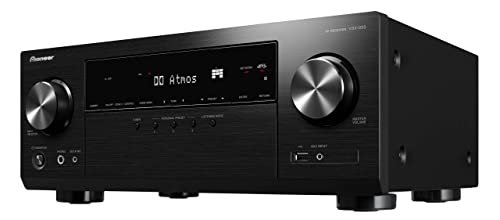
- Dolby Atmos, DTS:X, and height virtualization
- Seven-channel, 7.2-channel surround configuration
- Eight HDMI ports plus Bluetooth, Wi-Fi, and USB
Best For: Flexible conventional surround systems with multiple sources
Best Overall 8K Pick

- 8K/60Hz and 4K/120Hz pass-through
- HEOS, Wi-Fi, and Bluetooth streaming
- eARC, VRR, ALLM, and voice control
Best For: Modern 5.2-channel home theaters and 8K TV owners
Best Simple 4K Value

- 5.1-channel surround sound
- 4K HDR and Dolby Vision support
- YPAO automatic calibration
Best For: Entry-level 4K home theater systems
Best for Gaming and Atmos

- 4K/120Hz HDR pass-through
- VRR, ALLM, and QFT gaming features
- 7.2 channels with Dolby Atmos and DTS:X
Best For: Console gamers and expandable immersive-audio systems
Budget-Friendly Pick
Pyle PT865BT 5.2-Channel Receiver

- 5.2-channel surround sound with 4K pass-through
- Bluetooth, USB/MP3, and DAC connectivity
- Built-in electrical protection features
Best For: Simple, budget-conscious home theater setups
Feature-Rich Upgrade
Yamaha RX500A 7.2-Channel AV Receiver

- Dolby Atmos and DTS:X with 5.2.2 support
- 4K/120, 8K/60, VRR, and ALLM HDMI features
- Wi-Fi streaming and automatic room correction
Best For: Advanced theaters with immersive audio and network streaming
Compact Atmos Choice
Yamaha RX300A 5.2-Channel AV Receiver

- Dolby Atmos with 3.1.2-channel support
- 4K/120 and 8K/60 HDMI with VRR and ALLM
- Room correction and Bluetooth Multipoint
Best For: Compact systems needing Atmos and gaming-ready HDMI
Best Overall – Denon AVR-X1700H
The Denon AVR-X1700H is a well-rounded av receiver for home theater, combining seven-channel amplification, 8K-ready HDMI connectivity, immersive audio formats, and built-in HEOS streaming. Its guided setup and color-coded connections make it a practical choice for upgrading a movie, gaming, and music system.
Best For: Home theater users who want broad format support, easy setup, and multi-room streaming.
Pros:
- Supports Dolby Atmos, DTS:X, DTS Virtual:X, and Dolby Atmos Height Virtualization.
- Offers three dedicated 8K HDMI inputs, 4K/120Hz pass-through, and eARC.
- Includes HEOS, Wi-Fi, Bluetooth, AirPlay 2, voice control, and multi-zone streaming.
- On-screen setup guidance and color-coded connections simplify installation.
Cons:
- Seven channels may not suit larger systems requiring more amplification channels.
- Its 80-watt-per-channel output may be limiting for demanding speakers or very large rooms.
The AVR-X1700H stands out as a flexible all-purpose receiver, especially if you value modern video support and convenient streaming alongside surround sound.
Best for THX Sound – Onkyo TX-NR6100
The Onkyo TX-NR6100 is a strong av receiver for home theater for buyers who prioritize certified cinema-style performance and flexible connectivity. It combines THX Select certification with Dolby Atmos, DTS:X, HDMI 2.1 inputs, and discrete Zone 2 audio and video.
Best For: Home theater enthusiasts seeking THX-certified playback and a flexible second-zone setup.
Pros:
- THX Select certified with a listed 210-watt-per-channel Dynamic Audio Amplification system.
- Supports 5.2.2-channel Dolby Atmos and DTS:X playback.
- Provides three 8K HDMI 2.1 inputs with 40Gbps bandwidth.
- Includes discrete Zone 2 audio and video plus broad music-service support.
Cons:
- The supplied specifications list different power figures, so system matching deserves careful attention.
- Its 7.2-channel configuration may be less suitable for larger, more advanced layouts.
With THX certification and useful Zone 2 flexibility, the TX-NR6100 is a compelling pick for a dedicated theater or a home with separate entertainment areas.
Best for 8K Gaming – Denon AVR-S770H
The Denon AVR-S770H is a practical av receiver for home theater for modern TV and gaming setups. It supports 8K/60Hz and 4K/120Hz pass-through, gaming features such as VRR and ALLM, and immersive audio in a range of speaker configurations.
Best For: 8K TV and gaming systems that need responsive video features and wireless music playback.
Pros:
- Supports 8K/60Hz, 4K/120Hz, HDR10+, Dolby Vision, HLG, and Dynamic HDR.
- Includes VRR, ALLM, and QFT for smoother, lower-lag gaming.
- Supports Dolby Atmos, DTS:X, Dolby Height Virtualization, and DTS Virtual:X.
- Built-in HEOS, Wi-Fi, Bluetooth, and voice control support multi-room listening.
Cons:
- Its 75-watt-per-channel rating may be less suitable for especially large rooms or difficult-to-drive speakers.
- It is a seven-channel receiver, limiting expansion compared with models designed for larger layouts.
The AVR-S770H focuses on current video and gaming standards while retaining useful surround and streaming features, making it a sensible hub for a contemporary living-room system.
Best Value Features – Pioneer VSX-935
The Pioneer VSX-935 offers a feature-rich approach to an av receiver for home theater, with seven channels, network connectivity, and support for Dolby Atmos and DTS:X. Its multiple HDMI connections make it suitable for systems combining a television, game console, and several source components.
Best For: Buyers wanting flexible surround processing and plentiful connections for a conventional 7.2-channel setup.
Pros:
- Supports Dolby Atmos, DTS:X, Dolby Surround, DTS Neural:X, and Dolby Atmos Height Virtualizer.
- Provides 7.2-channel surround sound with an 80-watt-per-channel specification under FTC conditions.
- Offers eight HDMI ports and compatibility with televisions, speakers, and game consoles.
- Includes Bluetooth, Wi-Fi, USB, and TuneIn support.
Cons:
- The supplied specifications list different output figures under different testing conditions.
- Its listed warranty is one year, shorter than some competing models in this group.
The VSX-935 is a sensible option when connection flexibility and broad surround-format support matter more than adding extra amplifier channels.
Best Overall 8K Pick – Denon AVR-S670H
The Denon AVR-S670H is a strong all-around choice for shoppers seeking an av receiver for home theater with modern 8K video support, immersive surround formats, and built-in streaming. Its five-channel design suits a conventional living-room theater while HDMI eARC, Wi-Fi, Bluetooth, and HEOS add flexibility.
Best For: Home theater users who want 8K connectivity, multi-room streaming, and voice control in a 5.2-channel receiver.
Pros:
- Supports 8K/60Hz and 4K/120Hz pass-through, HDR formats, VRR, ALLM, and QFT.
- Includes Dolby TrueHD, Dolby ProLogic II, and DTS Neo:6 surround processing.
- Offers HEOS, Wi-Fi, Bluetooth, Spotify, TIDAL, and Alexa compatibility.
- Provides HDMI ARC/eARC and eight HDMI ports.
Cons:
- Five-channel amplification may not suit buyers planning a larger surround system.
- Its 75-watt-per-channel output is lower than some competing receivers listed here.
Choose the Denon when current video standards and convenient whole-home audio matter more than expanding beyond a five-channel setup. It is particularly well equipped for 8K TVs and gaming consoles.
Best Simple 4K Value – Yamaha RX-V385
The Yamaha RX-V385 is a straightforward av receiver for home theater built around 5.1-channel surround sound, 4K video, and Bluetooth. It is a practical fit for smaller systems that do not need the newer 8K features found on more advanced receivers.
Best For: Entry-level home theater setups that need 4K support, wireless Bluetooth playback, and automatic speaker calibration.
Pros:
- Delivers 5.1-channel surround sound with up to 100 watts of output power listed.
- Supports 4K Ultra HD, HDR10, Dolby Vision, Hybrid Log-Gamma, and BT.2020.
- YPAO auto-calibration helps configure sound for the room.
- Includes Bluetooth and HDMI CEC connectivity.
Cons:
- Provides four HDMI inputs and one output, limiting connected-device capacity.
- Does not list 8K pass-through or advanced HDMI 2.1 gaming features.
- Streaming-service support is more limited than the other options in this roundup.
The RX-V385 makes sense when you want dependable 5.1 sound and 4K compatibility without paying for features you may not use. Its YPAO calibration is a useful convenience for first-time system builders.
Best for Gaming and Atmos – Onkyo TX-NR5100
The Onkyo TX-NR5100 is a compelling av receiver for home theater if gaming features and expanded surround support are priorities. Its 7.2-channel layout, HDMI 2.1 gaming functions, and eARC support make it a flexible choice for consoles, streaming devices, and immersive audio systems.
Best For: Gamers and movie fans who want 4K/120Hz playback, low-latency features, and support for Dolby Atmos and DTS:X.
Pros:
- Supports 4K/120Hz HDR pass-through for fast-moving game content.
- VRR, ALLM, and QFT are designed to reduce tearing and gaming latency.
- 7.2-channel configuration supports Dolby Atmos, DTS:X, and DTS-HD Master Audio.
- Includes eARC plus Chromecast built-in, AirPlay 2, and DTS Play-Fi.
Cons:
- Only four HDMI ports are listed, which may require input management in larger setups.
- Its listed output is 80 watts, so especially demanding speakers may need more power.
The TX-NR5100 is the strongest match here for a growing theater that combines console gaming with object-based audio. Its 7.2-channel design also leaves more room for system expansion than the five-channel alternatives.
Budget-Friendly Pick – Pyle PT865BT 5.2-Channel Receiver
If you want an affordable AV receiver for home theater, the Pyle PT865BT combines 5.2-channel surround sound with 4K Ultra HD pass-through, Bluetooth streaming, and digital audio connectivity. Its high listed output rating and built-in protection features make it suited to straightforward home entertainment setups.
Best For: Basic home theaters seeking 5.2-channel sound, Bluetooth playback, and 4K video pass-through.
Pros:
- Supports 5.2-channel stereo and surround sound configurations.
- Passes through 4K Ultra HD video and includes four HDMI ports.
- Offers Bluetooth streaming, USB/MP3 support, and a DAC digital interface.
- Includes overcurrent, short-circuit, and overvoltage protection.
Cons:
- Does not list Dolby Atmos or DTS:X support.
- Wireless connectivity is limited to Bluetooth rather than Wi-Fi-based streaming.
- The supplied details do not specify 4K/120 or 8K video support.
The Pyle is a practical choice when core surround sound and 4K compatibility matter more than advanced immersive formats or network streaming. It is best suited to buyers building a simple, feature-conscious system.
Feature-Rich Upgrade – Yamaha RX500A 7.2-Channel AV Receiver
The Yamaha RX500A is a versatile AV receiver for home theater with 7.2-channel processing, Dolby Atmos and DTS:X support, and flexible 5.2.2-channel layouts. It also adds Wi-Fi streaming, 4K/120 and 8K/60 HDMI support, room correction, and gaming-focused HDMI features.
Best For: Larger or more advanced systems that need immersive audio, network streaming, and next-generation video support.
Pros:
- Supports Dolby Atmos, DTS:X, and 5.2.2-channel speaker layouts.
- Handles 4K/120 and 8K/60 video with Dolby Vision, HDR10+, ALLM, and VRR.
- Includes Wi-Fi, Spotify Connect, Google Cast, AirPlay 2, TIDAL Connect, and Qobuz Connect.
- Uses an included setup microphone for automatic room correction.
Cons:
- Its 70-watt output rating may be less suitable for very demanding speakers or large rooms.
- With seven channels, it offers less expansion than higher-channel receivers.
- Advanced features may be more than needed for a basic TV-and-speaker setup.
The RX500A stands out for combining immersive audio, modern HDMI capabilities, and broad streaming support in one receiver. It is a strong fit for home theater owners planning to add height speakers or connect current gaming and video sources.
Compact Atmos Choice – Yamaha RX300A 5.2-Channel AV Receiver
The Yamaha RX300A offers a balanced entry point for shoppers seeking an AV receiver for home theater with Dolby Atmos, 5.2-channel processing, and modern HDMI features. It supports 3.1.2-channel layouts, 4K/120 and 8K/60 video, Bluetooth Multipoint, and automatic room calibration.
Best For: Smaller or mid-sized theaters that want immersive sound and gaming-ready video features without moving to a larger-channel receiver.
Pros:
- Supports Dolby Atmos and flexible 3.1.2-channel height-speaker layouts.
- Provides 4K/120 and 8K/60 HDMI support with Dolby Vision and HDR10+.
- Includes ALLM, VRR, and HDMI eARC/ARC for modern gaming and TV setups.
- Offers automatic room correction and Bluetooth Multipoint for two paired source devices.
Cons:
- Does not list built-in Wi-Fi or the broader network streaming services found on the RX500A.
- Its five-channel design provides less expansion than a 7.2-channel receiver.
- The supplied 70-watt output rating may not be ideal for very large rooms or difficult-to-drive speakers.
The RX300A is a sensible middle ground for buyers who want Atmos and current HDMI standards but do not need extensive network streaming or seven-channel expansion. Its room correction and straightforward setup also help simplify installation.
How We Picked the Best Av Receiver for Home Theater
We selected these models based on the features that matter most in a modern home theater: powered-channel configuration, HDMI connectivity, support for 4K or 8K video, gaming-friendly refresh rates, surround formats, networking, wireless music, and ease of system matching. We also included options at different price and performance levels, from straightforward 5.1-channel receivers to more capable 7.2-channel models.
Specifications can vary by input, output, and setup, so check the manufacturer’s current documentation before buying—especially if you need a particular HDMI 2.1 feature, speaker impedance, or audio format.
Quick Comparison
| Best For | What to Look For |
|---|---|
| Small rooms and simple systems | 5.1 or 5.2 channels, compact connectivity, automatic room setup |
| Flexible surround sound | 7.2 channels and Dolby Atmos or DTS:X support |
| Gaming | 4K/120Hz support, HDMI 2.1 inputs, low-latency features, and VRR compatibility |
| Whole-home listening | Wi-Fi, Bluetooth, app control, and a multiroom streaming platform |
| Future-proofing | 8K video support and enough HDMI inputs for your consoles and media players |
Key Buying Factors for an Av Receiver for Home Theater
Choose the Right Channel Count
A 5.1-channel receiver is usually enough for a conventional surround setup with front, center, surround, and subwoofer channels. Choose a 7.2-channel model if you want two additional surround or height channels, dual subwoofer connections, or more flexibility as your system grows. Remember that the receiver’s channel count describes powered speaker channels, not necessarily the number of speakers you must install.
Check HDMI and Video Compatibility
Make sure the receiver supports the resolution and refresh rate of your television or projector. 4K is sufficient for most systems, while 8K support can add useful headroom for newer displays. Gamers should verify 4K/120Hz, variable refresh rate, auto low-latency mode, and the number of HDMI 2.1 inputs rather than assuming every HDMI port offers the same capabilities.
Match Audio Features to Your Room
Dolby Atmos and DTS:X are valuable for height effects, but they require compatible speakers and suitable placement. Room-correction software can also help balance speaker levels and compensate for acoustic differences. Consider receiver power ratings as a guide, then account for speaker sensitivity, room size, listening distance, and volume expectations.
Consider Streaming and Daily Convenience
Built-in Wi-Fi, Bluetooth, voice control, app-based setup, and network music services can make a receiver easier to use than a system that depends on external streamers. If you already use a particular platform, confirm compatibility before purchasing.
Who Should Buy Which Av Receiver for Home Theater?
Buy a 5.1 or 5.2-channel model if you have a small or medium room, a basic surround layout, or a limited budget. A 7.2-channel receiver is the better choice for larger rooms, Dolby Atmos expansion, multiple subwoofers, or a more upgradeable system. Choose a network-enabled Denon, Onkyo, Pioneer, or Yamaha when streaming and app control are priorities. For console gaming, prioritize verified HDMI 2.1 and 4K/120Hz features. A simpler Yamaha or entry-level receiver may be the most sensible choice for a first system, while a more feature-rich model suits enthusiasts planning to add height speakers and more sources.