Choosing among DI boxes for beginners can feel confusing when specifications, connectors, and studio terminology are unfamiliar. The right unit should make connecting an instrument to a mixer, interface, or PA system simpler—not add another layer of guesswork.
This roundup brings together beginner-oriented options and practical learning resources, with an emphasis on straightforward setup, useful signal control, and reliable performance for home recording, rehearsal, and live sound.
Best 10 Di Boxes for Beginners Picks for 2026
Top Guide

- Covers box design, tools, joinery, hardware, and finishing
- Includes beginner through advanced project guidance
- Features projects from pencil boxes to puzzle boxes
Best For: Beginners seeking a complete wooden box-making reference
Fantasy Pick

- Includes player and game master handbooks
- Supplies dice, pawns, maps, and character sheets
- Contains an introductory adventure and campaign tools
Best For: New Pathfinder players and game masters
Project Builder
Wooden Box Making for Beginners

- Guides measuring, cutting, joining, building, and finishing
- Covers lids, hardware, compartments, and decorative interiors
- Includes easy-to-advanced woodworking projects
Best For: Beginners wanting practical, progressive box-making projects
Cloud Storage Pick

- Explains setup and syncing across major devices
- Covers file sharing, backups, and version history
- Includes collaboration and privacy guidance
Best For: Beginners learning OneDrive and Dropbox
Design-Build Challenge

- 52 guided box projects
- Covers core construction and finishing techniques
- Develops design skills through repeated practice
Best For: Woodworkers seeking a structured, yearlong box-making challenge
Learn-to-Play Card Game

- Guided two-player tutorial
- Eight themed half-decks included
- Playboards and life counters supplied
Best For: Two new Magic players who enjoy the Avatar theme
Musical Foundations Guide

- Explains Shruti Box fundamentals
- Includes first-sound and ear-training exercises
- Covers singing, rhythm, and daily practice
Best For: Beginners learning Shruti Box for music, singing, or meditation
Hands-On Woodworking Guide
The Beginner's Guide to Box Making

- Covers tools, wood preparation, and four joinery types
- Includes nine progressively guided wooden-box projects
- Explains lids, interiors, sanding, and finishing
Best For: New woodworkers learning to build wooden boxes
Compact Audio Direct Box

- Connects instruments and unbalanced sources to mixers
- Provides impedance transformation and hum cancellation
- Steel chassis with support for up to 10 effects pedals
Best For: Beginners setting up basic live or recording audio connections
Guided Card-Game Starter Set
Marvel Super Heroes Beginner Box
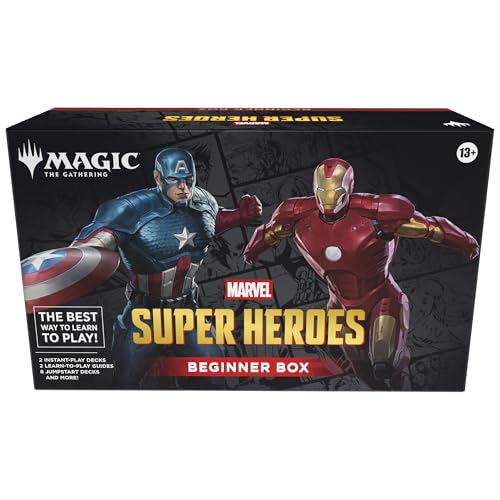
- Includes two guided tutorial decks for first-time players
- Adds eight themed half-decks for deck combinations
- Comes with boards, counters, tokens, and rule materials
Best For: Two new Magic players learning together
Top Guide – The Box Making Bible
For readers researching di boxes for beginners, The Box Making Bible offers a broad woodworking foundation, from choosing and preparing wood to joinery, hardware, interiors, and finishing. Its progression from simple projects to advanced designs makes it useful for building skills over time.
Best For: Beginners and hobby woodworkers who want a comprehensive guide to designing and building wooden boxes.
Pros:
- Covers tools, wood selection, grain direction, and box construction fundamentals.
- Explains foundational and advanced joinery, including rabbets, grooves, finger joints, and splines.
- Includes projects such as a sliding-lid pencil box, valet tray, and puzzle box.
Cons:
- The wide scope may feel more extensive than necessary for someone seeking only one simple project.
- Advanced projects and techniques may require additional woodworking experience.
This is the strongest all-around choice for beginners who want both project inspiration and a structured path toward more refined box-making skills.
Fantasy Pick – Pathfinder Beginner Box
Although it is not a woodworking product, the Pathfinder Beginner Box is a strong match only if your search for di boxes for beginners refers to beginner tabletop gaming boxes. It packages rules, an introductory adventure, dice, maps, pawns, and character materials for starting a Pathfinder game.
Best For: New Pathfinder players and game masters who want an all-in-one tabletop roleplaying starter set.
Pros:
- Includes separate handbooks for heroes and game masters.
- Provides an introductory adventure, character options, maps, pawns, and reference cards.
- Comes with a complete polyhedral dice set and premade characters.
Cons:
- It does not teach woodworking or help create physical boxes.
- The supplied reading age is 16 years and up.
Choose this only when “boxes” means tabletop game starter sets; for wooden box-making, one of the woodworking guides is a better fit.
Project Builder – Wooden Box Making for Beginners
For anyone comparing di boxes for beginners with a focus on hands-on woodworking, Wooden Box Making for Beginners provides a practical start-to-finish framework. It covers measuring, cutting, joining, fitting lids, adding hardware, creating interiors, and applying finishes across easy-to-advanced projects.
Best For: New woodworkers who want straightforward instruction and a range of progressively challenging wooden box projects.
Pros:
- Explains essential joints such as butt, rabbet, miter, finger, and dovetail joints.
- Covers practical details including hinges, locks, clasps, compartments, trays, and linings.
- Also addresses workspace safety, material selection, repairs, restoration, and maintenance.
Cons:
- At 106 pages, it may provide less depth than a larger reference book.
- Readers seeking highly specialized or extensive advanced projects may need another resource.
This is a focused option for beginners who prefer a project-oriented guide that connects core techniques with useful finished boxes.
Cloud Storage Pick – Mastering OneDrive & Dropbox
This title is not about woodworking or tabletop game boxes, but it may appear in broad searches for di boxes for beginners because it covers beginner-friendly digital storage tools. Mastering OneDrive & Dropbox explains setup, syncing, file sharing, backups, collaboration, and version history across common devices.
Best For: Beginners who need step-by-step help managing files with OneDrive and Dropbox on Windows, Mac, iOS, or Android.
Pros:
- Uses platform-specific instructions for Windows, macOS, iOS, and Android.
- Covers syncing, sharing, collaboration, backups, and restoring older file versions.
- Addresses privacy controls and Personal Vault features.
Cons:
- It does not cover physical box making or tabletop roleplaying.
- Readers specifically seeking a box-building guide will find it unrelated.
Consider this only for a digital-storage interpretation of the search; it should not be selected as a woodworking or gaming box resource.
Design-Build Challenge – 52 Boxes in 52 Weeks
For woodworkers comparing di boxes for beginners, 52 Boxes in 52 Weeks offers a structured way to learn through repeated practice. The book introduces foundational box-making techniques, design principles, and 52 projects with step-by-step guidance and photography.
Best For: Beginners and developing woodworkers who want a yearlong project plan focused on box construction and design.
Pros:
- Teaches grain matching, precise miters, tops and bottoms, and finishing techniques.
- Includes 52 distinct box projects with clear instructions and photographs.
- Builds design awareness alongside hands-on woodworking skills.
- Suitable for a range of woodworking skill levels.
Cons:
- A 52-project challenge requires a substantial time commitment.
- It is a book rather than a physical box-making kit or tool set.
This is a strong choice if you want more than a single beginner project. Its progressive, practice-oriented format can help turn basic box-making techniques into a broader design skill set.
Learn-to-Play Card Game – Avatar Beginner Box
If you mean card-game starter boxes when searching for di boxes for beginners, this Magic: The Gathering Beginner Box is designed to teach two new players together. It combines guided tutorial decks with themed half-decks, playboards, life counters, and reference materials.
Best For: Two beginners who want a guided introduction to Magic: The Gathering with an Avatar: The Last Airbender theme.
Pros:
- Includes step-by-step tutorial games featuring Aang and Zuko.
- Provides eight themed half-decks for mix-and-match deck building.
- Includes two playboards, spindown life counters, tokens, and guides.
- Designed specifically for two-player learning.
Cons:
- Its contents are centered on learning Magic rather than general-purpose gameplay accessories.
- The included decks are themed around Avatar: The Last Airbender, which may not suit every player.
The guided format makes this a convenient entry point for newcomers who have a teaching partner. After the tutorial, the half-decks provide a simple way to explore different play styles without immediately building a collection from scratch.
Musical Foundations Guide – How To Play Shruti Box
For readers using “di boxes for beginners” to find beginner-friendly instructional books, How To Play Shruti Box For Beginners provides a practical introduction to the instrument. It covers setup considerations, drone notes, first exercises, rhythm, ear training, singing, and daily practice.
Best For: New Shruti Box players, singers, meditation practitioners, and sound enthusiasts seeking an accessible learning path.
Pros:
- Explains Shruti Box fundamentals and how the instrument works.
- Includes step-by-step first-sound exercises and guidance on drone notes.
- Covers rhythm, flow, ear training, singing, and expression.
- Offers practice-routine advice and solutions to common beginner concerns.
Cons:
- It is an instructional book, so a Shruti Box is not included.
- The supplied notes do not specify the book’s full print length or detailed edition information.
This guide is best suited to learners who want a gentle, organized start rather than theory-heavy instruction. Its emphasis on listening, consistent practice, and meditative sound makes it relevant for both musical and contemplative use.
Hands-On Woodworking Guide – The Beginner's Guide to Box Making
For anyone searching for di boxes for beginners but meaning hands-on box building, this 175-page guide offers a structured introduction to making wooden boxes from scratch. It covers wood selection, stock preparation, joinery, lids, interiors, sanding, finishing, and nine guided projects.
Best For: New woodworkers who want a step-by-step book and progressively challenging wooden box projects.
Pros:
- Explains four joinery types, from miter joints to dovetails.
- Includes guidance for lids, dividers, felt lining, and removable trays.
- Provides nine projects that build on previously introduced skills.
Cons:
- It is an educational book, not a physical box-making kit.
- The listed publication date is August 7, 2026.
This is the strongest match for beginners who want to learn the craft rather than purchase an electronic direct box or a game starter set. Its project-based format can help readers move from basic techniques toward independent design decisions.
Compact Audio Direct Box – Pyle PDC21 Passive DI Unit
If your search for di boxes for beginners refers to audio direct injection boxes, the Pyle PDC21 is a compact passive option for connecting instruments and other unbalanced sources to balanced or unbalanced equipment. It provides impedance transformation, hum cancellation, a ground-lift adapter, and an input attenuator.
Best For: Beginners connecting guitar, bass, keyboards, effects processors, or consumer audio sources to a PA or recording mixer.
Pros:
- Supports guitars, basses, keyboards, processors, and some consumer stereo outputs.
- Includes buzz and hum cancellation for cleaner connections.
- Steel chassis and the ability to power up to 10 effects pedals add practical versatility.
Cons:
- It is a passive DI unit, so it may not suit setups specifically requiring an active DI.
- The supplied details do not specify included cables or a power supply.
With straightforward instrument and line-output applications, this unit is a practical entry point for basic live-sound or recording connections. Its compact steel construction and ground-lift functionality are useful when troubleshooting unwanted noise.
Guided Card-Game Starter Set – Marvel Super Heroes Beginner Box
For shoppers using di boxes for beginners to find beginner boxes generally, this Magic: The Gathering Marvel Super Heroes set is a guided two-player card-game starter kit. It includes tutorial decks, learn-to-play guides, themed half-decks, playboards, spindown counters, tokens, and a rules reference.
Best For: New Magic players aged 14 and up who want a structured first game with a friend.
Pros:
- Uses step-by-step tutorial games featuring Captain America and Iron Man.
- Includes eight themed 20-card half-decks for mix-and-match deck building.
- Supplies playboards, life counters, tokens, guides, and rules reference materials.
Cons:
- It is designed for two players rather than solo play.
- The supplied age information is inconsistent, listing 14 years and up alongside a manufacturer recommendation of 0–8 years.
This box is aimed at accessible learning rather than experienced deck builders. The guided tutorial and included accessories make it a convenient starting point for two people who want to learn the basic Magic experience together.
How We Picked These Di Boxes for Beginners
We evaluated the selection around the needs of first-time users: simple connections, clear controls, practical compatibility, and a manageable learning curve. A good direct box should accept the source you use most often, convert the signal appropriately for a mixer or interface, and help solve common problems such as impedance mismatch, long cable runs, and ground-loop hum.
Because this list includes products with different purposes, check each item carefully before buying. Some are dedicated passive DI units, while others are books, game products, or beginner kits that may be useful only if they match your broader project. For audio use, prioritize the product specifications over the word “beginner” in a listing title.
Quick Comparison
| What to check | Best for | Why it matters |
|---|---|---|
| Passive DI design | Guitars, basses, keyboards, and powered sources | Usually simple, durable, and does not require batteries |
| Input attenuation | Hot instrument or line-level signals | Helps prevent unwanted clipping |
| Ground-lift switch | Hum and buzz troubleshooting | Can reduce noise caused by grounding differences |
| Balanced XLR output | Mixers, stage boxes, and long cable runs | Provides the connection most PA systems expect |
| Thru or link output | Sending the signal to an amplifier | Allows monitoring while feeding the mixer |
Key Buying Factors for Di Boxes for Beginners
Passive or Active
Passive DI boxes are often the easiest starting point for loud, active, or line-level sources and generally need no power. Active models can offer more flexibility with passive pickups and weak signals, but may require batteries or phantom power.
Connections and Signal Level
Confirm that the input matches your source—typically 1/4-inch instrument or line input—and that the output is balanced XLR. If you are connecting a keyboard, pedalboard, or other high-output device, an input pad or attenuation switch is especially useful.
Noise Control and Durability
A ground-lift switch can help with hum, although it is not a cure for every wiring problem. For live use, choose a sturdy metal enclosure, clearly labeled controls, and connectors that feel secure.
Power and Setup
Check whether the unit uses phantom power, a battery, or neither. Beginners benefit from a design with minimal switches and a clear signal path; extra features are valuable only when you understand when to use them.
Who Should Buy Which Di Boxes for Beginners?
Choose a basic passive DI if you want the simplest solution for bass, keyboard, acoustic-electric guitar, or a powered output. Look for attenuation when connecting hotter sources, and choose a model with a thru output if you need to feed an amplifier and mixer simultaneously.
Home recordists should prioritize compatibility with their audio interface and the instruments they already own. Performers should give greater weight to rugged construction, ground-lift functionality, and dependable connectors. If you are still learning signal flow, start with the simplest dedicated DI rather than paying for controls you will not use.