The right headphone amplifier can add usable power, improve control, and make a familiar pair of headphones more versatile without requiring a costly audio setup.
We compared 10 affordable options for desktop listening, gaming, multi-headphone sharing, portable use, and guitar practice, focusing on output, connectivity, compatibility, and everyday value.
Best 10 Headphone Amplifiers Under 200 Picks for 2026
Gaming DAC Powerhouse
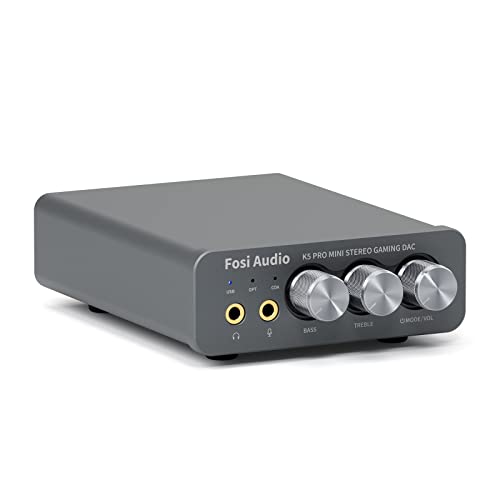
- USB-C, optical, and coaxial DAC inputs
- Up to 1000 mW output at 16 ohms
- Bass, treble, mic, RCA, and AUX controls
Best For: Gaming and flexible desktop audio setups
Four-Listener Session Hub

- Four independent headphone outputs
- Separate volume control for each listener
- Compact metal, plug-and-play design
Best For: Rehearsals, tracking, and shared monitoring
Portable High-Impedance Pick
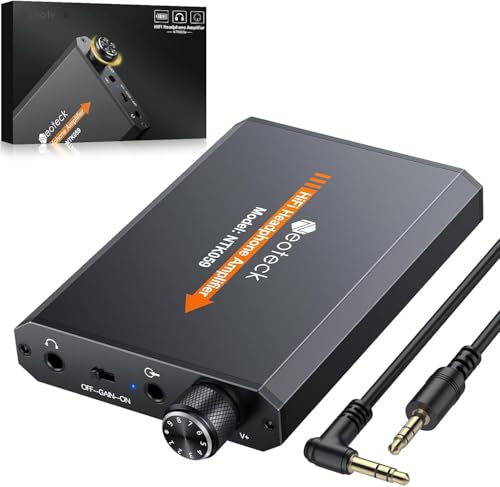
- Supports 16- to 300-ohm headphones
- Two-stage gain switch and volume control
- 12+ hours of rechargeable battery life
Best For: Mobile listening and travel
Warm Tube-Sound Option

- Dual 6K4 tubes for warm analog sound
- Supports 16- to 600-ohm headphones
- RCA and 3.5 mm inputs with 6.35 mm output
Best For: Tube-style desktop listening
High-Power Desktop Pick

- Up to 4600mW+4600mW balanced output at 32Ω
- Class AB discrete amplification
- 4.4mm and 3.5mm headphone outputs
Best For: Demanding planar magnetic and high-impedance headphones
Gaming Connectivity Pick
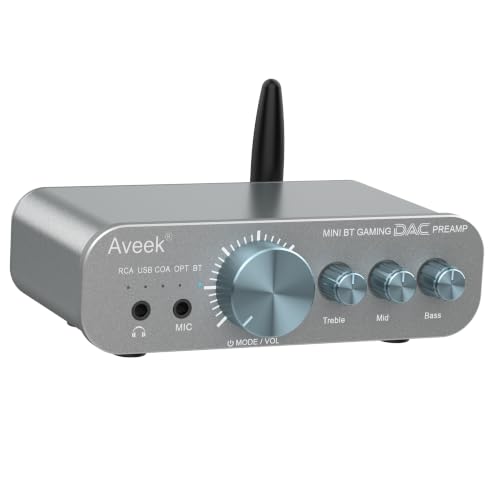
- Five input types, including Bluetooth and optical
- Three-band bass, mid, and treble EQ
- Supports 16–100Ω headphones
Best For: PC, PS5, game chat, and multi-source desktop audio
Shared Listening Pick
LZSIG LHA2 4-Channel Headphone Amp
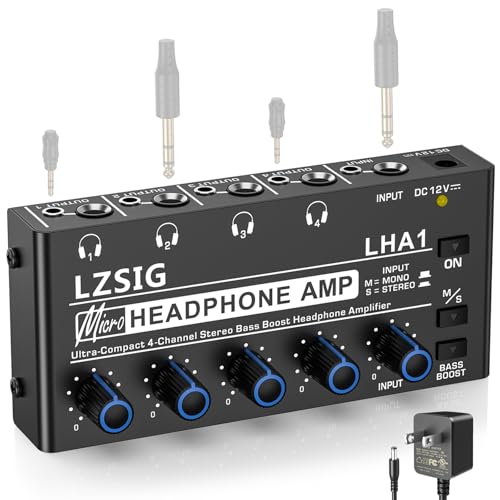
- Four independently controlled headphone outputs
- Accepts 3.5mm and 6.35mm connections
- Bass boost and stereo/mono switching
Best For: Home studios and shared monitoring from one stereo source
Flexible Wired Audio Pick
TNP Portable 3.5mm Headphone Amplifier

- 3.5mm and RCA input support
- 3.5mm and 6.3mm outputs
- Analog volume knob with 5V power
Best For: Home audio and desktop wired setups
Best Wireless Upgrade
Neoteck Bluetooth 5.0 Headphone Amplifier

- Bluetooth 5.0 and 3.5mm AUX
- Two-stage gain for 16–300Ω headphones
- 1500mAh battery lasts over 8 hours
Best For: Wireless use with existing wired headphones
Best for Guitar Practice
LEKATO Micro FX Guitar Headphone Amp
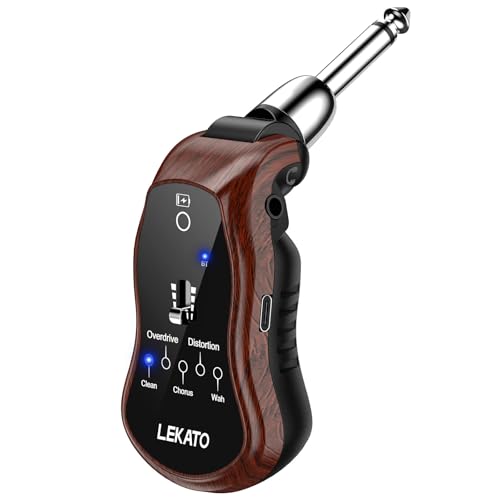
- Five built-in guitar effects
- Bluetooth backing-track reception
- Over 8 hours of rechargeable use
Best For: Quiet electric guitar and bass practice
Gaming DAC Powerhouse – Fosi Audio K5 Pro
For shoppers comparing headphone amplifiers under 200, the Fosi Audio K5 Pro stands out as a versatile desktop DAC and amplifier for gaming, music, and powered-speaker setups. It supports USB-C, optical, and coaxial inputs, adds microphone connectivity, and includes bass, treble, and volume controls.
Best For: Gamers and desktop listeners who need flexible digital inputs, microphone support, and strong headphone output.
Pros:
- Supports headphones from 16 to 300 ohms with up to 1000 mW output at 16 ohms.
- Includes USB-C, optical, coaxial, RCA, AUX, and microphone connections.
- Offers bass and treble controls plus low-noise performance with a Texas Instruments NE5532 op-amp.
- Works with PS5, computers, Macs, phones, and active speakers.
Cons:
- The audio source must connect through the USB-A/C port when using the USB input function.
- Its feature set is primarily suited to desktop systems rather than simple portable use.
With broad connectivity and substantial rated output, the K5 Pro is a strong all-around choice when a headphone amplifier also needs to serve as a gaming DAC and desktop audio hub.
Four-Listener Session Hub – Mackie HM-4
Among headphone amplifiers under 200, the Mackie HM-4 is a straightforward solution for sharing one audio source with multiple listeners. Its four outputs each have independent level controls, making it useful for rehearsals, tracking sessions, and collaborative monitoring.
Best For: Bands, recording sessions, and rehearsals where up to four people need separate headphone volume control.
Pros:
- Drives four headphones from a source with a 1/4-inch or 1/8-inch output.
- Provides an independent volume control for every listener.
- Compact metal housing can be attached to a desk, rack, or stand with Velcro.
- Plug-and-play operation requires no separate power-supply setup.
Cons:
- It is designed for multi-headphone distribution rather than portable listening or DAC conversion.
- The supplied details do not specify headphone impedance support or per-channel power output.
The HM-4 keeps monitoring simple: connect a source, plug in up to four headphones, and let each listener set a comfortable level. It is a practical studio accessory rather than a feature-heavy audiophile amplifier.
Portable High-Impedance Pick – Neoteck 16-300 Ohm Amp
For portable headphone amplifiers under 200, the rechargeable Neoteck model focuses on compatibility and mobility. Its two-stage gain switch is designed for 16- to 300-ohm headphones, while the compact aluminum body and 12-hour battery make it practical for use with phones, laptops, and portable players.
Best For: Travelers and mobile listeners who want extra drive for low-, medium-, or high-impedance headphones.
Pros:
- Supports headphones rated from 16 to 300 ohms.
- Two-stage gain switching helps increase signal power and refine output.
- Rechargeable 1500 mAh battery provides over 12 hours of continuous use.
- Lightweight, smartphone-sized aluminum design weighs about 102 g according to the product notes.
Cons:
- Uses a 3.5 mm input and output, so it does not provide digital inputs or balanced connections.
- Requires charging for portable operation.
The Neoteck is a sensible choice when portability matters as much as headphone drive. Its wide impedance range and gain switch make it more flexible than a basic phone or laptop headphone output.
Warm Tube-Sound Option – Rockville TubeHead
Among headphone amplifiers under 200, the Rockville TubeHead is aimed at listeners who want a warmer, vintage-inspired presentation. Its dual 6K4 vacuum tubes, compact aluminum chassis, and support for headphones from 16 to 600 ohms make it suitable for home listening, gaming, or studio monitoring.
Best For: Audiophiles and desktop listeners seeking tube coloration with broad headphone compatibility.
Pros:
- Dual 6K4 vacuum tubes provide a warm, analog-style sound.
- Supports a wide 16- to 600-ohm headphone range.
- Offers RCA and 3.5 mm inputs with a 6.35 mm headphone output.
- Compact aluminum construction includes volume control and dual-input selection.
Cons:
- Maximum rated output is 180 mW at 32 ohms, which may be less than some high-powered desktop amplifiers.
- Its tube-based design is less suited to users seeking a strictly neutral solid-state presentation.
The TubeHead makes the most sense for listeners who value tube character and flexible impedance support. Its analog inputs and compact chassis keep it focused on straightforward desktop headphone use.
High-Power Desktop Pick – FiiO JadeAudio GIGAS 1
For shoppers comparing headphone amplifiers under 200, the FiiO JadeAudio GIGAS 1 stands out for its high-power desktop output and flexible connectivity. Its Class AB discrete design, balanced 4.4mm output, and support for optional 12V USB-C PD power make it especially suitable for demanding headphones.
Best For: Planar magnetic and high-impedance headphones, desktop listeners, and users who want balanced or single-ended connectivity.
Pros:
- Delivers up to 4600mW+4600mW through the 4.4mm balanced output at 32Ω.
- Class AB discrete amplification uses high-current transistor pairs for control and low distortion.
- Supports 4.4mm balanced and 3.5mm outputs, with CTIA microphone pass-through on 3.5mm.
- Works with RCA and 3.5mm sources and supports 5V USB or 12V USB-C PD power.
Cons:
- Its desktop-focused design may be more capability than needed for basic headphones.
- Higher output capability requires compatible 12V USB-C PD power.
The GIGAS 1 is a strong choice when power and headroom matter most. Dual gain modes also help it accommodate both sensitive IEMs and power-hungry headphones, while the compact 5.2-inch-wide chassis fits neatly into a desktop setup.
Gaming Connectivity Pick – Aveek DAC-200 Gaming DAC Amp
Among headphone amplifiers under 200, the Aveek DAC-200 is a versatile option for gaming and desktop audio. It combines a DAC, headphone amplifier, and preamp with Bluetooth, USB, optical, coaxial, and RCA inputs, making it useful for mixed PC, console, TV, and music setups.
Best For: PC and PS5 gaming, game chat, streaming, and listeners who need multiple digital and analog inputs.
Pros:
- Offers Bluetooth, USB, optical, coaxial, and RCA input options.
- Three-band bass, mid, and treble EQ provides direct sound customization.
- Supports headphones from 16–100Ω, including IEMs, gaming headsets, and full-size headphones.
- Includes a front microphone input and headphone monitoring for communication and streaming.
Cons:
- The stated headphone range is limited to 16–100Ω.
- Its many functions may be unnecessary for users seeking a simple analog amplifier.
The DAC-200 makes the most sense for an all-in-one desktop audio station. Its 24-bit/96kHz processing, 113dB SNR, and compact metal chassis support everyday listening, while the rear 3.5mm output adds preamp flexibility.
Shared Listening Pick – LZSIG LHA2 4-Channel Headphone Amp
For buyers seeking headphone amplifiers under 200 for shared monitoring, the LZSIG LHA2 focuses on practical multi-headphone use. One stereo input feeds four independently controlled outputs, and the unit accepts both 3.5mm and 6.35mm connections.
Best For: Home studios, musicians, audio interfaces, DJ mixers, and groups sharing one stereo source.
Pros:
- Drives up to four pairs of 32–100Ω headphones with separate volume controls.
- Accepts both 3.5mm and 6.35mm headphones without requiring an adapter.
- Bass boost enhances selected frequency bands for stronger vocals and bass.
- Metal chassis, heavy-duty knobs, stereo/mono switching, and low-noise circuitry suit studio or stage use.
Cons:
- It is a four-channel headphone amplifier, not a mixer.
- The single-input design is intended for distributing one source rather than switching among sources.
- Its stated headphone support is 32–100Ω.
The LZSIG LHA2 is a purpose-built distribution amplifier rather than a general desktop DAC. Its independent level controls and anti-crosstalk design make it a practical solution when several listeners need comfortable monitoring from the same source.
Flexible Wired Audio Pick – TNP Portable 3.5mm Headphone Amplifier
If you are comparing headphone amplifiers under 200 for a home or desktop setup, the TNP Portable 3.5mm Headphone Amplifier offers a straightforward wired design. It supports 3.5mm and RCA inputs, provides both 3.5mm and 6.3mm outputs, and includes a physical analog volume knob.
Best For: Home audio, PC setups, studios, and listeners who need flexible wired connections.
Pros:
- Supports 3.5mm or RCA input, with 3.5mm and 6.3mm stereo outputs.
- Analog volume control and power switch make adjustments simple.
- Includes a 5V power adapter and can also use Micro-USB power.
- Compact, lightweight design with an LED power indicator.
Cons:
- It is a wired amplifier without Bluetooth functionality.
- Only one input should be connected at a time.
The TNP is a practical choice when connection flexibility matters more than portability. Its dual output options make it useful for headphones with either standard or larger stereo plugs.
Best Wireless Upgrade – Neoteck Bluetooth 5.0 Headphone Amplifier
Among headphone amplifiers under 200, the Neoteck Bluetooth 5.0 model stands out for combining wired AUX connectivity with wireless reception. Its two-stage gain control is designed for 16–300Ω headphones, while the rechargeable battery supports more than eight hours of playback.
Best For: Listeners who want to use wired headphones wirelessly with phones, laptops, and other Bluetooth devices.
Pros:
- Bluetooth 5.0 with SBC/AAC decoding and a stated range of up to 26 feet.
- Two-stage gain switch supports low- and high-impedance headphones.
- 1500mAh rechargeable battery provides over eight hours of continuous playback.
- Works with Bluetooth or 3.5mm AUX connections.
Cons:
- Bluetooth playback is limited to the supported SBC/AAC codecs.
- It is intended for wired headphones or speakers, not Bluetooth headphones.
The Neoteck is a versatile option for upgrading existing wired headphones without giving up wireless convenience. Its gain switch and broad device compatibility make it especially adaptable for everyday mobile listening.
Best for Guitar Practice – LEKATO Micro FX Guitar Headphone Amp
For shoppers browsing headphone amplifiers under 200 specifically for guitar practice, the LEKATO Micro FX serves a different purpose from conventional hi-fi amps. It is a compact electric guitar and bass headphone amp with five effects, Bluetooth reception for backing tracks, and a rechargeable battery.
Best For: Quiet electric guitar, bass, and electric-acoustic practice with wired headphones or speakers.
Pros:
- Includes clean, chorus, overdrive, distortion, and wah effects.
- Bluetooth reception lets you play backing music from a phone or other device.
- Built-in rechargeable battery provides more than eight hours of operation.
- 180-degree swivel plug supports guitars with different jack positions.
Cons:
- It is designed for instruments with pickups rather than general music listening.
- Bluetooth is for receiving music and does not support Bluetooth headphones or speakers.
- Sound output requires wired headphones or speakers.
The LEKATO is a focused practice tool rather than a universal headphone amplifier. Its effects, silent-play design, and portable form make it a strong fit for guitarists who want to practice without disturbing others.
How We Picked the Best Headphone Amplifiers Under 200
We evaluated these models by looking at the features that matter most at this price: headphone impedance support, output power, connection options, controls, portability, and intended use. We also considered whether each amplifier is designed for a single listener, multiple headphones, gaming, mobile listening, or instrument practice.
Specifications can vary by input, output, and connected headphones, so treat quoted power figures as a comparison point rather than a guarantee of louder or better sound. A well-matched amplifier should provide clean headroom without forcing you to run the volume control near its limit.
Quick Comparison
| Best For | What to Look For |
|---|---|
| Desktop music listening | Clean output, useful gain, and a suitable DAC or analog input |
| Gaming | Low-latency connections, easy volume control, and microphone or console compatibility |
| Sharing headphones | Multiple independent outputs or a multi-channel design |
| Portable listening | Battery power, compact construction, and a 3.5mm connection |
| Guitar practice | Instrument input, rechargeable power, and a dedicated headphone output |
Key Buying Factors for Headphone Amplifiers Under 200
Power and Impedance
Check the amplifier’s recommended impedance range against your headphones. Easy-to-drive earbuds and low-impedance headphones need less power, while many high-impedance studio headphones benefit from additional voltage and gain. More power is useful only when it remains clean and controllable.
Inputs and Outputs
Choose connections that match your source. USB or optical inputs may be useful for computers and consoles, while RCA and 3.5mm inputs suit traditional audio equipment. Bluetooth adds convenience, but wired connections are generally the safer choice when latency and maximum consistency matter.
Controls and Features
Look for a substantial volume control, selectable gain, bass adjustment, or an output arrangement that fits your setup. Bass boost and EQ can be helpful, but they should be treated as optional tuning tools rather than substitutes for a compatible amplifier and headphones.
Size and Power
Desktop units usually offer more output and connection flexibility. Portable models are better for phones and laptops, but battery life, charging, and output limits become part of the decision. Tube-style designs may appeal to listeners who want a particular aesthetic or tonal character, though they are not automatically more accurate.
Who Should Buy Which Headphone Amplifiers Under 200?
Choose a compact DAC amplifier if you mainly listen from a computer and want a simple desktop upgrade. A multi-channel model makes more sense for music sharing, teaching, monitoring, or connecting several headphones at once. Gamers should prioritize console and PC compatibility, convenient controls, and low-latency operation.
Choose a portable amplifier when your source has limited output or you regularly listen away from a desk. Guitarists should select an instrument-specific practice amp rather than a general headphone amplifier. Before buying, confirm the connector type, impedance range, power requirements, and whether the device includes the cables or adapters your setup needs.