Choosing among podcast recorders for beginners can feel complicated when product listings mix handheld recorders, podcast mixers, microphones, and complete bundles. The right choice depends less on having the most features and more on matching your recording style, microphone needs, and comfort with setup.
We’ve selected 10 practical options for first-time creators, from compact recorders for mobile interviews to multitrack systems designed for several guests. Use the guide below to compare the features that matter before you buy.
Best 10 Podcast Recorders for Beginners Picks for 2026
Best All-in-One Recorder

- Four XLR inputs with phantom power
- Four headphone outputs with individual volume
- Mix-minus for phone and remote interviews
Best For: Beginner group podcasts and remote interviews
Best Complete Starter Kit

- Includes two XLR mics and headphones
- Two-channel interface with two headphone outputs
- USB-A, USB-C, and Lightning cables included
Best For: Two-person podcasts and mobile recording
Best Portable Field Recorder

- Built-in stereo microphones for quick recording
- Two XLR/TRS inputs for external gear
- 32-bit float and USB-C recording support
Best For: Podcasts, interviews, video audio, and field recording
Best Beginner Streaming Mixer

- Includes condenser mic and audio mixer
- Built-in and recordable sound effects
- Supports two people and multiple streaming platforms
Best For: Podcasting and live streaming with voice effects
Best Pro-Ready Pick

- 32-bit/96kHz recording with clip-free 32-bit float audio
- Two locking XLR/TRS combo inputs
- OLED waveform display and SDXC support up to 1TB
Best For: Beginners planning to use multiple microphones or instruments
Best All-in-One Bundle
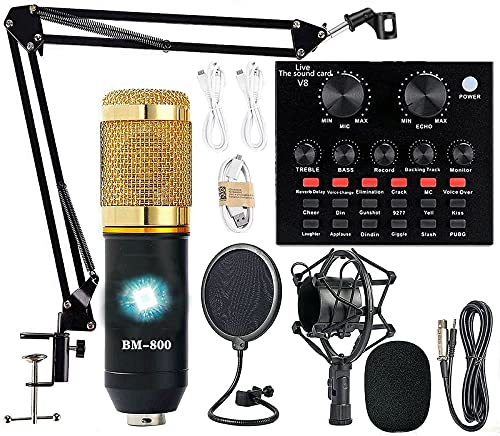
- Includes microphone, arm, shock mount, pop filter, and sound card
- Cardioid condenser microphone for voice recording
- Supports computers, phones, tablets, and gaming platforms
Best For: Beginners building a desktop podcast or streaming station
Best Simple Stereo Recorder

- Built-in X/Y stereo microphones
- 32-bit float recording for clip-free audio
- USB-C microphone mode for streaming and calls
Best For: Beginners seeking a lightweight recorder for portable content and interviews
Best All-in-One Starter Kit

- Four XLR inputs with phantom power
- Four headphone outputs and sound pads
- Includes two ZDM-1 podcast packs
Best For: Beginners launching a two-microphone podcast
Best Mixer-Style Setup
Zoom L8 with Mic and Headphones

- Eight-channel digital mixer/recorder
- Includes microphone and closed-back headphones
- Adds tripod, cable, and windscreen
Best For: Beginners needing a larger corded setup
Best for Four Hosts

- Four XLR inputs and headphone outputs
- Includes four ZDM-1 podcast packs
- Supports sound pads and call-ins
Best For: Four-person beginner podcast teams
Best All-in-One Recorder – Zoom PodTrak P4
For beginners comparing podcast recorders for beginners, the Zoom PodTrak P4 is a practical choice for multi-person shows. It combines four XLR microphone inputs, four individually controlled headphone outputs, programmable sound pads, and phone or USB connectivity in a battery-powered recorder.
Best For: Beginner podcasters recording group discussions, call-in interviews, or remote guests.
Pros:
- Four XLR inputs with phantom power support up to four microphones.
- Four headphone outputs include individual volume control.
- Automatic mix-minus supports phone and remote interviews.
- Records multiple inputs and sound pads to separate tracks.
Cons:
- Battery life is listed at up to 3.5 hours on two AA batteries.
- It is designed around WAV recording rather than a broader range of listed formats.
The P4 is especially appealing when you expect to add co-hosts or guests. Its mix-minus and headphone features also reduce the need for extra equipment as your show grows.
Best Complete Starter Kit – Movo PodPro Bundle
The Movo PodPro is a convenient entry point for beginners searching for podcast recorders for beginners because it includes the core equipment for two people. The bundle pairs a dual-channel USB interface with two XLR dynamic microphones, headphones, stands, cables, and a travel case.
Best For: Two-person podcasts and mobile creators who want microphones and monitoring gear included.
Pros:
- Includes two dynamic XLR microphones, tabletop stands, and headphones.
- The interface provides two XLR inputs with 48V phantom power and two headphone outputs.
- USB-A, USB-C, and Lightning cables support computers, iPhones, iPads, and Android devices.
- Battery operation is rated for up to eight hours, or three hours with phantom power.
Cons:
- The listed maximum sample rate is 16 kHz.
- Its 2-channel design is less suited to larger panels.
This bundle removes much of the guesswork from a first setup. It is a strong fit if you want to record with a partner immediately and value included accessories over expanding to many microphone inputs.
Best Portable Field Recorder – Zoom H4 Essential
For creators evaluating podcast recorders for beginners beyond a desk setup, the Zoom H4 Essential offers a flexible handheld format. It has built-in stereo microphones, two XLR/TRS inputs, four-track recording, USB-C connectivity, and 32-bit float recording designed to help avoid clipped takes.
Best For: Podcasters who also record interviews, video audio, music, live performances, or field sound.
Pros:
- Built-in stereo microphones provide a ready-to-use recording option.
- Two XLR/TRS inputs connect external microphones, instruments, mixers, or soundboards.
- 32-bit float recording helps protect against distorted takes.
- Can record or stream over USB-C while saving a backup to an SD card.
Cons:
- It has two external input channels rather than four.
- Two AA batteries are required for battery operation.
The H4 Essential is a better fit for a beginner who wants one recorder for podcasting and broader creative work. Its built-in microphones simplify quick sessions, while the external inputs leave room for more controlled setups.
Best Beginner Streaming Mixer – MAONO Podcast Bundle
The MAONO bundle takes a mixer-first approach for people comparing podcast recorders for beginners. It includes a condenser microphone, audio mixer, built-in effects, real-time monitoring, and connections for smartphones or PCs, making it geared toward podcasts and live streaming.
Best For: Beginners who want simple voice effects and live-streaming controls for a one- or two-person setup.
Pros:
- Includes a microphone, stand, cable, windscreen, mixer, and charging cable.
- Offers four recordable effects and eight built-in sound effects.
- Supports up to two people, four devices, and four platforms for simultaneous streaming.
- Includes voice changing, denoise, reverb, and real-time monitoring features.
Cons:
- The AM200 supports only 3.5mm microphone input and does not support phantom power.
- Phones without a 3.5mm jack require an OTG adapter, which is not included.
- Instrument connections may require an additional 6.35mm-to-3.5mm adapter.
This is less of a traditional multitrack recorder and more of an accessible live-production station. Choose it when immediate effects and streaming controls matter more than XLR expansion or advanced recording features.
Best Pro-Ready Pick – Zoom H1 XLR Recorder
For beginners comparing podcast recorders for beginners, the Zoom H1 XLR offers a straightforward path to cleaner, more flexible recordings. Its two XLR/TRS combo inputs support microphones and instruments, while 32-bit/96kHz recording and the waveform display help you capture and monitor detailed audio.
Best For: Beginners who want a portable recorder with two professional-style inputs for interviews, podcasts, or music.
Pros:
- Records in 32-bit/96kHz with clip-free 32-bit float audio.
- Two locking XLR/TRS combo inputs accommodate microphones and instruments.
- OLED waveform display makes level monitoring easier.
- Supports SDXC cards up to 1TB and includes 3.5mm input and headphone output.
Cons:
- Requires two AA batteries.
- Its extra inputs may be more capability than a beginner needs for a simple solo setup.
The H1 XLR is a strong choice if you expect your podcast setup to grow. It combines beginner-friendly monitoring with inputs suited to more advanced microphones and recording sources.
Best All-in-One Bundle – BM-800 Podcast Equipment Kit
This BM-800 package is a convenient starting point for beginners searching for podcast recorders for beginners and wanting the accessories included in one kit. It combines a condenser microphone, arm stand, shock mount, pop filter, windscreen, cables, and a live sound card for podcasting, streaming, and recording.
Best For: New podcasters and streamers who want a complete desktop microphone setup with voice effects and broad device compatibility.
Pros:
- Includes the microphone, scissor arm, shock mount, pop filter, windscreen, cables, and live sound card.
- Cardioid pickup pattern focuses on sound from in front of the microphone.
- Works with Windows, Mac OS, smartphones, tablets, game consoles, and other listed platforms.
- Offers multiple sound effects and voice-changing functions.
Cons:
- The bundle is a one-channel setup.
- The sound card must be charged before use.
- Its many accessories and connection options may require more setup than a standalone recorder.
This kit makes sense for beginners who want to start at a desk and value included accessories over a compact, battery-powered field recorder. It is particularly suited to live streaming and voice-focused content.
Best Simple Stereo Recorder – Zoom H1 Essential
The Zoom H1 Essential is an approachable option for beginners comparing podcast recorders for beginners and prioritizing quick, portable recording. Its built-in X/Y stereo microphones capture podcasts, interviews, lessons, and ambient audio, while USB-C microphone mode supports streaming, calls, and computer or mobile recording.
Best For: Beginners who want a lightweight recorder for interviews, voiceovers, content creation, and everyday stereo audio.
Pros:
- Built-in X/Y stereo microphones capture natural stereo sound.
- 32-bit float recording helps provide clip-free audio.
- Can function as a USB microphone for calls, livestreams, podcasts, and voiceovers.
- Compact 92g design and approximately 10-hour battery life support portable use.
Cons:
- Uses two AAA batteries.
- Built-in stereo microphones are less flexible than a recorder with XLR inputs.
- It is designed for stereo operation rather than a multi-input podcast setup.
The H1 Essential is a practical first recorder for creators who want to press record without assembling a full microphone system. Choose it for mobility and simplicity, especially when recording interviews, ideas, or content away from a desk.
Best All-in-One Starter Kit – PodTrak P4 with 2 ZDM-1 Packs
Zoom PodTrak P4 Portable Multitrack Podcast Recorder Bundle with 2X Zoom ZDM-1 Podcast Pack
Check Price On AmazonFor beginners comparing podcast recorders for beginners, this PodTrak P4 bundle offers a practical way to start with two included ZDM-1 podcast packs. Its four XLR inputs, headphone outputs, sound pads, and call-in support cover common interview and conversational recording setups.
Best For: Beginners starting a two-microphone podcast or recording remote guests through a smartphone or USB connection.
Pros:
- Four high-gain XLR microphone inputs with +48V phantom power.
- Four independent headphone outputs for monitoring.
- Four sound pads for music and samples.
- Includes two Zoom ZDM-1 podcast packs.
Cons:
- The bundle includes two microphone packs, so it is less suited to larger four-microphone teams.
- Uses 3.5 mm headphone connections.
This is a well-rounded entry point for a small podcast team, especially if you want included microphones and straightforward support for phone or USB call-ins.
Best Mixer-Style Setup – Zoom L8 with Mic and Headphones
Among podcast recorders for beginners, the Zoom L8 bundle is a larger mixer/recorder option for creators who want an eight-channel setup. It pairs the L8 with a ZDM-1 microphone pack that includes headphones, a tripod, cable, and windscreen.
Best For: Beginners who want an eight-channel, corded mixer/recorder setup with a microphone and monitoring accessories included.
Pros:
- Eight-channel digital mixer/recorder configuration.
- Includes a ZDM-1 large-diaphragm dynamic microphone.
- Bundle includes closed-back headphones, tripod, cable, and windscreen.
- Provides USB connectivity and XLR audio inputs and output.
Cons:
- Its corded-electric power source is less portable than a battery-powered recorder.
- The supplied bundle includes one microphone pack.
The L8 is a sensible choice if your beginner setup needs more channels than a compact recorder and you prefer a bundled mixer, microphone, and monitoring accessories.
Best for Four Hosts – PodTrak P4 with 4 ZDM-1 Packs
Zoom PodTrak P4 Portable Multitrack Podcast Recorder Bundle with 4X Zoom ZDM-1 Podcast Pack
Check Price On AmazonThis PodTrak P4 bundle is a strong fit for beginners comparing podcast recorders for beginners who expect a full four-person conversation. It provides four XLR inputs, four independent headphone outputs, sound pads, and four included ZDM-1 podcast packs.
Best For: New podcasts with up to four microphone users who want matching microphone packs and individual headphone monitoring.
Pros:
- Four high-gain XLR inputs with +48V phantom power.
- Four independent headphone outputs.
- Four sound pads for music and samples.
- Includes four Zoom ZDM-1 podcast packs.
Cons:
- The four-pack bundle may be more equipment than a solo or two-person show needs.
- Records up to four hours according to the supplied details.
Choose this version when your format regularly involves four speakers; the matching four-microphone bundle avoids needing to add microphones separately at the start.
How We Picked These Podcast Recorders for Beginners
We focused on equipment that lowers the technical barrier without limiting future use. The selection includes dedicated podcast recorders, handheld audio recorders, mixer-based systems, and all-in-one bundles. We considered input count, headphone monitoring, portability, connection options, multitrack recording, included accessories, and how easily each product can fit a beginner’s workflow.
Because bundles vary considerably, check the exact contents before ordering. A package may include microphones, headphones, cables, stands, or a sound card, while a recorder-only listing may require additional equipment.
Quick Comparison
| Best For | Look For |
|---|---|
| Solo podcasts | A simple recorder with one reliable microphone input |
| Two-person interviews | At least two inputs and separate headphone monitoring |
| Group shows | Four or more microphone inputs and multiple headphone outputs |
| Remote interviews | Phone or USB connectivity, plus easy mix-minus or routing features |
| Mobile recording | Compact size, battery operation, and built-in microphones |
| Streaming and live content | Physical controls, sound pads, and flexible computer connections |
Key Buying Factors for Podcast Recorders for Beginners
Inputs and Microphone Compatibility
Count how many people may speak at once, then choose enough inputs for each microphone. XLR inputs are a strong choice for traditional dynamic podcast microphones, while 3.5mm connections can suit lavalier microphones and simple mobile setups. Some handheld recorders also include built-in microphones for fast location recording.
Monitoring and Recording Control
Separate headphone outputs help each guest hear the conversation clearly, but they are especially important for multi-person shows. Physical gain controls, mute buttons, level meters, and sound pads can make live recording easier and reduce software dependence.
Portability and Power
Battery-powered handheld models are convenient for interviews, travel, and field work. Larger podcast mixers generally provide more control but need more desk space and may be better suited to a permanent setup.
Connectivity and Workflow
USB connectivity is useful for recording directly to a computer or using the device as an audio interface. Phone inputs can simplify remote calls, while multitrack recording gives you more control when editing individual voices later.
Included Accessories
Bundles can offer good value if you need microphones, headphones, stands, and cables immediately. However, confirm microphone quality and connector types rather than assuming every accessory is equally useful.
Who Should Buy Which Podcast Recorders for Beginners?
Choose a compact handheld recorder if you want the simplest portable setup or plan to record interviews away from a desk. A two-channel model is usually enough for a host and one guest, while a four-input podcast recorder is more practical for regular group discussions and multiple microphones.
Choose a mixer-style podcast system if you want hands-on controls, several headphone outputs, sound effects, or a setup that can grow with your show. A complete microphone bundle is best for buyers who need to start immediately and do not already own compatible accessories. For creators who expect to edit heavily, prioritize multitrack recording and reliable USB connectivity over the largest accessory package.