The best portable streaming encoders make it easier to send high-quality video from events, studios, classrooms, houses of worship, and remote locations. The right model can simplify switching, recording, network delivery, and platform streaming in one compact setup.
This roundup compares 10 options ranging from pocket-friendly HDMI encoders to full all-in-one production systems. Focus on your input sources, output protocols, resolution needs, and how much hands-on control you want during a broadcast.
Best 10 Portable Streaming Encoders Picks for 2026
Best All-in-One Studio

- Encoder, switcher, monitor, and recorder in one unit
- Three HDMI inputs with support for up to eight sources
- 8-inch touchscreen and over four hours of battery use
Best For: Mobile multi-camera production without a laptop
Best Ultra-Portable 4K Encoder
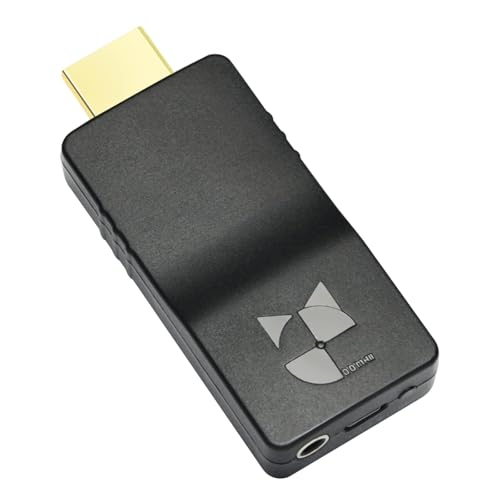
- 25-gram design with 2.6-watt power consumption
- Accepts 4K30 input and supports H.265 and H.264
- Streams to up to four platforms simultaneously
Best For: Compact, low-power 4K broadcast installations
Best for Advanced Mobile Production

- 4K encoder, switcher, recorder, and monitor in one device
- Four HDMI inputs plus USB connections for 10+ sources
- Supports ISO recording, NDI, SRT, and network bonding
Best For: Multi-camera events needing advanced production and redundancy
Best for NDI and Gaming Workflows

- 4K HDMI passthrough with compact standalone streaming
- Converts HDMI to NDI|HX3, HX2, and HX
- Supports SRT, RTMP(S), RTSP, and HLS
Best For: Gaming, PTZ, and flexible IP-video production
Best All-in-One Pick

- Eight HDMI inputs with 4K60 scaling
- 4K ISO recording and instant replay
- 10-hour battery with large OLED touchscreen
Best For: Complex multi-camera sports, events, and mobile productions
Best Network-Workflow Value
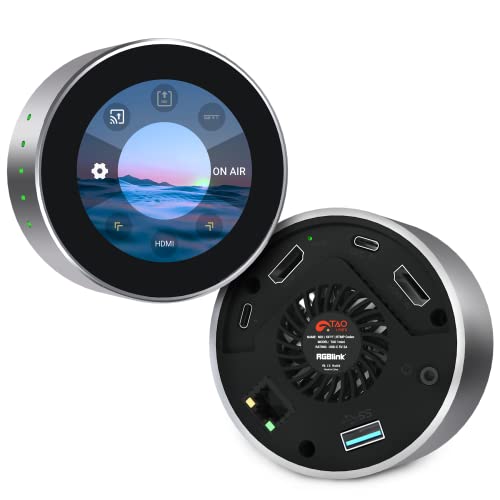
- Functions as both NDI encoder and decoder
- Supports NDI, SRT, RTMP, and RTSP
- HDMI, USB-C, Wi-Fi, Bluetooth, and Ethernet
Best For: Flexible networked streaming and media workflows
Best Fixed HDMI Encoder

- One 4K30 or four 1080p30 output modes
- H.264/H.265 encoding with SRT and RTMP
- OLED status display and HDMI loop-out
Best For: Single-source wired streaming, IPTV, signage, and meetings
Best All-in-One Production Hub

- Standalone switching, encoding, recording, and streaming
- HDMI, USB, IP, media, and mobile-camera inputs
- AMOLED touchscreen and hot-swappable battery support
Best For: Mobile creators needing a complete field-production system
Best Ultra-Compact HDMI Encoder

- 32g design with 2.4W power consumption
- H.264/H.265 encoding and broad protocol support
- Can use HDMI power or a USB power bank
Best For: Lightweight HDMI broadcasting and remote video installations
Best Remote-Controlled 1080p60 Encoder
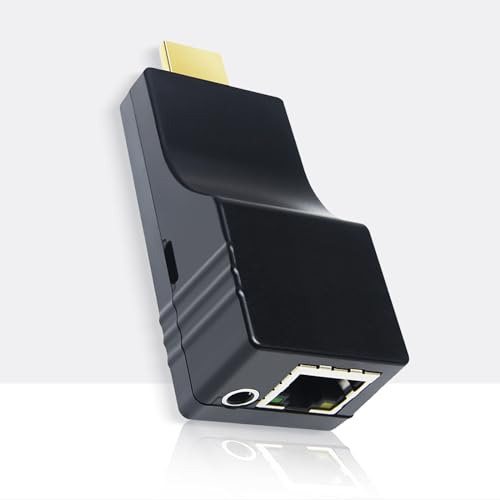
- 1080p60 encoding with up to 16Mbps bitrate
- Cloud, web UI, and remote monitoring control
- Tiny 32g, 2.4W USB-powered design
Best For: Remote HDMI streaming with cloud management and OSD branding
Best All-in-One Studio – YoloBox Pro
The YoloLiv YoloBox Pro is a highly integrated option among portable streaming encoders. It combines encoding, switching, monitoring, and recording in a battery-powered 8-inch touchscreen unit, with HDMI, USB, SD card, NDI, and multiple network connection options.
Best For: Mobile creators, event teams, and multi-camera streamers who want a standalone production system without a laptop.
Pros:
- Combines encoder, switcher, monitor, and recorder in one portable device.
- Supports three HDMI inputs, up to eight sources, and one NDI signal input.
- Offers 4G LTE, Wi-Fi, Ethernet, and bonding support, plus over four hours of battery use.
- Includes overlays, cropping, instant replay, and auto-switching at no additional cost.
Cons:
- Its 1080p60 capability is less suited to workflows requiring 4K production.
- Bonding may involve additional charges.
- The broad feature set may take time to learn.
The YoloBox Pro is a strong choice when portability and hands-on production control matter more than maximum resolution. Its built-in display and long feature list make it especially practical for live events and multi-camera work.
Best Ultra-Portable 4K Encoder – DDMALL HEV-4KW
The DDMALL HEV-4KW stands out among portable streaming encoders for its tiny 25-gram design and low 2.6-watt power draw. It accepts up to 4K at 30Hz and supports several streaming protocols, making it suitable for compact installations and mobile broadcasting setups.
Best For: Travelers, event crews, and installations where low weight, low power use, and 4K input support are priorities.
Pros:
- Extremely compact at 75 x 32 x 15mm and lightweight at 25 grams.
- Supports up to 4K at 30Hz input and H.265 or H.264 encoding.
- Works with RTMP, RTMPS, SRT, HLS, RTSP, RTP, TCP, and UDP protocols.
- Can broadcast to up to four live platforms simultaneously.
Cons:
- Has only one HDMI port.
- Its 4K support is limited to 30Hz.
- Cloud management and some wireless features may require additional setup.
Choose the HEV-4KW when minimizing equipment size and power consumption is essential. Its protocol flexibility and multi-platform support are impressive for such a small encoder, though it is more specialized than an all-in-one production switcher.
Best for Advanced Mobile Production – YoloBox Ultra
The YoloLiv YoloBox Ultra is a powerful choice among portable streaming encoders, combining a 4K encoder, switcher, recorder, and 8-inch touchscreen. It adds vertical and horizontal streaming, NDI and SRT support, cellular bonding, and ISO recording for more advanced live production workflows.
Best For: Sports, churches, schools, creators, and production teams that need multi-camera switching, network redundancy, and separate input recordings.
Pros:
- Combines 4K encoding, switching, recording, and monitoring in one device.
- Supports four HDMI inputs plus USB-C and USB-A for more than 10 sources.
- Can stream to three horizontal or two vertical platforms simultaneously.
- Offers ISO recordings, NDI, SRT, and up to five combined network connections.
Cons:
- At 1kg, it is less lightweight than simpler portable encoders.
- Cellular bonding may involve additional charges.
- Its advanced production features can increase setup complexity.
The YoloBox Ultra is the most capable option here for demanding mobile productions. Its 4K workflow, vertical-streaming support, ISO recording, and network redundancy make it a strong fit when a compact device must handle more than basic encoding.
Best for NDI and Gaming Workflows – ZowieBox
The ZowieBox is a compact choice among portable streaming encoders for gaming and IP-video workflows. It can encode HDMI to NDI, RTMP, SRT, or RTSP, provide zero-lag HDMI passthrough, and decode IP video back to HDMI for flexible production setups.
Best For: Gamers, PTZ-camera operators, and broadcasters who need NDI conversion, HDMI passthrough, or PC-free streaming.
Pros:
- Supports up to 4K capture with zero-lag HDMI passthrough.
- Provides NDI|HX3, HX2, and HX conversion for IP-video workflows.
- Supports SRT, RTMP(S), RTSP, and HLS streaming protocols.
- Offers USB-C power, PoE, DC output, and tripod mounting.
Cons:
- Encoder and decoder modes cannot operate simultaneously.
- Full NDI signals are not supported.
- USB capture-card functionality is currently unavailable.
The ZowieBox is best understood as a flexible signal-conversion and streaming tool rather than a full production switcher. Its compact build, passthrough, NDI support, and multiple power options make it especially useful for gaming and networked video systems.
Best All-in-One Pick – YoloBox Extreme
The YoloLiv YoloBox Extreme is a powerful choice for shoppers seeking portable streaming encoders for complex multi-camera productions. It combines eight HDMI inputs, NDI support, ISO recording, replay tools, and a large OLED touchscreen in a battery-powered unit.
Best For: Multi-camera sports, events, and mobile productions that need extensive inputs and onboard control.
Pros:
- Connects up to eight HDMI sources with 4K60 scaling and two assignable HDMI outputs.
- Records individual inputs in up to 4K30 or 1080p60 for post-production flexibility.
- Includes NDI HX support, six-camera instant replay, and an advertised 10-hour battery life.
- The 11.2-inch 2.5K OLED touchscreen offers 120Hz refresh and up to 1,000 nits brightness.
Cons:
- Its broad feature set and multiple inputs may be more than simple single-camera streamers need.
- At 2 kg, it is less compact than minimalist portable encoders.
Choose this model when production flexibility matters more than keeping the setup small. Its combination of switching, recording, replay, and network-video support makes it the most capable option here for demanding field workflows.
Best Network-Workflow Value – RGBlink TAO 1Mini
The RGBlink TAO 1Mini is a versatile option among portable streaming encoders, functioning as both an NDI encoder and decoder. Its HDMI, USB-C UVC, Wi-Fi, Bluetooth, and Ethernet connectivity supports flexible streaming, recording, and monitoring without requiring a computer.
Best For: Creators and production teams moving video between cameras, networks, smartphones, and displays.
Pros:
- Works as both an NDI encoder and decoder with support for Full NDI, NDI|HX2, and NDI|HX3.
- Supports H.264, H.265, SRT, RTMP, RTMPS, and RTSP workflows.
- Accepts HDMI and USB-C UVC sources and can record or play H.264 media through USB storage.
- A 2.1-inch touchscreen provides simple control and preview monitoring.
Cons:
- The single HDMI port limits direct HDMI source capacity.
- Its feature-rich network setup may require more configuration than a basic encoder.
This is a strong fit when interoperability is a priority. The encoder-decoder design and wide protocol support make it especially useful for distributed or hybrid productions, while the compact touchscreen keeps basic operation accessible.
Best Fixed HDMI Encoder – ORIVISION EH1401
The ORIVISION EH1401 is a practical choice for buyers comparing portable streaming encoders for a single HDMI source. It accepts up to 4K30 input, supports either one 4K30 stream or four 1080p30 streams, and includes an OLED status display and HDMI loop-out.
Best For: IPTV, digital signage, education, meetings, and live events using a wired HDMI workflow.
Pros:
- Offers selectable 1×4K30 or 4×1080p30 output modes.
- Supports H.265, H.264, and MJPEG encoding with RTMP, RTMPS, SRT, RTSP, HTTP, and UDP.
- OLED status display shows the IP address, resolution, and encoding information.
- Includes HDMI loop-out, ONVIF compatibility, OSD overlays, image flipping, and audio-only encoding.
Cons:
- It has only one HDMI input and relies on 12-volt power rather than an advertised battery.
- The default EDID is 1080p, so 4K input requires changing the setting through the web interface.
Consider this encoder when you want flexible output formats and broad protocol compatibility in a straightforward wired design. It is less suited to battery-powered field work, but its monitoring, loop-out, and integration features are useful in installed or semi-portable setups.
Best All-in-One Production Hub – Magewell Director Mini
The Magewell Director Mini is a powerful choice among portable streaming encoders when you need switching, recording, monitoring, and streaming in one standalone unit. Its touchscreen, multi-source support, and battery options make it well suited to mobile productions without an external computer.
Best For: Mobile creators and production teams that need an integrated switcher, encoder, recorder, and streaming system.
Pros:
- Combines switching, encoding, recording, monitoring, and streaming in a compact device.
- Accepts HDMI, USB, IP, media, and mobile-camera sources.
- Supports H.264/H.265 encoding up to 1080p60 and simultaneous streaming and recording.
- Dual hot-swappable NP-F battery slots support field use.
Cons:
- Its broader production feature set may be more than needed for simple single-camera streaming.
- USB cellular modems are supported but not included.
Choose the Director Mini if production flexibility matters more than minimal setup. The built-in AMOLED display, scene tools, wired and wireless networking, and multiple power options give it a strong advantage for polished field broadcasts.
Best Ultra-Compact HDMI Encoder – DDMALL HEV-2K
The DDMALL HEV-2K is one of the most compact portable streaming encoders for HDMI-based broadcasting. At 32g and 2.4W, it can draw power from many HDMI sources or a USB power bank, making it practical for lightweight, mobile installations.
Best For: Travelers, event crews, and installers who need a tiny HDMI encoder with broad network protocol support.
Pros:
- Ultra-small 75 x 32 x 22mm design weighing 32g.
- Supports up to 1080p60 input and H.264/H.265 encoding up to 1080p30.
- Supports SRT, HLS, RTMP, RTMPS, RTSP, RTP, TCP, UDP, multicast, and unicast.
- Offers DDNS, cloud management, web preview, and multi-platform broadcasting features.
Cons:
- Encoding output is limited to 1080p30 even with 1080p60 input support.
- Its HDMI-focused design provides less production control than an all-in-one switcher.
The HEV-2K is a sensible pick when portability, low power use, and protocol compatibility are priorities. It is especially useful for distributed video, monitoring, teaching, gaming, and other HDMI-source workflows.
Best Remote-Controlled 1080p60 Encoder – DDMALL CEV-2K
The DDMALL CEV-2K combines a tiny HDMI-over-IP form factor with 1080p60 encoding, cloud control, and low-power operation. For buyers comparing portable streaming encoders, it stands out when remote monitoring and web-based management are more important than built-in production switching.
Best For: Remote operators and mobile streaming setups that need 1080p60 HDMI encoding with cloud-based control.
Pros:
- Compact 75 x 32 x 22mm, 32g design for space-constrained setups.
- Supports 1080p60 HDMI input and encoding with video bit rates up to 16Mbps.
- USB-powered and rated at 2.4W for extended mobile operation.
- Provides real-time OSD customization plus web UI and DDMALL Cloud control.
Cons:
- It provides a single HDMI encoding workflow rather than multi-source switching.
- Its feature set depends on network connectivity for cloud-based remote control.
The CEV-2K is a strong fit for straightforward, high-definition HDMI streaming where remote access and branded overlays are valuable. Its compact size and power-bank compatibility also make it convenient for moving or temporary installations.
How We Picked the Best Portable Streaming Encoders
We evaluated these Portable Streaming Encoders by looking at the features that matter most during real-world broadcasts: video resolution, supported codecs, input and output options, streaming protocols, portability, monitoring, recording, and production controls. We also considered whether each device is best suited to a simple single-camera stream, a multi-camera production, an NDI-based workflow, or a more advanced remote contribution setup.
Protocol support is especially important. RTMP and RTMPS work with many major streaming platforms, while SRT can provide more resilient transport over unpredictable networks. RTSP, HLS, and NDI may be more useful for IPTV, local distribution, production networks, or custom workflows.
Quick Comparison
| Best For | Look For |
|---|---|
| Simple HDMI streaming | 1080p support, RTMP or RTMPS, and straightforward setup |
| Remote and professional contribution | SRT, H.265 encoding, network flexibility, and stable bitrate controls |
| Multi-camera productions | Multiple inputs, built-in switching, overlays, and recording |
| NDI production networks | NDI encode/decode support and reliable wired networking |
| Field production | Compact construction, local display, battery-friendly operation, and loop-through monitoring |
Key Buying Factors for Portable Streaming Encoders
Inputs and Resolution
Start with the cameras and sources you already use. HDMI is common for cameras, laptops, and switchers, but some devices also support USB video, NDI, or multiple simultaneous inputs. A 4K-capable encoder is useful when you need higher-resolution capture, although many services still deliver at 1080p.
Codec and Bandwidth Efficiency
H.264 offers broad compatibility, while H.265 can reduce bandwidth at similar quality when the destination supports it. Check whether the encoder can produce the frame rate and bitrate your platform requires, particularly for 1080p60 or 4K video.
Streaming Protocols and Network Options
Confirm compatibility with your destination before buying. RTMPS is generally preferred for secure platform streaming, while SRT is valuable for contribution feeds over less reliable connections. Ethernet is typically more dependable than Wi-Fi, but wireless connectivity can be useful for mobile setups.
Production and Monitoring Controls
An all-in-one switcher can replace several pieces of equipment with touchscreen control, scene switching, graphics, multiview monitoring, and recording. A basic encoder may be the better choice if you already own a switcher and only need dependable signal delivery.
Who Should Buy Which Portable Streaming Encoders?
Choose a compact HDMI encoder if you want to stream one camera or presentation source with minimal equipment. Look for an H.265 model when bandwidth savings matter, but verify compatibility with your streaming service and playback devices.
Choose an all-in-one system such as a YoloBox or Director-style production unit if you need to switch cameras, add graphics, record locally, and stream without a separate computer. These systems are particularly useful for events, sports, houses of worship, and mobile creators.
Choose an NDI-focused encoder or decoder if your production is built around network video and you need to move sources between rooms or devices. Finally, prioritize 4K support, loop-out, multiple outputs, and SRT when you are building a more advanced field or contribution workflow.